HIBAPRESS – Ahmed Al-Musaed
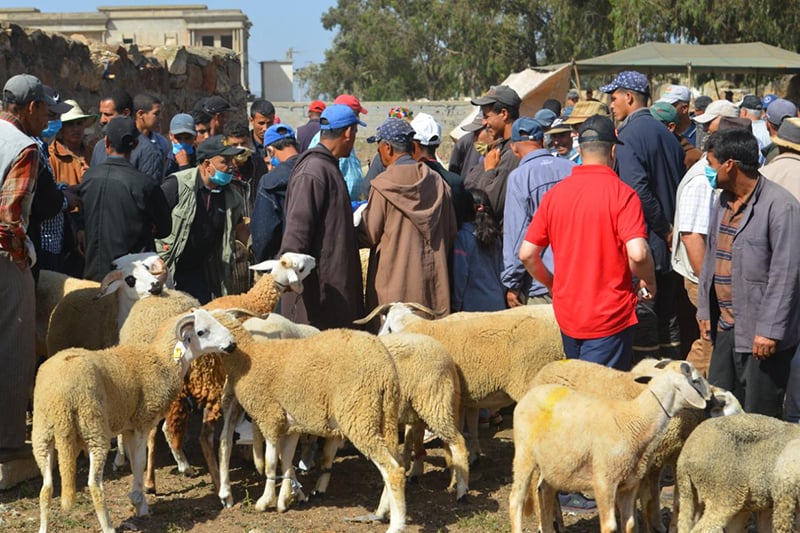
With the approach of Eid al-Adha, the markets of Oujda and the Eastern region have begun to witness a vigorous movement. Between the consumer's optimism about the abundance of the herd and the livestock farmer's fear of loss, the features of an exceptional season are drawn, dominated by a discussion of "purchasing power" and production costs.
A number of livestock sellers confirmed in field statements to the "HIBAPRESS" website that the supply this year is "available and abundant", as the markets are witnessing a strong presence of various varieties for which the Eastern region is famous. Regarding prices, one of the sellers indicated that they range between 2,500 and 4,100 dirhams, stressing that there is relative "prosperity" compared to previous expectations, as some varieties recorded a decrease ranging between 300 and 500 dirhams depending on the quality and size of the sacrifice.
On his part, another livestock farmer stated that "goodness is present and all citizens can purchase the sacrifice according to their budget," stressing that the market includes sacrifices that suit the "dervish" as well as those seeking high quality.
Behind this abundance, the voices of the breeders rise to talk about the dark side of the equation; which is the increase in the costs of breeding, as one of the livestock farmers bitterly expressed his displeasure with the "Khallouh Yuba'bi'" campaigns that spread on social media platforms, considering it "an injustice to the breeder" who spends the entire year caring for the herd.
The breeders explained that the price of "alfalfa", fodder and feed has recorded record levels, which makes the profit margin very narrow or non-existent in many cases. "We are suffering from the high cost of living and the high cost of feed, and the consumer must understand that the livestock farmer also faces great difficulties in securing these sacrifices," says one of the breeders.
The speakers in the market agreed that what is being promoted on social media "Facebook" about the exorbitant prices does not always reflect the reality of the field, as while some believe that the market is subject to the law of supply and demand, the livestock farmers believe that inciting boycotts or promoting unrealistic prices harms a vital sector from which thousands of families in the Eastern region live.
The Oujda market, despite all the challenges, remains a preferred destination for the residents of the region due to the quality of "Sardi" and "Beni Guil" that distinguish the region, and while the livestock farmer awaits the last days of "Eid" to compensate for his losses, the citizen anticipates greater price stability that guarantees him performing the religious rite in comfortable conditions.