HIBAPRESS
Prime Minister Aziz Akhannouch reviewed, on Monday in Paris, the outcomes of the reforms initiated by the Kingdom in the health sector, highlighting that Morocco has made significant strides in rehabilitating health infrastructure and strengthening human resources, as part of a reform process aimed at bringing health services closer to citizens and enhancing the system's capacity to meet their needs.
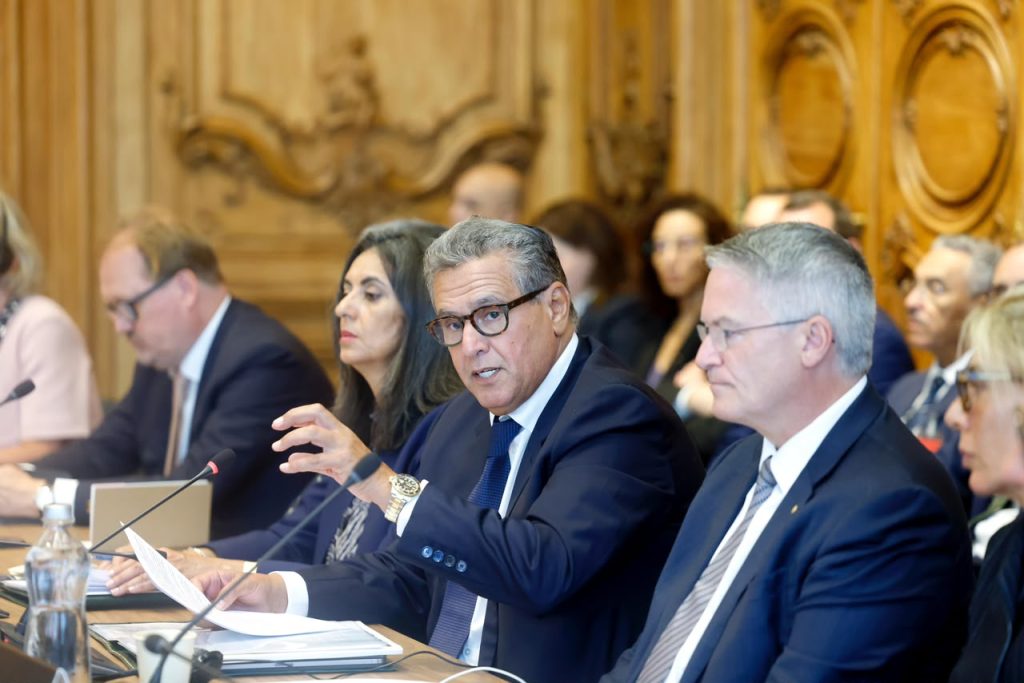
This came during the Prime Minister's participation in a session of the Organisation for Economic Co-operation and Development (OECD) Council, at the invitation of the organization. He presented to the participants an overview of the transformations Morocco has undergone in several fields, most notably the building of the social state and investment in human capital.
Akhannouch stated that Morocco has rehabilitated 1400 primary health institutions, while planning for an additional 1600 institutions, including 500 that are currently undergoing rehabilitation by 2026, as part of restructuring and developing the health offering at the territorial level.
In parallel with the rehabilitation of primary health institutions, the Prime Minister highlighted that the year 2026 will witness the completion or operation of 20 hospital institutions, which will provide 3067 additional beds. Meanwhile, 27 other hospitals with a capacity of up to 3120 beds are expected to be completed between 2027 and 2029.
Akhannouch affirmed that investment in health infrastructure cannot achieve its objectives without providing the cadres capable of ensuring their efficient functioning, noting that the density of health cadres has increased between 2021 and 2026 from 17.4 to 25 health cadres per 10,000 inhabitants.
According to the Prime Minister, this development has enabled Morocco to surpass the critical threshold set by the World Health Organization of 23 health cadres per 10,000 inhabitants, reflecting, according to his presentation, the efforts made to strengthen human resources in the sector.
Akhannouch also touched upon the development of the health budget, which increased between 2021 and 2026 by 115%, reflecting the importance of the sector within the government's reform priorities.
The Prime Minister indicated that the next phase will focus on generalizing the territorial organization of healthcare, controlling the cost of medicines, and the gradual development of the third-party payer system, which will bring the right to health closer to its actual practice.
The review of these outcomes before the OECD Council comes in the context of presenting the Moroccan experience in building the social state. Akhannouch emphasized that social reforms are not limited to social support and protection but also include the development of essential public services, foremost among which are health and education.
The volume of investments and announced programs in the sector, according to the data presented by the Prime Minister, reflects a trend towards building a health system more capable of responding to citizens' needs, by combining the modernization of infrastructure, the strengthening of human resources, and the territorial reorganization of health services.