

HIBAPRESS – Mohammed Daher
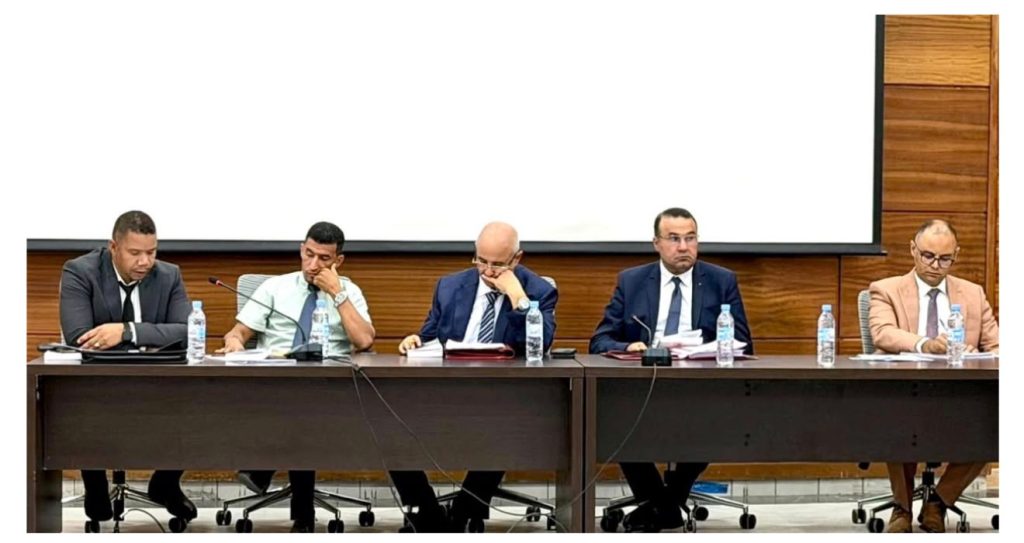
The Primary Court of Marrakech organized a study day on Tuesday, September 15, 2026, on the topic of "Notification and Procedures for Investigating Lawsuits under the New Civil Procedure Law No. 58.25." This event was held as part of keeping pace with legislative developments and promoting scientific and professional discussion on the new procedural provisions and the mechanisms for their practical implementation.
The scientific meeting was attended by Mohammed Dahan, President of the Primary Court of Marrakech, and Khalid El Rekik, the King's Prosecutor, along with the judges working at the court and the head of judicial registration. The meeting provided an opportunity to exchange visions and perspectives on a number of developments introduced by the new Civil Procedure Law, and the challenges they pose related to the smooth running of lawsuits and the achievement of judicial efficiency.
In this context, Professor Ismail Akram, a judge at the Primary Court of Marrakech, delivered a presentation on the developments in notification in light of the new Civil Procedure Law. He reviewed the most prominent new provisions of Law No. 58.25 in this area, highlighting the most important transformations in the rules and mechanisms of notification and their impact on the course of judicial proceedings.
The presentation also addressed a number of practical issues related to the implementation of these provisions, given the importance of notification as a fundamental procedure to ensure parties are aware of the proceedings in a lawsuit and to safeguard defense rights. Furthermore, its effectiveness is linked to accelerating the pace of case resolution and avoiding delays that may arise from its failure.
For his part, Professor Hicham El Merjani, a judge at the Primary Court of Marrakech, presented a paper dedicated to the topic of lawsuit investigation procedures. He discussed the most significant legal developments related to this area and the mechanisms and procedures included in the new law aimed at enabling the court to clarify the elements of the dispute and form its conviction, while considering the requirements for good case management and safeguarding litigants' rights.
The two presentations were followed by an extensive scientific and professional discussion in which the attendees participated. During this discussion, a number of questions and issues that could arise from the practical application of the new provisions were raised, and viewpoints were exchanged on how to address them in a way that contributes to unifying the practical understanding of the texts and achieving greater harmony and effectiveness in judicial work.
This meeting was an occasion to emphasize the importance of continuous training and scientific follow-up of legislative developments, especially in light of the amendments brought by the new Civil Procedure Law that affected various aspects of the judicial process. This necessitates the continuation of professional discussion and guidance on its content and the issues related to its application.
At the conclusion of the meeting, it was agreed to continue this dynamic by planning and organizing a series of future study days and scientific meetings. These will be dedicated to discussing the remaining developments in the new Civil Procedure Law and examining the practical issues that may arise from the implementation of its provisions, thereby providing a continuous space for discussion and exchange of expertise and experiences among the various components of the court.
This initiative falls within the framework of the Primary Court of Marrakech's commitment to keeping pace with legislative transformations and strengthening professional training and communication within the judicial institution, thereby contributing to the development of judicial practice, improving the quality of performance, enhancing judicial efficiency, and serving litigants.