This article was automatically translated from HIBAPRESS, the Arabic version:
This article was automatically translated from HIBAPRESS, the Arabic version:
Heba Press – Rabat
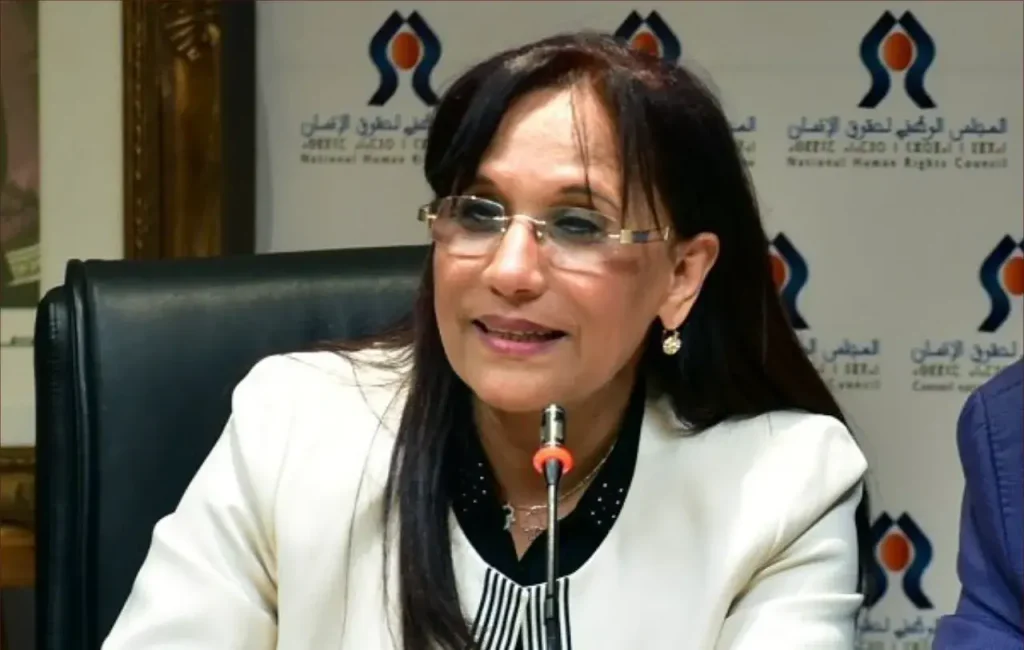
Today Thursday in Geneva, the President of the National Human Rights Council, Amna Bouayach, announced a series of commitments aimed at supporting the implementation of the International Convention for the Protection of All Persons from Disappearance forced.
During the plenary session of the first Conference on Enforced Disappearances, held on January 15 and 16, Ms. Bouayach highlighted that the first step is a multidimensional call to implement the observations of the Committee on Enforced Disappearances in October 2024, with all the actors concerned.
She explained that the National Human Rights Council would also seek recognition of the committee’s competence to receive and study communications from individuals.
Ms. Bouayash, who heads the delegation of the National Human Rights Council participating in the conference, added that the Council will also continue to identify around ten graves of former victims of enforced disappearance through DNA tests, some of which have already been carried out in cooperation with the families of the victims and the internationally accredited laboratory of the General Directorate of National Security.
She indicated that the Council will also commit to ensuring that the criminalization of enforced disappearances is strengthened, as stipulated in the Moroccan Constitution, and will work to harmonize the draft criminal law with the Convention.
According to Ms. Bouayach, the Council will ensure the protection of memory, by digitizing the archives of the work of the Equity and Reconciliation Authority, by handing them over to the Moroccan Archives, by allowing researchers to access the Council’s documents, by protecting the tombs victims, and rehabilitate former irregular detention centers, so that they become centers for the preservation of memory, in consultation with non-governmental organizations.
These commitments are in addition to two commitments announced the day before, on behalf of Morocco, by the Ministerial Delegation in charge of Human Rights, which is also participating in this conference with a large delegation representing several institutions concerned.
On the other hand, Ms. Bouayach indicated that the National Human Rights Council has developed an action strategy aimed at supporting universities in their research on contemporary history, to continue to publish biographies of former victims arbitrary detention and enforced disappearance and to support non-governmental organizations. active in the 12 regions of Morocco, for activities that promote memory.
The President of the Council urged participants in this first conference to universally ratify the Convention on Enforced Disappearances and make it a platform to promote “common ground” against disappearances and torture.
The first conference, organized by the Committee and Working Group on Enforced Disappearances and the United Nations High Commissioner for Human Rights, took place in cooperation with the initiative of the Convention against Enforced Disappearances, which Morocco has ratified, with the participation of more than 120 countries. representing States, national human rights institutions and members of society, as well as victims and their families.
This conference aims to strengthen global efforts to combat enforced disappearances by bringing together key stakeholders and stimulating collective action.
Morocco’s participation stems from its firm conviction, under the enlightened leadership of His Majesty King Mohammed VI, that God assists it, in the urgency of combating enforced disappearances and promoting human rights by strengthening its legal system, by confronting this scourge and consolidating regional and regional relations. international cooperation aimed at strengthening the protection of human rights.