By Mustafa Antara
Since the outbreak of the conflict over the Moroccan Sahara in the mid-1970s, this issue has occupied a central position in Moroccan political awareness and has formed a fundamental pillar in rebuilding the relationship between the state and society. The Sahara file was not merely a regional dispute over sovereignty, but rather turned into a strategic tool for restoring political legitimacy and fortifying the internal front at a sensitive stage in the modern history of Morocco.
This file was, and still is, one of the most important national issues that contributed to unifying the Moroccan ranks. In the past, it formed the cornerstone in building national consensus around the "first national cause," and contributed to launching the democratic process in 1975. It also helped to ease the political tension that followed the two coup attempts in 1971 and 1972, when the authorities used this issue as an entry point to restore internal trust and direct a part of the military institution towards the south.
In that period, Morocco was experiencing an internal crisis of confidence and external isolation. The Sahara issue came to rearrange the national house, as it transformed from a geopolitical file to a unifying cause that was able to unite the state, political and societal forces of various orientations. The Green March in 1975 was an actual embodiment of this consensus, as it transformed popular support into a unified political act, and restored the regime's national legitimacy based on participation and unity.
After about half a century, the Sahara issue returns to play the same role but in a different context. Today, the need for the traditional political consensus is no longer as prominent as the need to consolidate popular legitimacy and strengthen trust between the state and society, in light of social transformations and the growing awareness of the new generations of their rights and demands.
Despite the changing circumstances, the issue still retains its strategic importance. The recent decision of the Security Council regarding the autonomy proposal for the Sahara region has constituted a new victory for the calm royal diplomacy that succeeded in transferring the file from a regional dispute to the framework of national sovereignty, with international recognition of the Moroccan proposal as the only realistic solution to end a dispute that has lasted for a long time.
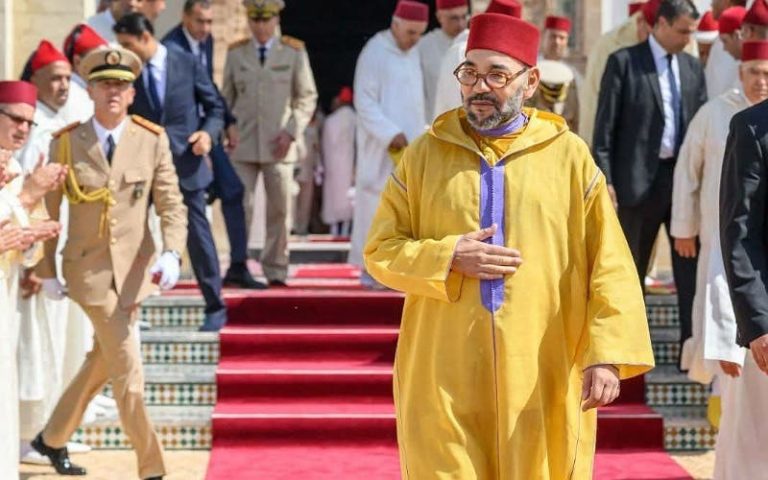
UN Resolution No. 2797 issued on October 31, 2025, consolidated international recognition of the territorial integrity of the Kingdom, and inaugurated a new phase of diplomatic decisiveness based on wisdom and foresight that distinguished the leadership of King Mohammed VI of this file. Morocco is no longer in a defensive position, but rather in a phase of consolidating gains and strengthening its position as a responsible and influential regional actor in North Africa and the Sahel region.
This diplomatic victory came at the same time as a social movement led by the youth, who raised legitimate demands related to health, education, social justice, and the fight against corruption, which explains the wide popular response of public opinion to these demands, which reflect the development of societal awareness and the expansion of participation in the public debate on development and governance, and indicate increasing political and civil maturity within Moroccan society.
In this context, the Sahara issue once again emerges as a symbolic unifying factor that renews trust between the state and society, not through traditional discourse, but through the common sense of a common destiny and collective belonging. The recent diplomatic gains have become an opportunity to renew national cohesion and direct the discussion towards the priorities of reform and development.
The late King Hassan II once said about the Sahara: "It is the origin and source of good," and the saying: "All the good comes from the Sahara, and all the evil comes from the Sahara." A phrase that deeply summarizes the dual role that this issue has played in the history of Morocco, as it is a source of national unity and a measure of political maturity at the same time. For decades, it has been a sacred issue and a red line, but the current stage redefines this sanctification from an official conviction to a popular awareness that understands that defending territorial integrity is part of defending a comprehensive national project for development and justice.
Today, the Sahara issue continues to play its strategic role in consolidating the legitimacy of the royal institution and strengthening its popular dimension, as a lever for reform and modernization. After it contributed yesterday to building the political legitimacy of the regime, it has become today a tool to consolidate popular legitimacy, in light of the wide international support for the Moroccan proposal by the major powers, led by the United States, France, Britain, and Spain.
The Moroccan street has expressed this national momentum through spontaneous celebrations that swept the cities, in which the national flags and pictures of King Mohammed VI were raised, expressing popular support for the national unity and reform project that he leads.
The Sahara issue today is not only an issue of borders and sovereignty, but also a title for a renewed national path that seeks to build a cohesive democratic state, based on popular legitimacy, justice, and development. From 1975 to 2025, the Sahara has remained a mirror that reflects Morocco's journey towards modernization without compromising its constants, and towards democracy without prejudice to unity.
It appears that the Sahara will once again impose a reconsideration of the structure of the Moroccan state as a whole, and the openness of the Moroccan political system towards democratization and the consecration of a state of rights and freedoms.
And indeed, all the good, all the good comes from the Sahara….