HIBAPRESS – Abdellatif Baraka
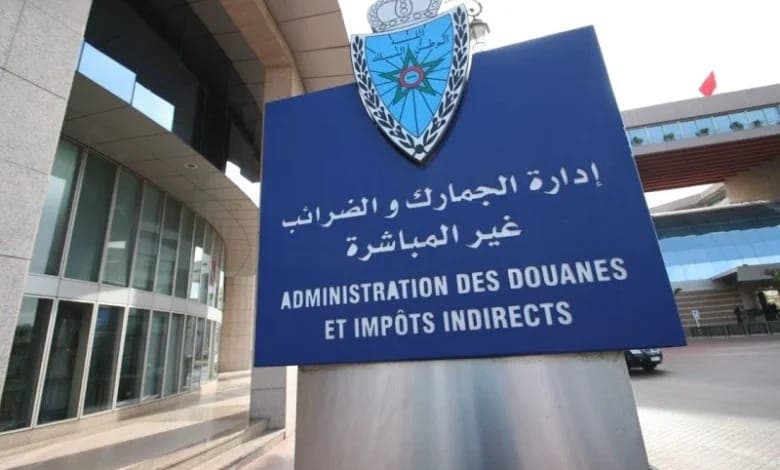
In a quiet office at the headquarters of the Customs Administration in Rabat, the screens of the digital system "Badr" displayed successive warning signals. Artificial intelligence algorithms detected unusual transactions in import files related to Moroccan and foreign companies, which opened the door to one of the most extensive customs investigations in recent years.
– Digital warning reveals the first clues
A customs official, who preferred not to be identified, said: "It all started with small numbers, transactions that do not match the average global prices. But when we expanded the analysis, we realized that we were facing an organized network that manipulates invoices and bank guarantees."
Since that initial discovery, dozens of files have been opened and hundreds of documents related to import operations carried out during the last three years have been reviewed. The surprise was that part of these documents were forged with extreme care, from fake invoices to bank transfer certificates that did not match reality.
– Cooperation between financial and regulatory institutions
According to sources within the investigation, unprecedented coordination was activated between the Customs Administration, the Exchange Office, the General Directorate of Taxes, and Bank Al-Maghrib. The goal: to track every transfer abroad and verify its legality.
"We are not talking about an individual case, but about a series of operations linked to suppliers from abroad, especially from China," says a source from the Exchange Office, adding that cooperation with the Chinese customs authorities has enabled the discovery of invoices whose values were inflated significantly.
– Millions of dirhams left the country with forged documents
The investigation results indicate that the suspected companies succeeded in transferring more than 330 million dirhams of hard currency abroad since 2022 to the current year 2025, while the real value of the goods does not exceed 120 million dirhams.
The difference, i.e. about 210 million dirhams, represents amounts that were smuggled through inflating the prices of goods and issuing fake bank guarantees and financial certificates.
One of the experts in financial affairs commented, saying: "This type of manipulation directly harms the national economy. The smuggled money can be used in suspicious activities, and it also deprives the local market of real investments."
– Artificial intelligence on the front lines
What is remarkable in this case is the customs' reliance on artificial intelligence techniques in data analysis.
A data engineer working within the system explains: "The program automatically compares global market prices with the values declared in import invoices. When the differences are large, the inspectors are alerted to open an investigation."
This new approach has enabled the discovery of dozens of similar cases in recent months, especially in imports coming from China and Turkey, which are among the most prominent sources of low-priced goods whose declared value is easy to manipulate.
– External accounts under surveillance
The specialized teams continue to track the bank accounts to which the money was transferred abroad.
A source close to the investigation says that some of the amounts were distributed to multiple accounts in different countries, in an attempt to hide their true path. "There are strong suspicions that some of these accounts belong to front companies used to launder money," the source adds.
– Tightening control and protecting the national economy
The case, according to informed sources, has prompted the Customs Administration to review the mechanisms for controlling bank documents and expand its shared database with financial institutions. It is also considering imposing more stringent measures on importers, including direct verification of suppliers' invoices abroad before approving financial transfers.
One of the officials confirms that this operation "is not just a circumstantial campaign, but the beginning of a new phase in combating manipulation in foreign trade."