HIBAPRESS
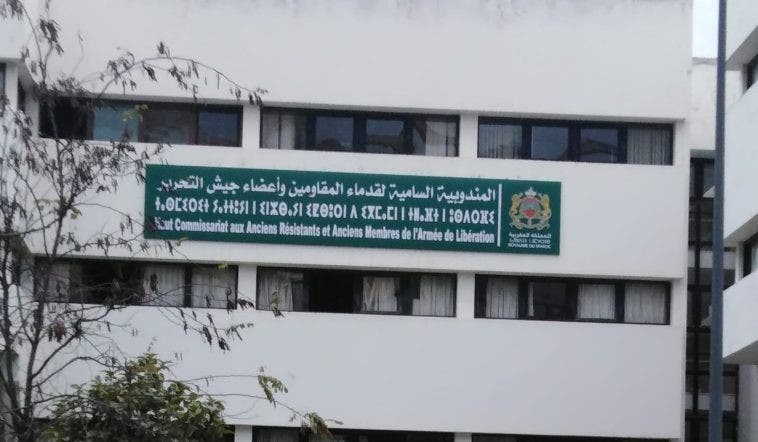
The High Commission for Former Resistance Fighters and members of the Liberation Army confirmed today, Sunday, that celebrating Independence Day is a manifestation of the victory of the will of the Throne and the people and their close cohesion in defense of religious sanctities and national constants.
The Commission mentioned in a statement that the anniversary of the glorious Independence Day is one of the most precious national memories rooted in the hearts of Moroccans because of its significant and distinguished place in the record of national historical memory, and what it represents of symbolism and deep connotations that embody the victory of the will of the Throne and the people and their close cohesion in defense of religious sanctities and national constants.
It added that by commemorating this glorious anniversary, the Commission recalls the historical context of this great event, the achievement of which was neither easy nor simple, but rather a great epic overflowing with wonderful stances, lessons, eloquent lessons, great heroism, immense sacrifices, and immortal historical glories made by the King and the People's Revolution, which erupted, signaling the start of the battle and resistance, and adherence to true patriotism and positive citizenship in its most sublime and greatest manifestations.
The statement stated that with all manifestations of pride and glorification, and in an atmosphere of overflowing national enthusiasm, comprehensive mobilization, and the praise of the Security Council's adoption of Resolution No. 2797 on October 31, 2025, which consecrates the validity of the Moroccan proposal for self-governance for the recovered southern regions within national sovereignty, as a just and lasting solution to the issue of our territorial unity, the Moroccan people from Tangier to El Guerguarat, and with them the family of the national movement, the resistance, and the Liberation Army, from November 16 to 18, are commemorating the 70th anniversary of the return of the hero of liberation, independence, and the first resistor, His Majesty the late King Mohammed V, may God have mercy on him, from exile to the homeland, announcing the end of the era of the stone and protection and the dawn of freedom and independence, and the transition from the smaller liberating jihad to the greater economic and social jihad, and the victory of the glorious King and People's Revolution, which embodied a great heroic epic in the national struggle that the proud Moroccan people waged under the leadership of the glorious Alawi Throne in order to obtain freedom, independence, national sovereignty, and territorial unity.
The Commission pointed out that the return of historical legitimacy and legitimacy with the return of the hero of liberation and independence constituted a clear victory and a decisive historical event, crowned with glory and immortality the stages of the bitter struggle that followed its phases and varied its manifestations and images in the face of the imposed colonial presence since March 30, 1912, where Moroccans immortalized the most wonderful stances and values of national zeal, commitment, and loyalty, and made the greatest sacrifices for the sake of the nation's honor, dignity, and defense of its sanctities and constants.
There are many heroic battles and popular uprisings that the sons of the Moroccan people fought in all parts of the Kingdom in a desperate confrontation with the foreign presence and colonial domination. Among these heroic acts, we mention the battles of Al-Herri, Anwal, Bougafer, Jabal Bado, Sidi Bou Othman, the uprising of the Ait Baamran tribes, the southern regions, and other historical stations in which the Mujahideen taught the colonial forces eloquent lessons in steadfastness, resistance, and sacrifice.
Among the masterpieces of the national struggle is what the national movement did with the beginning of the thirties of the last century by moving to political struggle and purposeful national work, which was mainly aimed at spreading national awareness, igniting enthusiasm, and sharpening determination in the ranks of the young and the youth and within the Moroccan society in all its spectrums, groups, and classes. The national movement also worked to introduce the Moroccan cause in international forums, which had the greatest impact and the greatest impact on the foreign presence, which was facing the national political struggle with arbitrary measures and schemes that were against the liberationist thought that the national movement was spreading and spreading in consultation and harmony with the father of the nation and the hero of liberation and independence, His Majesty the late King Mohammed V, may God sanctify his soul.
One of the most prominent of these colonial schemes was the project of division between the sons of the united Moroccan people, the dismantling of their unity, and the obliteration of their religious and national identity by issuing what was called the Berber Decree on May 16, 1930. But the racist and discriminatory plan soon failed, as the nationalists and militants stood in the trench of confrontation and opposition to the colonial presence, and the Moroccans adhered to the true Islamic religion, the Moroccan identity, and national unity.
From the manifestations and results of the national struggle was the initiative of a select group of pioneers and leaders of the national movement to present the document of the demand for independence to the protectorate authorities on January 11, 1944, in complete consultation and harmony with the hero of liberation and independence, His Majesty the late King Mohammed V, may God bless his soul, and what followed that of violent reactions from the colonial authorities, as some leaders, leaders, and men of the national movement were arrested and Moroccans who showed unparalleled national enthusiasm were subjected to abuse and bravely and courageously expressed their support for the historical document.
Also, one of the most prominent of these historical stations that distinguished the path of the national struggle was the historical unity journey undertaken by the father of the nation and the hero of liberation and independence to Tangier on April 9, 1947, confirming Morocco's, King and people, adherence to the freedom, independence, and territorial unity of the homeland and its adherence to its components, identity, and belonging to its Arab and Islamic environment.
This blessed journey, the unity journey, had a significant impact on the relationship of the French Protectorate General Residence with the Royal Palace, as the conflict intensified, especially since His Majesty the late King Mohammed V did not succumb to its pressures, which were mainly represented in disassociating from the national movement and the national liberation tide. His stances rejecting any compromise were a cause for the political situation to worsen and the authorities of the French Protectorate General Residence to manage a plan to dismantle the close ties between the King and his people. The Moroccans confronted this conspiracy, the threads of which appeared in the early days of August 1953, where the residents of the city of Marrakesh stood on August 14 and 15, 1953, to prevent the installation of the colonial creation, Ibn Arafa.
The uprising of August 16, 1953, began in Oujda, and the uprising of August 17, 1953, in Tafoughalt, and the stances of condemnation and condemnation of the heinous act of the foreign occupation forces prevailed in all parts of the country when the authorities of the French Protectorate General Residence besieged the Royal Palace with their security and military forces on August 20, 1953, threatening and promising His Majesty the late King Mohammed V to cede the throne. He preferred, may God have mercy on him, exile rather than submit to the will of the foreign occupier, declaring, with all his faith in God and his conviction of the justice of the Moroccan cause, that he is the legitimate King of the nation, and that he will not lose the trust that his loyal people placed on his shoulders and surrounded him with, which makes him the legitimate Sultan and the symbol of sovereignty and national unity.
In the face of these noble national stances that were taken with determination, firmness, and insistence by the hero of liberation, independence, and the first resistor, His Majesty the late King Mohammed V, the authorities of the General Residence implemented their heinous conspiracy by exiling him and his companion in struggle and exile, His Majesty the late King Hassan II, may God have mercy on them, and the Sharifian Royal Family on August 20, 1953, to the island of Corsica and from there to Madagascar.
As soon as the ominous news spread throughout the Kingdom and spread in all its parts, the Moroccan people revolted in a violent uprising, and their anger and wrath erupted in the face of the foreign occupation, and the beginnings of armed action, resistance, and sacrifice appeared, and the commando cells and secret organizations were formed, and the heroic operations began to strike the extremists of colonialism, its interests, and its goals. It was clear from the popular tribute to the King and the People's Revolution the determination and insistence of the Moroccans on a desperate struggle for the return of legitimacy and historical legitimacy and the achievement of independence.
From the daring commando operation of the martyr Allal Ben Abdellah on September 11, 1953, which targeted the colonial creation, Ibn Arafa, to the heroic commando operations of the martyr Mohamed Zerktoni and his comrades in the resistance cells in Casablanca and the operations of resistors and militants in many Moroccan cities and villages, the pace of resistance escalated with demonstrations, massive protests, and successive popular uprisings, including the demonstrations of Oued Zem, the tribes of Smaala, and Bani Khiran, and in many Moroccan regions on August 19 and 20, 1955, and culminated in the victorious launch of the Liberation Army in the northern regions of the Kingdom on the night of October 1-2, 1955.
The fervor of resistance and sacrifice did not subside except by achieving the hope of the Moroccan nation in the return of the hero of liberation, independence, and the symbol of national unity, His Majesty the late King Mohammed V, may God have mercy on him, carrying with him the banner of freedom and independence, and announcing the transition from the lesser jihad to the greater jihad in order to build the new Morocco and continue the epic of achieving territorial unity. The Liberation Army operations began in southern Morocco in 1956 to liberate the southern Saharan regions from the yoke of the Spanish occupation, and the hero of liberation announced it as a resounding cry in his historic speech in Mahamid Al-Ghizlan on February 25, 1958, as he received delegations from the Saharan tribes, confirming Morocco's steadfast stances and its full mobilization to regain its stolen Sahara, and achieving on April 15 of the same year 1958 the recovery of the Tarfaya region, as the beginning of the victory of the process of liberating what remained of the stolen areas of the homeland.
Following the path of his blessed father, the unified King, His Majesty the late King Hassan II, may God have mercy on him, fought the battle to complete the territorial unity, so the city of Sidi Ifni was recovered in his reign on June 30, 1969, and the recovery of our southern regions was achieved thanks to the victorious Green March, which began on November 6, 1975, and the national flag was raised in the sky of Laayoune on February 28, 1976, signaling the departure of the last foreign soldier from it. On August 14 of the year 1979, the completion of the territorial unity of the homeland continued with the recovery of the Dakhla region to achieve territorial unity from Tangier to El Guerguarat.
The statement added that the family of the national movement, the resistance, and the Liberation Army, while expressing its pride and pride in the passage of 70 years since Morocco's independence, praises the UN resolution that supports negotiations to solve the Moroccan Sahara issue on the basis of the self-governance initiative within national sovereignty, as the realistic and only framework for settling the artificial conflict.
The Commission also praised this decisive historical turning point, which is the culmination of the continuous and high-level diplomatic path led by His Majesty King Mohammed VI with wisdom, insight, and foresight, by consolidating the Moroccan approach to the Sahara issue on the international arena, and the continuous efforts to gain the confidence of the major powers that influence decision-making, and to convince them of the justice and validity of the Moroccan position, and of the credibility and realism of the self-governance initiative as the realistic and applicable solution.
It also reaffirmed, like all segments, categories, and components of the Moroccan people and its political, trade union, human rights, and youth spectrums, their continuous mobilization, their ongoing vigilance, and their permanent mobilization behind His Majesty, may God protect him, in order to activate the mechanisms and foundations of self-governance within the framework of advanced regionalization, and to make the southern regions a locomotive for development, stability, peace, and African cooperation.
In commemoration of this glorious anniversary, the High Commission for Former Resistance Fighters and members of the Liberation Army will organize, the day after tomorrow, Tuesday, in the halls of the National Space for the Historical Memory of Resistance and Liberation, which belongs to the Commission in Rabat, a rhetorical festival and an intellectual symposium during which words and presentations will be delivered about this eternal historical event, overflowing with lessons and lessons that must be recalled and disseminated in the ranks of the young and new and successive generations.
A select group of former resistance fighters and members of the Liberation Army will be honored, and financial aid will be distributed to a number of individuals of this Mujahideen family, worthy of continued care and comprehensive attention. Activities and events will also be held on the occasion in all regions, prefectures, and provinces of the Kingdom, supervised by the regional and provincial delegations, local offices, and the historical memory spaces for resistance and liberation opened across the national territory, which number 106 space units, through organizing and framing scientific seminars, round tables, lectures, communication meetings, educational, cultural, and sports competitions, with the aim of rooting and consolidating national, ethical, and behavioral values in the ranks of the young, youth, and the generations of today and tomorrow.
(And)