HIBAPRESS-Rabat
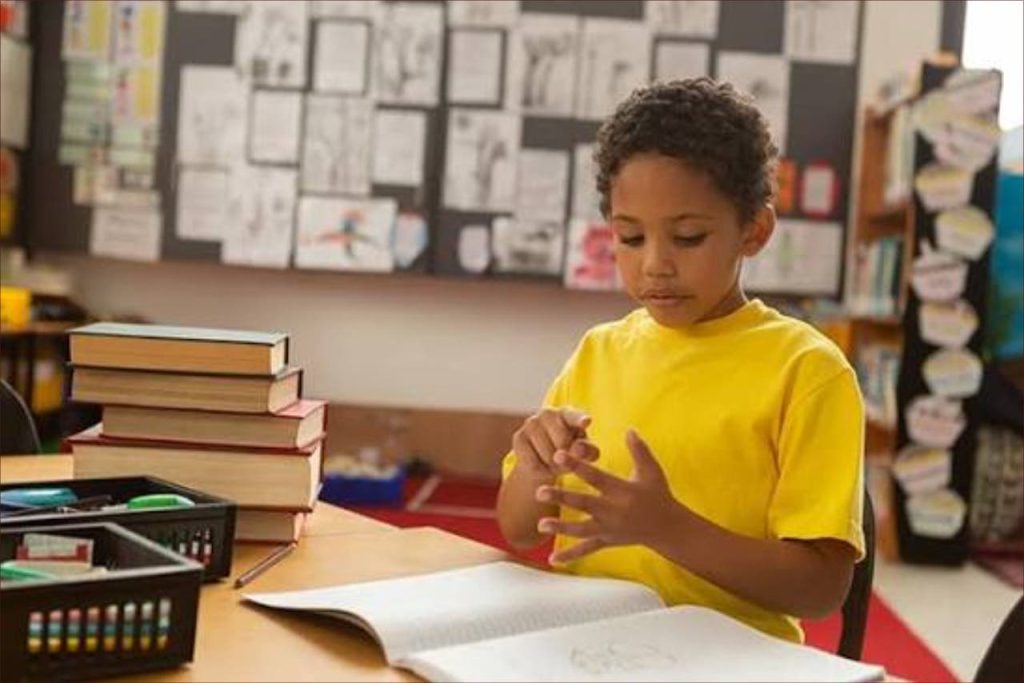
A recent study prepared by two researchers from the University of Lausanne in Switzerland revealed that the use of fingers by primary school students during calculation is not a sign of weakness, but rather an effective educational tool that contributes to consolidating mathematical concepts for them.
The study, which was published in the specialized journal "Developmental Psychology," explained that children who relied on their fingers at an early age later showed remarkable superiority in calculation skills, compared to their peers who never used this method, as they recorded weaker performance in numerical tests. Catherine Tiffon, the lead researcher in the study, confirmed that using fingers is "a natural educational tool that should not cause children to feel ashamed," calling on parents and teachers not to prevent young children from counting on their fingers, due to its positive impact on building their calculation skills. The two researchers indicated that children who stop using fingers after the age of seven have often benefited from this tool during the first years, which later helps them transition smoothly to mental calculation. However, Tiffon explained that the continued reliance of children on fingers after the age of eight may indicate the presence of learning difficulties, but she stressed at the same time the need not to rebuke them, because this method may still be an important bridge that helps them catch up with their peers and overcome the stage of delay.