HIBAPRESS – W.A.M.
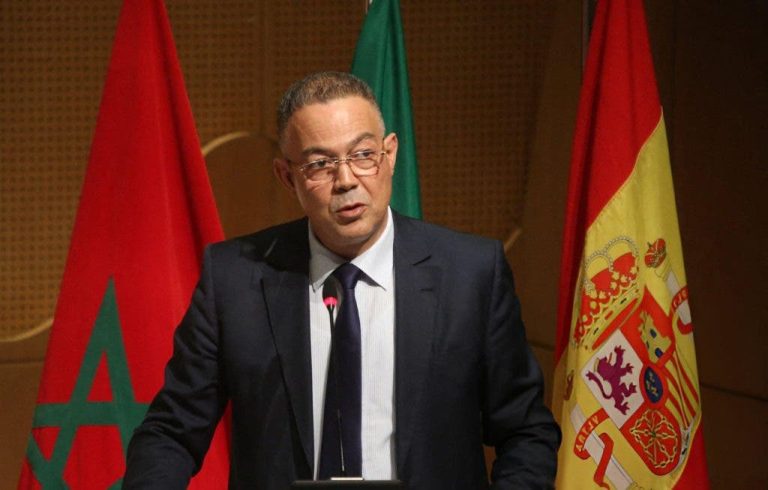
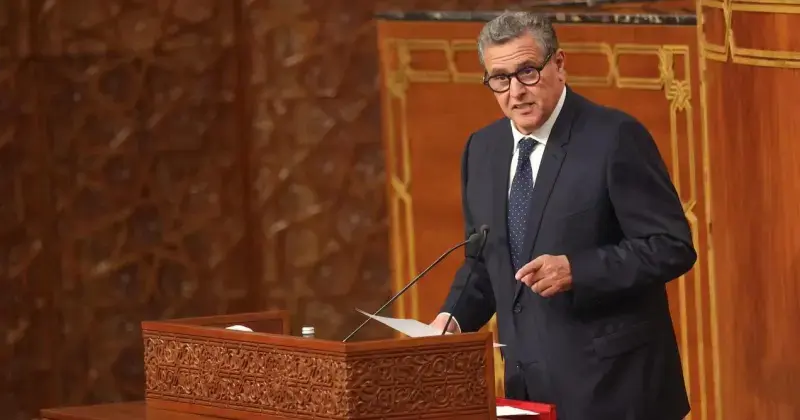
The Head of Government, Aziz Akhannouch, confirmed on Tuesday in the House of Councillors that the government has engaged in recent years in a reform path aimed at transitioning from fragmented sports management to building an integrated system, based on organization, framework, expanding the base of practice, and improving the sports offer.
Akhannouch explained, in a presentation he gave during the monthly question session related to general policy, devoted to the topic "Government policies in the field of sports: achievements and stakes," that the first indicator of this transformation is what the organizational structure of national sports has witnessed, as Morocco today has 57 national sports federations, overseeing various specializations, supervising competitions, keeping pace with training, and ensuring Morocco's representation at the regional and international levels. In addition to these federations, the Head of Government adds, 261 regional leagues are spread, a number that reflects the territorial extension of the sports system, and confirms that the organization is no longer confined to the center. In the same context, the Head of Government stressed the importance of the associative fabric close to citizens and capable of embracing daily practice, pointing out that the number of sports associations has witnessed a remarkable development, as it increased from about 4,745 associations in 2021 to more than 7,000 associations in 2025, an increase exceeding 53 percent. He pointed out that this fabric today includes about 500,000 subscribers, considering that this number "reflects the expansion of the practice base, but at the same time puts us before a great responsibility in terms of framing, quality, and governance." At the level of the sports offer, the Head of Government noted that about 2,500 sports and social structures were supported and rehabilitated during the same period, highlighting that Morocco now has a wide and diverse network of facilities, including more than 1,050 neighborhood stadiums, 157 multi-specialty sports halls, and 717 socio-sports centers of proximity, without counting the sports facilities in which the territorial communities have invested with their own capabilities. He stressed in this context that the importance of these numbers lies in the fact that they reflect a clear choice not to be satisfied with investing in major structures with symbolic impact, but to direct a fundamental part of public effort towards neighborhood sports. He noted that the program to establish 800 neighborhood stadiums in the rural and semi-urban world, during the period from 2021 to 2025, is a strategic workshop that embodies the public vision of the state in making sport a right available to all citizens, not a privilege confined to major cities. Akhannouch added that directing public investment towards neighborhood stadiums and socio-sports centers within rural communities and under-equipped urban neighborhoods was an expression of a clear political will to make sports practice a real right not linked to place or financial ability. He emphasized the importance of linking neighborhood stadiums with the rest of the components of the sports system, at the forefront of which are schools and associations, highlighting that the integrated approach that makes the neighborhood stadium a link between the student, the association, and the neighborhood, is sufficient to transform these structures into actual tools for education, prevention, and building local human capital.