HIBAPRESS – Abdelatif Baraka
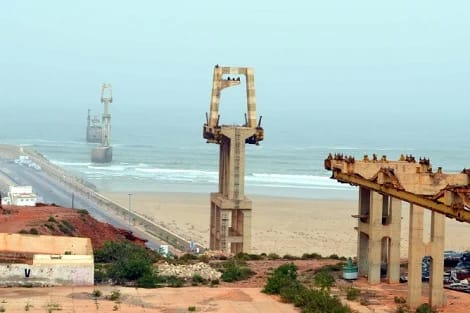
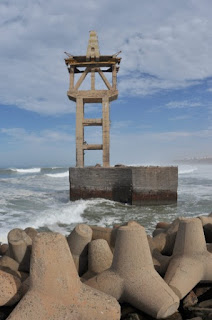
On the southern beach of Sidi Ifni, where the waters and waves of the Atlantic Ocean meet the soil of the Kingdom of Morocco, the "cable car" looms in the coastal sky, a steadfast witness to a bygone colonial era, towering amidst the waves and weather fluctuations, despite the neglect of time. This landmark, construction of which began between 1962 and 1965, was a vital artery connecting ships coming from Spain to the mainland, and replaced a port that could not be built at the time due to the phenomenon of sand accumulation that prevented ships from docking on the shore.
The project was built by French engineers at a cost exceeding four million dollars, becoming one of the most prominent major projects in the Spanish colonies in Africa. The essential building materials were transported from the Canary Islands, and the work took three years until the "cable car" entered service, carrying two carriages: the first to transport more than 300 passengers per hour, and the second to transport tens of tons of goods, via huge cables connecting towering concrete towers and a small naval base designed to receive ships away from the shifting sands. 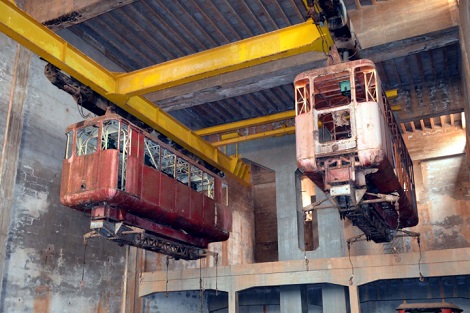 The project served the city until 1975, after which it was abandoned and replaced by a modern port in 1989. Today, only the huge concrete towers remain, while the hanging carriages are weary and dilapidated, witnessing the humidity of the sea and the neglect of years. Mohammed Salki, a resident of the city, says: “The cable car was the beating heart of Sidi Ifni, and although it is deserted today, its structure still stands, and it can be brought back to life if it is restored and operated again.” As for Youssef, who is interested in the history of the city, he points out that the project represents an exception in Africa, as it carries great historical and cultural value, and confirms that its rehabilitation will transform the landmark into a tourist and recreational destination that preserves the city's memory and supports its local economy.
 On his part, the foreign tourist, "Jonathan," who is visiting the city for the first time, is amazed by the size of the towers and the strength of the construction that has withstood the ocean waters: “The visitor can only feel the spirit of history here, the place is unique and amazing, and I see it as an opportunity to revive the project touristically and connect it to marine tours between Sidi Ifni and other southern cities.” Today, this landmark needs the Souss-Massa regional council and the Ministries of Culture and Tourism to think about a new chapter in the life of this "cable car" to recreate development through the integration of history and tourism, and to show this landmark in a new look to add an important tourism project to the Souss-Massa region.