HIBAPRESS
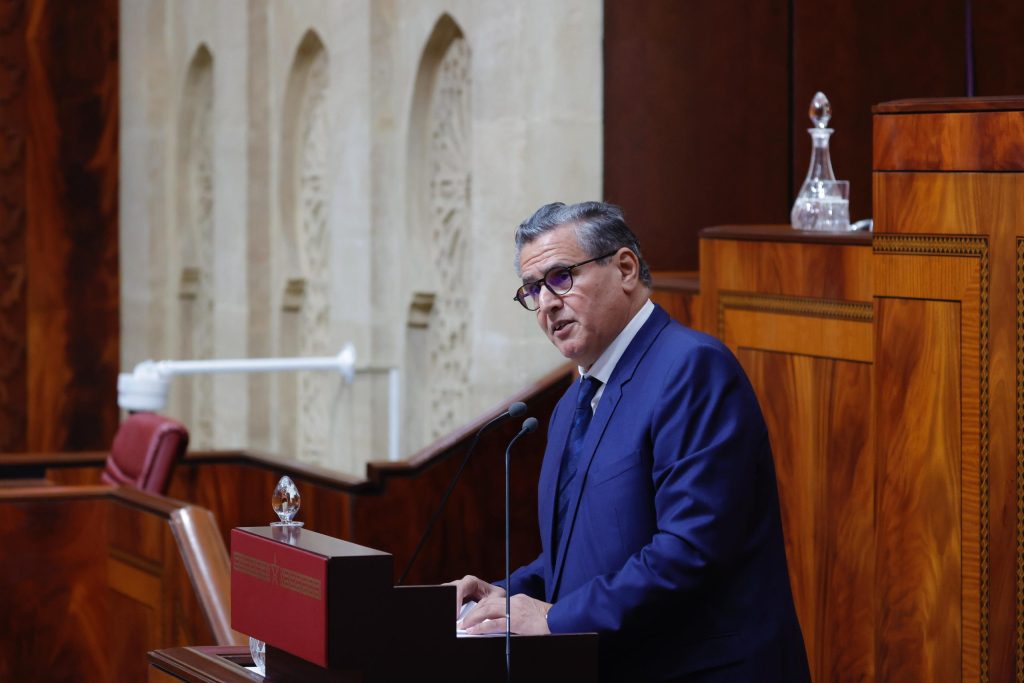
The Head of Government, Aziz Akhannouch, confirmed that the government's achievements in the social field are not measured by slogans, but by numbers and tangible results that directly impact the lives of Moroccan families, highlighting that the government has made the family a central focus of all its interventions since 2021.
In this context, Aziz Akhannouch reviewed ten main achievements that reflect this trend, foremost among them being the expansion of health coverage for non-wage earners, where the number of beneficiaries increased from only 8,000 in 2021 to approximately 1.7 million beneficiaries by 2025, in a qualitative step towards generalizing social protection. He also highlighted the launch of the direct social support program, which enabled 4 million beneficiary families with a budget of approximately 26 billion dirhams, in addition to the direct housing support program, which benefited more than 96,000 families, at a cost of 7.8 billion dirhams, with a view to expanding the base of beneficiaries. In the health sector, the Head of Government pointed to the establishment of 8 new university hospitals, 3 of which have entered service, with an increase in the sector's budget to more than 42.4 billion dirhams in 2026, within the framework of strengthening the health offer and achieving spatial justice. As for education, the number of medical schools has been increased from 7 to 11 schools, with the doubling of the number of pedagogical seats from 2,700 to more than 6,400, in addition to an 18% increase in financial positions in the sector, which enhances human resources and keeps pace with ongoing reforms. Aziz Akhannouch noted that social dialogue also formed a prominent station, through the mobilization of an unprecedented financial envelope of 46 billion dirhams, which enabled the improvement of the conditions of more than 4 million wage earners and employees, in addition to settling the situation of 114,000 teachers, and ending a number of pending files. The Head of Government stressed that these numbers reflect a real transformation in social policies, confirming that their impact is not only visible in reports, but also in the tangible improvement of the living conditions of Moroccan families, which consolidates the state's orientation towards building a more equitable and sustainable social model.