

HIBAPRESS – Rabat
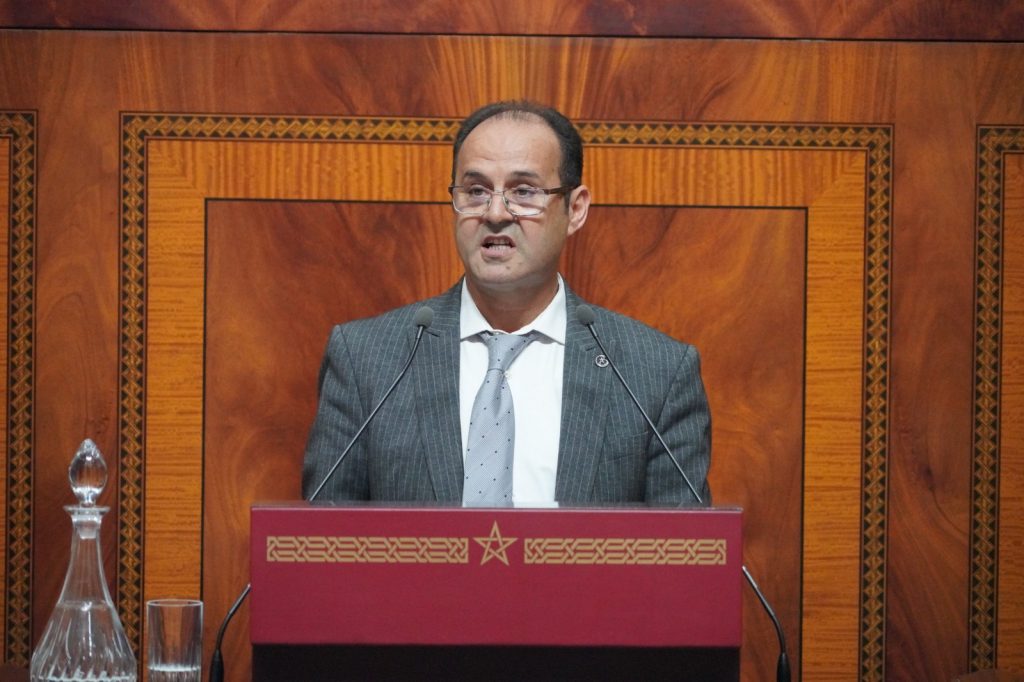
Ahmed Al-Abadi, head of the Progress and Socialism Party bloc in the House of Representatives, affirmed that the party's transition from opposition to the government majority will not prevent it from exercising its oversight and legislative roles, stressing that supporting the government does not contradict monitoring it and evaluating its public policies.
Al-Abadi explained, in a press statement following his appointment as head of the parliamentary bloc, that this responsibility represents a mandate, an honor, and a trust, confirming his determination to maintain the bloc's credibility and seriousness in parliamentary work, after the period during which Rashid Hammouni led the bloc in the previous term, and Al-Abadi was his deputy for five years.
Al-Abadi said that the party's position within the new majority requires supporting the government and voting on draft laws and granting it confidence based on its program, but he stressed that this does not exempt the bloc from its duties in oversight, legislation, accountability, proposal, and amendment, and defending the causes of citizens, vulnerable groups, the middle class, and regions suffering from developmental deficits.
He added that the bloc will undertake these roles based on the public interest, and in accordance with the principle of separation of powers, their cooperation, and integration, considering that the exercise of parliamentary oversight remains a constitutional duty that should not be compromised, to avoid repeating an experience in which the majority was described as merely a "faint shadow of the government."
Regarding the bloc's priorities for the next phase, Al-Abadi identified four basic issues, topped by the issue of democracy, by pushing towards political and rights-based detente, restoring confidence in elected institutions and the party sphere, expanding the scope of freedoms and rights, and strengthening equality and participation in public life.
The second priority includes sanitizing public life, by issuing a law to sanitize it and criminalize conflicts of interest, combating rent-seeking, corruption, and bribery, while activating the principle of linking responsibility with accountability, which contributes to restoring citizens' confidence and improving the investment climate.
The third priority relates to social and spatial issues, by taking concrete measures to improve purchasing power and reduce price hikes, tightening market control, and confronting speculation and monopolies, along with rationalizing public support and strengthening attention to public schools, hospitals, and universities.
Al-Abadi stressed, in this context, the necessity of adopting an effective and integrated policy for youth, aiming to enhance their integration and reduce the numbers of those who are unemployed, out of school, and not undergoing training, and to limit school and university dropout, while making spatial justice a priority of parliamentary work.
The fourth priority concerns the economic issue, by reviewing and developing sectoral strategies in the fields of industry, agriculture, energy, water, digitization, tourism, services, the solidarity economy, sports, and cultural industries, with the aim of strengthening economic sovereignty, reducing dependence, and creating wealth and decent employment opportunities.
He also called for the state to play a pivotal role in economic development, in parallel with supporting Moroccan entrepreneurship, improving the business climate, and enshrining fiscal justice, while paying special attention to small and medium-sized enterprises, and strengthening the banking sector's involvement in financing high-value-added sectors.
Regarding the relationship between supporting the government and exercising oversight over it, Al-Abadi considered that there is no contradiction in this matter, explaining that the bloc will commit to supporting the majority within the framework of its charter and its governmental program, while simultaneously adhering to the tasks entrusted to it by the constitution and the internal regulations of the House of Representatives in the fields of oversight, legislation, and evaluation of public policies.
He affirmed that these tasks represent the core of the relationship between the representatives of the nation and the citizens, and that the bloc does not intend to abandon or compromise them, despite its participation in the government majority.