HIBAPRESS
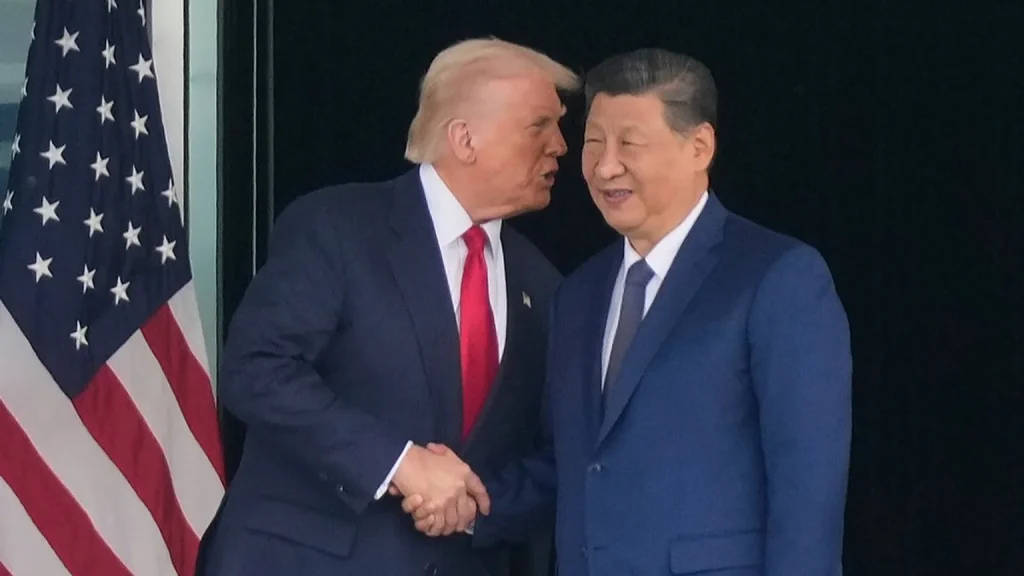
US President Donald Trump said on Thursday that his Chinese counterpart Xi Jinping offered help in reopening the Strait of Hormuz and vowed not to send military equipment to help Iran in its war with the United States and Israel.
Trump told the "Hannity" program on Fox News, after meeting with Xi in Beijing: "He said he would not provide military equipment… He emphasized that." He added, referring to the Chinese President: "He wants to see the Strait of Hormuz open, and he said: If I can provide any help at all, I want to help." In another context, the US President said that China agreed to order 200 Boeing aircraft. Fox News quoted Trump as saying, "He agreed on one order today, which is that he will order 200 aircraft… Boeing wanted 150 aircraft, and it got 200" This comes while US Secretary of State Marco Rubio revealed that Trump discussed with the Chinese President the ongoing war with Iran and the tensions associated with the closure of the Strait of Hormuz, during a summit that lasted more than two hours in Beijing, stressing that the United States did not ask China for help in dealing with Tehran. Rubio said in an interview with NBC on Thursday that the Chinese side expressed its rejection of the militarization of the Strait of Hormuz or the imposition of transit fees on navigation in it, explaining that this position is consistent with the American vision. The summit came amid expectations that Trump would seek to push Beijing to play a role in ending the American-Israeli confrontation with Iran, especially after the disruption of global energy supplies and the rise in fuel prices as a result of tensions in one of the most important oil corridors in the world. But Rubio stressed that Washington "did not ask anything from China," adding: "We don't need their help," despite acknowledging that the rise in global oil prices affects the American economy as it affects other countries to a greater extent. According to Rubio, Trump and Xi reached common ground on the Iranian file, with China confirming its rejection of Tehran possessing nuclear weapons and calling for a diplomatic solution to the war that began in late February.