HIBAPRESS -E. Alsamlali
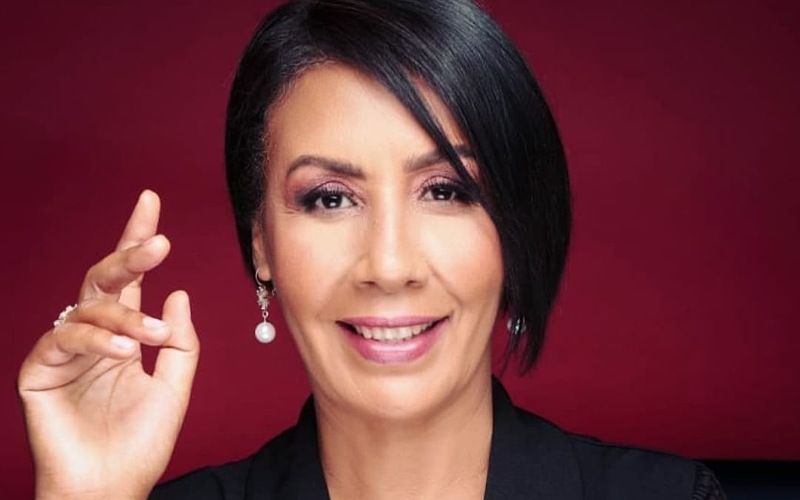
In a renewed creative step that enhances the Moroccan dramatic presence on the international scene, the capable actress Fatima Boujou is embarking on a remarkable artistic adventure through her participation in the massive Spanish series “Sira”, inspired by the narrative worlds of the famous novelist Maria Duenas.
In a private conversation with “HIBAPRESS”, Boujou reveals the details of this entry into a global production in which the historical intersects with the police, where the threads of the story intertwine between the First World War and networks of influence and cross-border conspiracies, in a work that was filmed important parts of it between Spain and Morocco, specifically in the city of Tangier, which turned into a vibrant visual space within this major dramatic project.
Fatima Boujou recalls the details of the first beginnings of this path, confirming that her launch towards “Sira” began with a precise professional contact she received from the casting director, in coordination with the Moroccan producer Khaled Amskan, before undergoing an initial test via the “Self-tape” technique, where she was asked to perform a specific scene according to precise directorial conditions that take into account the rhythm and representational truthfulness at the same time.
Boujou points out that this stage constituted a pivotal moment in assessing her readiness to cross over to an international production experience, before she received, after a short period, the news of her selection to embody the character of an aristocratic lady in her sixties, characterized by prestige, firmness and overwhelming social presence, within a multi-character and relational dramatic fabric. Filming her scenes was assigned to the spaces of Tangier, which added to the work a special visual dimension that reflects the spirit of the historical era that the series recalls.
The artist acknowledges that this standing in front of a Spanish camera was not just a geographical or professional transition, but a complex experience on both the psychological and linguistic levels, despite her mastery of the Spanish language since 1996 after her training at the “Cervantes” Institute in Rabat and her previous residence in Spain. She explains that the “accent” obsession continued to accompany her during the preparation stages, as it is a crucial element in the credibility of performance within foreign productions, as the precise sound detail may reveal the cultural identity of the actor, no matter how fluent he is.
Between this legitimate anxiety and the requirements of professional performance, Boujou underwent direct coaching from a Spanish "coach" who accompanied her in adjusting the pronunciation of letters and the rhythm of the sentence and enhancing her presence in front of the camera, before the first filming moment within the plateau resolved some of this tension, especially after receiving direct praise from the director, who expressed her satisfaction with the performance.
In the context of her talk about the atmosphere of the work, Boujou draws attention to the high level of organization that marked the filming experience, both in terms of the accuracy of preparation, respect for time, and the quality of interaction between the various components of the technical and artistic team.
She also indicates that the Spanish professional space gave her a clear sense of equality in dealing between actors, as each character was subjected to the same preparation protocol in terms of clothing, make-up, and pre-preparation of scenes, in line with a precise directorial vision that evokes the temporal era of the work with remarkable realism.
Fatima Boujou concludes her conversation by emphasizing that this participation, despite the limited presence of her drama, represents for her a pivotal station and an important window towards wider production spaces, considering that the value of the experience is not measured by the size of the role only, but by the depth of professional interaction and the opportunities it provides to prove competence within a competitive international market.
She also stresses that the challenges of language and positioning still constitute an obstacle to a wider presence of the Moroccan actor, calling for investment in training and professionalism to strengthen his position within global productions.