

HIBAPRESS
A preliminary report prepared by the Center for Strategic Thinking and Defense of Democracy in Laayoune and the Moroccan Organization for Human Rights, regarding the legislative elections held on September 23, 2026, in the Laayoune-Sakia El Hamra region, monitored a high turnout, alongside observations related to the election campaign, the voting process, and an analysis of party programs in the field of territorial development.
The two organizations prepared the report as part of a mission for independent and impartial monitoring and observation of the elections. This mission covered the pre-campaign phase, the election campaign, election day, vote counting, and the announcement of results, based on Law No. 30.11 and election regulations. The report clarified that the monitoring team adopted field coverage based on a random sample of polling stations, in addition to digital tracking of the campaign and analysis of electoral programs.
22 Local Lists and 20 Regional Lists
The report stated that the Laayoune local constituency witnessed a competition between 22 party lists for three seats, with a total of 66 candidates. The regional constituency for the Laayoune-Sakia El Hamra region included 20 lists, each comprising five female candidates, totaling 100 women candidates.
The report recorded that five out of the 22 local list leaders are under 35 years old, representing 22.7 percent, with ages ranging between 20 and 35 years.
It also indicated that three out of the 20 regional list leaders, i.e., 15 percent, reside outside Morocco, in Spain and Mauritania. They simultaneously hold the position of list head and its legal representative, which led the monitoring team to raise practical questions about the possibility of remotely following up on list operations during the campaign and on election day.
Clear Discrepancy in Electoral Programs
The report dedicated a section to analyzing the programs of seven parties: Istiqlal, Popular Movement, Socialist Union of Popular Forces, Progress and Socialism, National Rally of Independents, Justice and Development, and Authenticity and Modernity.
The analysis relied on a standardized grid of 30 indicators distributed across seven themes, including diagnosis and planning, employment and local economy, health and education, water and adaptation, territorial qualification, participation and inclusion, and implementation, financing, and accountability.
The recorded scores ranged between 48.7 and 69 points out of 90, while the volume of party documents analyzed ranged between 10 and 226 pages, totaling 560 pages.
The report noted that the diagnosis, planning, and equity theme achieved the highest score among the seven parties, with 12.6 points out of 15, while the participation and inclusion theme recorded the lowest score, with 4.1 points out of 15.
The analysis concluded that the programs intersect in prioritizing employment, education, health, social protection, and water, with variations in the presence of spatial and regional justice. In contrast, the report noted a recurring gap between stated objectives and implementation mechanisms, characterized by the absence of a responsible entity for some projects, clear funding sources, or timelines related to real estate readiness and studies.
It also observed the weak presence of several issues, including solidarity and inter-regional convergence, the development of rising rural centers, and addressing urban peripheries, in addition to the uneven presence of security and water efficiency.
Observations on the Campaign and the Digital Space
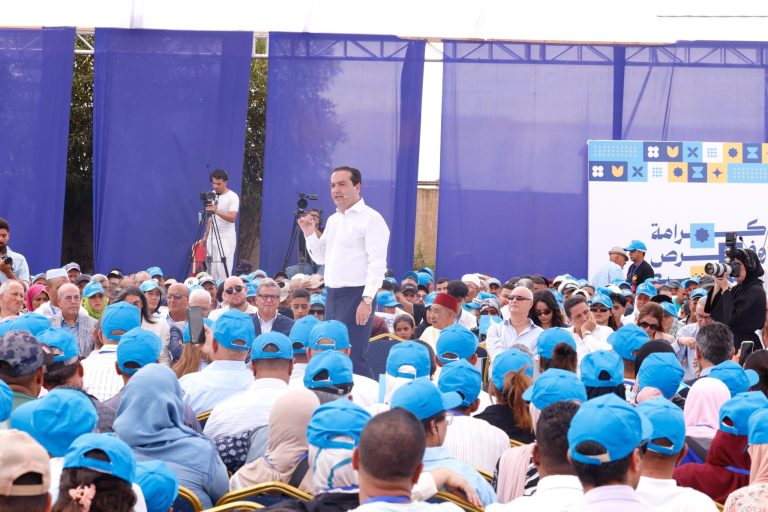
The monitoring team followed the election campaign, which extended from September 10 to 22, and noted the dominance of rhetorical gatherings over campaign activities in the region, with the presence of women and youth, compared to limited participation from persons with disabilities.
The report monitored the extensive use of AI-generated content in the digital campaign, whether through the official pages of candidates, their supporters, or their political parties, as well as some websites. This included re-sharing old video clips with the intention of influencing voters.
It also pointed to the circulation of audio files discussing vote buying or proxy voting. The report cautioned that some of these files are old and some are recent, and that the field monitoring mission does not undertake auditing campaign financial accounts, as this falls under the purview of the relevant regulatory bodies.
According to the report, competitors respected the election silence period in the streets and on billboards. However, some electronic pages and messaging applications, including WhatsApp, continued to disseminate propaganda and counter-propaganda.
Discrepancies in Access and Media Coverage
The monitoring team recorded the presence of polling stations that were inaccessible to persons with disabilities, especially when located on upper floors. They also observed cases where some voting booths were not suitable for this category of people or did not provide adequate privacy.
In terms of media, the report indicated that regional audiovisual media outlets, according to the team's observations, did not provide space to broadcast programs in Hassaniya and Amazigh on the regional Laayoune television and the Amazigh channel.
Election Day: High Turnout and Field Observations
The report described election day as generally calm, noting the timely opening of polling stations and the smooth conduct of the process in the stations covered by observers.
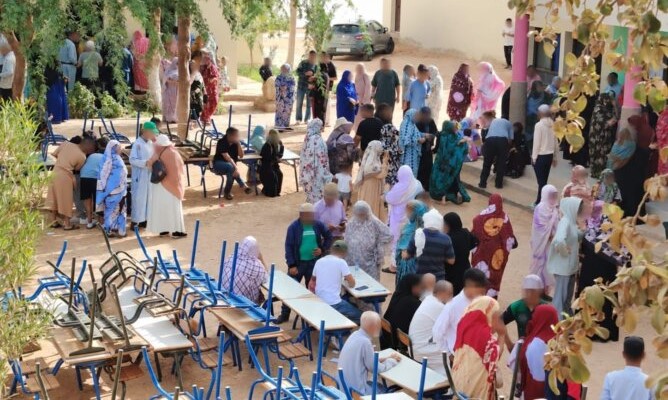
In contrast, the team recorded chaos in several polling centers due to high turnout, especially during the morning hours and before the closing of the polls. There was a variation in turnout between rural and urban areas, with weaker turnout in rural communities and more intense turnout in Laayoune and El Marsa.
The report also noted the presence of incompletely covered voting booths in some stations, leaving the possibility of photographing the ballot paper, as well as cases where the heads of some polling stations did not verify the identity of veiled women before they voted.
The team also observed cases where representatives of some parties were allowed to bring phones into polling stations, despite voters being prohibited from doing so. They also noted that some polling station members were unaware of their legally defined roles and responsibilities.
Among the most prominent observations in the report was the sighting of individuals near some polling stations handing out money to voters, an incident the team stated requires scrutiny by the competent regulatory and judicial authorities.
It also referred to the circulation of an audio recording discussing proxy voting, linking it to individuals wearing gray hats. However, the report emphasized that this information was not directly verified by the team in the field and therefore remained within the realm of circulating data until the competent authorities make a decision.
Conversely, the report noted a remarkable neutrality from authority officials tasked with guiding voters, especially the elderly and those without registration notices.
Results: Istiqlal Secures Three Seats in Both Constituencies
According to the final results presented in the report, the turnout in the Laayoune local constituency was 80.36 percent, with 120,217 out of 149,605 registered voters casting their ballots, and the number of valid votes cast was 106,313.
The Istiqlal party received 51,815 votes, or 48.74 percent, and won one seat. The Progress and Socialism party received 19,526 votes, or 18.37 percent, and the Authenticity and Modernity party received 19,102 votes, or 17.97 percent. Each of these parties won one seat.
In the Laayoune-Sakia El Hamra regional constituency, the turnout was 77.60 percent, with 167,838 voters casting their ballots out of 216,288 registered, and the number of valid votes cast was 146,955.
The five seats were distributed as follows: the Istiqlal party secured two seats, the Socialist Union of Popular Forces secured one seat, the Progress and Socialism party secured one seat, and the Authenticity and Modernity party secured one seat.
The report indicates that the turnout in the Laayoune-Sakia El Hamra regional constituency was 77.60 percent, compared to 38.02 percent nationally. It considered this to be the highest turnout recorded in the region compared to previous legislative elections, where turnout was 57.21 percent in the Laayoune electoral constituency in 2016 and 66.94 percent in the Laayoune-Sakia El Hamra region in 2021.
Preliminary Report Awaiting Final Report
The two entities that prepared the report confirmed that the current document is preliminary, and that the monitoring and observation mission covered various stages of the electoral process. Field data was subjected to four stages of review, including data completeness, context review, classification, and editorial review.
The report was drafted in Laayoune on September 24, 2026, and was signed by the president of the Center for Strategic Thinking and Defense of Democracy, Moulay Boubaker Hamdani, and the president of the Moroccan Organization for Human Rights, Nawfal Al Baamri.