HIBAPRESS – Economic Section
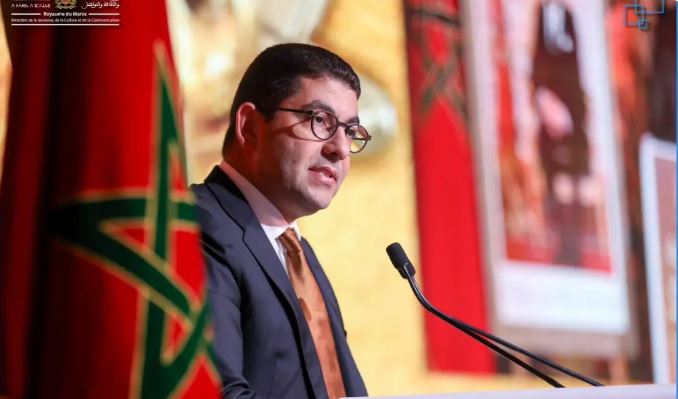
Tariq El Senhaji, Chairman of the Moroccan Capital Market Authority (AMMC), summarized the authority's current challenge as moving from a phase of market building and development to a phase of expanding its use and achieving greater proximity with the business fabric, especially small and medium-sized enterprises, and meeting the economy's financing needs.
El Senhaji, speaking during a meeting organized by the AMMC in partnership with the General Confederation of Moroccan Enterprises on financing SMEs, began his speech by recalling the directives of His Majesty King Mohammed VI in his Throne Speech on July 29th, in which he emphasized the importance that domestic financing must play in mobilizing the unprecedented financial resources required by Morocco's economic and social transformation, through "achieving a qualitative leap in expanding access to financing, both banking and non-banking, directed towards SMEs, innovation, manufacturing, and exports."
In his speech, His Majesty the King called for the financial sector to "open broader and more innovative horizons; ensuring the optimal mobilization of national savings, particularly institutional savings, and stimulating financial markets to accelerate the development dynamics of a rising Morocco."
El Senhaji stated, "This is precisely where the true value of the capital market lies, with the diverse solutions it offers, its adaptability, and the significant and mobilizable financial resources it makes available to keep pace with the various aspirations of the real economy."
El Senhaji added that Morocco possesses strong fundamentals in this area.
Regarding savings, El Senhaji indicated that household financial assets will reach MAD 1200 billion by the end of 2025, and the volume of assets transferred to insurance companies and pension schemes will exceed MAD 600 billion.
As an indicator of growing interest and engagement in the capital market, the Chairman of the Capital Market Authority pointed to the tripling of financial accounts since 2020, exceeding 430,000 accounts in the first quarter of 2026.
He said, "Our collective responsibility today is to better mobilize these savings by aligning long-term financial resources with the long-term needs of the economy, building broader bridges with household savings, and expanding meeting channels between investors and businesses."
El Senhaji explained that this transformation is also reflected in the development of the various segments of the capital market, both in terms of volume and capacity to respond to various financing needs. By the end of 2025, the private debt market exceeded MAD 308 billion, while the net assets of collective investment schemes in transferable securities reached MAD 785 billion at the end of 2025, before rising to MAD 827 billion at the end of May 2026. The net assets of real estate collective investment schemes were approximately MAD 134 billion, and the capitalization of the Casablanca Stock Exchange exceeded MAD 1,000 billion, confirming its role in the sustainable mobilization of capital and supporting the growth of companies.
He also pointed to the expansion of capital financing operations, in addition to the practical activation of crowdfunding with the recent licensing of the first such operation by the AMMC.
El Senhaji clarified that the growth and diversity of various financial products and their interconnectedness and operation as integrated links are strong indicators of the depth of the Moroccan capital market.
He stressed that the current challenge lies in expanding the use of these products, emphasizing that the Moroccan Capital Market Authority is determined to fulfill its full responsibility in this new phase.
Tariq El Senhaji added, "Our strategic plan 2024-2028 embodies these ambitions by striving to build an efficient and innovative financial market, serving the development of savings and the financing of the economy. We continue to implement this plan based on three priorities: improving savings mobilization, expanding financing solutions, and facilitating access to the market. This means continuing to develop private debt instruments and debt funds, deepening securitization and crowdfunding mechanisms, expanding the range of investment products, and most importantly, enhancing support for businesses."
El Senhaji called on capital market professionals to increase their proximity by going to meet businesses, better understand their trajectories, and contribute to preparing them for access to the financial market and improving their capacity to raise financing.
He stressed that solutions must stem from actual financing needs and not just from available financing tools, and that responsibility is shared, as businesses, on their part, must make the necessary effort to qualify, especially in terms of governance requirements, transparency, and the quality of information necessary to gain investor confidence.
Regarding the role of the Moroccan Capital Market Authority in the context of market expansion, El Senhaji noted its particular importance, as it is the market's regulatory authority.
He indicated that the current phase requires facilitation and proportionality to ensure the access of a larger number of companies to the capital market, but without disrupting regulation.
He stressed that there will be no compromise regarding the quality of information, market integrity, and investor protection. He said, "These principles cannot be compromised or relaxed under the pretext of market development," but he clarified that "the rigor of the rules does not necessarily mean applying the same requirements, and to the same extent, to all cases," noting that the Moroccan Capital Market Authority continues to work with the sectoral ecosystem to identify what can be simplified, without compromising the integrity and quality of information, nor confidence in the market.
He added, "No stakeholder within the sectoral ecosystem can carry this endeavor alone," noting that each party has a part of the answer.