HIBAPRESS – Abdel Latif Baraka
The continuation of Abdel Latif Ouahbi at the head of the Ministry of Justice in the new government represents a real test for restoring trust with professional bodies and ending the dispute over the Bar Law.
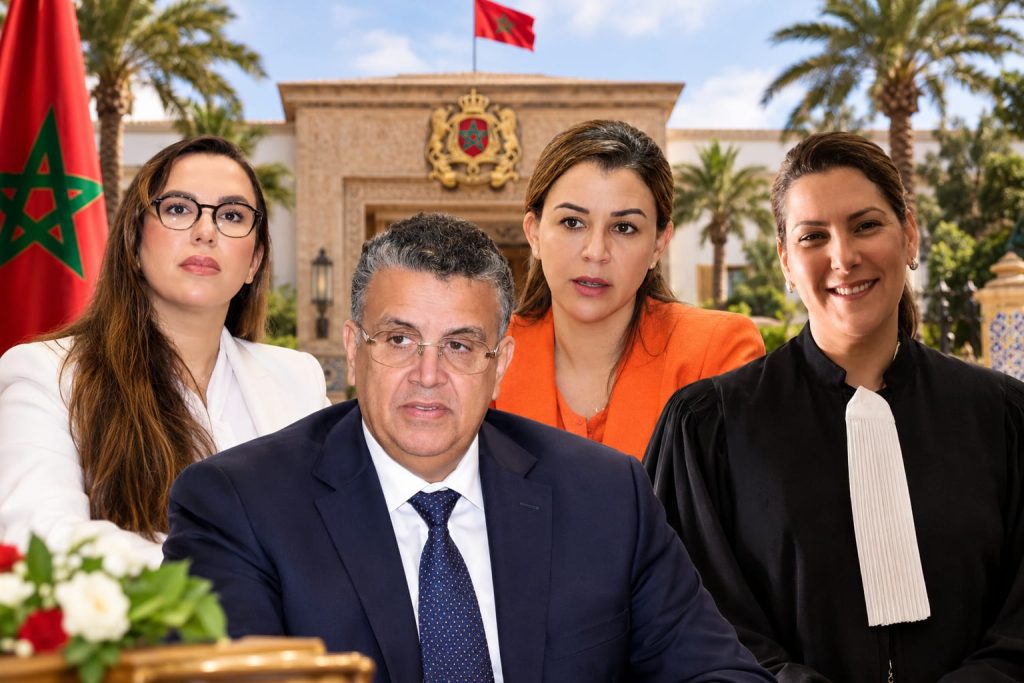
The formation of the new government, headed by Fatima Ezzahra Mansouri, raises questions about the future of the lawyers' crisis in Morocco, given the presence of four individuals belonging to the legal profession within the government team. These include the Prime Minister Fatima Ezzahra Mansouri, the Minister of Justice Abdel Latif Ouahbi, the Minister of Family, Social Development, and Equality, Nouzha Bouchareb, and the Minister Delegate for the Reform of Administration, Aisha Kilaa.
This composition is of particular importance, considering the ongoing dispute over the legislative reform governing the profession and the protests that accompanied it, affecting the relationship between the Ministry of Justice and the professional bodies.
Three of these individuals, Fatima Ezzahra Mansouri, Abdel Latif Ouahbi, and Nouzha Bouchareb, belong to the Authenticity and Modernity Party (PAM), while Aisha Kilaa belongs to the Socialist Union of Popular Forces Party (USFP). This data presents the government with an opportunity to open a discussion within its majority about the demands of lawyers, especially since the Prime Minister, the Minister of Justice, and the Minister of Family have accumulated professional experience in law, which should help in understanding the nature of the issues related to the independence of defense, the regulation of the profession, and the guarantees of its practice.
However, the presence of four lawyers in the government does not necessarily mean that their positions are identical on all demands of the professional bodies, nor does belonging to the profession alone guarantee a solution to the crisis. The issue is primarily linked to the extent of the government's readiness to transform this professional background into a political and institutional initiative that opens the door to negotiation and seeks a settlement of the provisions that have drawn the lawyers' objections, within a framework that balances the modernization of the legal system and the preservation of the profession's independence.
Fatima Ezzahra Mansouri stands at the heart of this equation, as she is the Prime Minister and a lawyer belonging to the party leading the majority. Her position allows her to oversee a dialogue that goes beyond the confines of the Ministry of Justice by bringing the concerned parties to the table and setting a clear timeline for addressing points of contention. Minister Nouzha Bouchareb and Minister Aisha Kilaa can also contribute, each from their position, to transferring the discussion within the government, which helps in narrowing the gap in viewpoints, without assuming that their professional background automatically means they adopt the stances of the professional bodies.
On the other hand, the continuation of Abdel Latif Ouahbi as Minister of Justice is one of the most prominent elements of this file, given that his name is associated with the process of preparing the draft law governing the legal profession and the dispute that accompanied it. His reappointment as minister means that the ministry will continue to work on the file under the leadership of the same minister, making the restoration of trust with lawyers a primary challenge for him. The minister's continuation may allow for the continuation of discussions based on past experience, but it also raises a question about the extent to which it is possible to overcome differences and open a new page based on dialogue and consensus.
The stakes are not limited to the relationship between the minister and lawyers, but extend to the rights of litigants and the continuity of the judicial service. After a period of protests and the suspension of strikes, the need arises to address the causes of the crisis rather than merely managing its repercussions. This can be achieved through serious dialogue between the Ministry of Justice and the Moroccan Bar Association, discussion of the contested provisions, and the utilization of Parliament's legislative role in crystallizing implementable solutions.