HIBAPRESS – Rabat
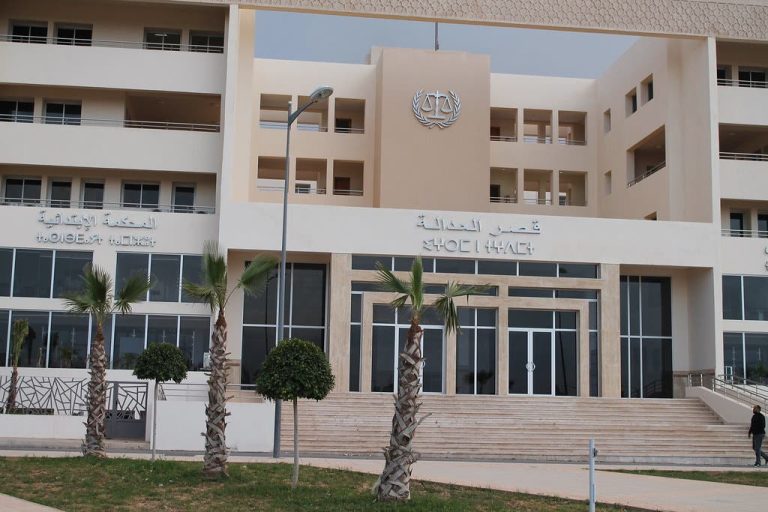
The Faculty of Arts and Humanities in Rabat is experiencing a successful academic year for the 2026-2027 season, which confirms the dynamism the institution has witnessed since Dr. Zakaria Boudhiim took over its deanship. This academic beacon is entering a new phase, seeking to renew its roles in training, research, and openness to the surrounding community.
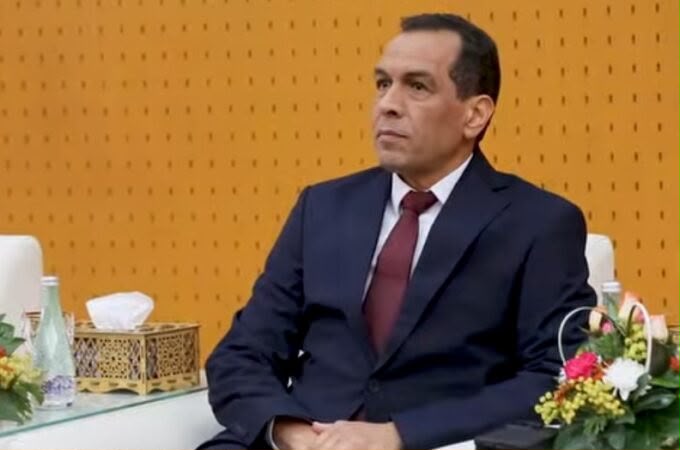
The Council of Government approved in November 2025 the appointment of Zakaria Boudhiim as Dean of the Faculty, before he was officially inaugurated on December 25, 2025, during a grand academic ceremony. He thus became the twelfth dean of the most prestigious modern university institution in post-independence Morocco. The Faculty was founded in 1957 and has seen prominent figures such as Charles-André Julien, Mohamed Aziz Lahbabi, Mohamed Qabbaj, and Said Ben Said Al-Alami serve as its deans.
Dean Boudhiim is a son of this Faculty, having obtained his license in History and Geography from it. He then joined the University of Bologna in Italy, where he earned his postgraduate degree and doctorate. He has accumulated significant administrative experience through his chairmanship of the Italian Studies Department, his membership in the Mohammed V University's council and its committees, and the teaching council, in addition to his involvement in university trade union work.
The Dean relies on a scientific project to develop the institution, spanning from 2025 to 2029. This project focuses on preserving the Faculty's core missions of rigorous training and serious scientific research, while establishing what is known as the "third mission of the modern university," which is the institution's engagement in the development of its territorial area through knowledge transfer and valorization of scientific research findings.
The current academic year has proceeded in an organized manner, reflected in the regular announcement of selection results for Master's and Doctoral programs, and the commencement of studies in several Master's tracks, including a Master's in Clinical Psychology and Psychopathology and a Master's in Teaching Arabic to Non-Native Speakers. This demonstrates the diversity of the Faculty's pedagogical offerings and its openness to the needs of society and the job market.
This academic year is accompanied by remarkable scientific dynamism. On October 14 and 15, 2026, the Faculty hosted a national symposium on "Literature, Linguistics, and Artificial Intelligence," organized by the Department of Arabic Language and Literature. It is also preparing to host an international symposium on the codicological study in the Arab world, from discovery and cataloging to digital services, on November 25 and 26, 2026.
Student life has not been absent from the dean's priorities. The Vice-Dean responsible for student affairs launched a support program that included communication meetings with students. Among the most prominent were the meeting "From the Classroom to Self-Creation: The Power of Student Activities" and the meeting "Moroccan Identity: From the Real to the Virtual Society," with the aim of placing the student at the heart of the university project.
Under Boudhiim's tenure, the Faculty has also regained its cultural and intellectual radiance. It hosted a tribute symposium for the poet Mohamed Bentalaha in the presence of the Minister of Youth, Culture, and Communication, and a symposium celebrating the late Abdelghani Abou Al-Azm in the presence of the Minister of Endowments and the President of Mohammed V University. This was in addition to meetings on Moroccan-Portuguese relations and issues concerning Moroccan territory, and others that recalled the legacy of the late historian Lotfi Bouchntouf. The Faculty also welcomed intellectual figures such as Abdellah Hammoudi.
Between a successful academic year, continuous scientific dynamism, and renewed cultural openness, the Faculty of Arts and Humanities in Rabat confirms that it is moving steadily towards regaining its leading position. This journey is led by a dean who knows the institution from the inside and holds a clear vision for a modern university engaged in the affairs of its society and nation.