Heba Press _ Fez office
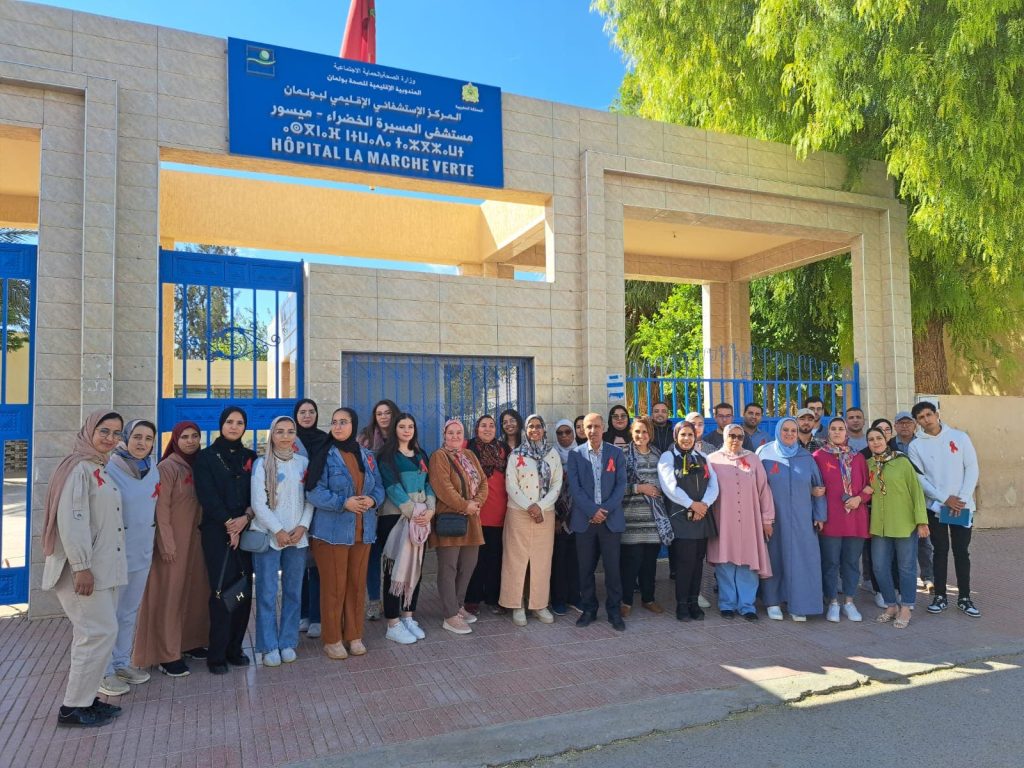
The meeting room and continuing education at the Green March Hospital in Mysore took place on October 17-18, 2024, as part of the integrated regional plan to combat AIDS and viral hepatitis 2024-2030 and conduct related activities in the regional plan. for the year 2024, in particular the component relating to the integrated detection of the human immunodeficiency virus and viral hepatitis C in the Fez-Meknes region, organized by the Regional Delegation of Health and Protection social welfare of the wilaya of Boulmane, with the support of the ministry. of Health and Social Protection, the Directorate of Disease Control and Epidemiology of the Ministry of Health and Social Protection, the United Nations Program to Fight AIDS and the International Fund for the Fight against AIDS Tuberculosis and malaria, and under the supervision of the Regional Directorate. of Health and Social Protection of the Fez-Meknes region, two regional training workshops for general practitioners, multi-specialty nurses, midwives and nurses specializing in community health in urban and rural areas, including the aim is to strengthen the skills of health sector agents in charge of the above programs, as well as strengthening integrated screening for HIV and hepatitis C in health centers and institutions in the Pullman region.
There is no doubt that these two workshops will help accelerate the achievement of the objectives of the integrated detection framework for human immunodeficiency and viral hepatitis C, and thus reduce new AIDS and viral hepatitis C infections. in the future. the Fez-Meknes region.
Participants in these two training courses covered several topics, including:
Presentation of the national strategy for detection and confirmation of cases of acquired immunodeficiency.
Presentation of important messages on the clinical status of monitoring and management of cases infected with acquired immunodeficiency disease and viral hepatitis C.
Rapid detection technology and package components for rapid detection of these two viruses
Strategy, confidentiality and the ethics of early detection
Share important ethical messages or technical advice before and after rapid testing
How to coordinate with reference centers
Identify key groups and enhance available opportunities for rapid detection in line with other relevant health programs.
Monitoring and evaluation
The work of the two aforementioned training sessions concluded with the development of results during which the participants expressed their satisfaction with the acquisition of new skills that would contribute to accelerating the pace of detection and achieving the desired objectives by eliminating new infections of acquired immunodeficiency diseases and viral hepatitis C by 2030 in the Boulemane region and in the Fez-Meknes region.