Heba Press
The teams of the parliamentary majority in the House of Representatives confirmed that the finance bill for the year 2025 is realistic, ambitious and credible, in light of the persistent external and internal challenges and the state of economic uncertainty and geopolitics.
The majority teams underlined in their interventions during a session held Friday by the Finance and Economic Development Committee, as part of the general discussion of the finance bill, that this project is part of the major orientations in which the Kingdom is committed as part of the visionary leadership of His Majesty King Mohammed VI, who must pursue the path of global development to achieve… economic and social progress.
In his intervention, the president of the National Rally of Independents, Mohamed Shouki, indicated that, taking into account the national, regional and international context and national priorities, “the finance bill is considered serious, ambitious and credible”, emphasizing that it “creates ways out of crises and reorganizes priorities in response to social demand. »
Shouki added that the draft finance law, in its context, assumptions, priorities and the main objectives it seeks to achieve, aims to strengthen the social foundations of the state, consolidate major structural reforms, improve the business climate and continue implementing strategic investments. projects in the areas of water, renewable energy, digitalization, green economy and food security, and the preparation of continental protests and internationalism that Morocco will adopt.
The team leader highlighted that the economic growth rate that the project seeks to achieve in 2025 (4.6 percent) is considered ambitious compared to the stable global rate of 3.2 percent, considering that the premise of economic growth on which the financing project is based The law is based “realistic and practical” on the basis of the achievements made, and in view of the diversification of the sources of the national economy and the strong global demand for Moroccan exports, and in light of the clear improvement in public finances. .
He expressed his team’s satisfaction with the government’s intention to reduce the budget deficit to 3.5 percent in 2025 and 3 percent in 2026, as it is “the golden rule that guarantees budgetary sovereignty and monetary immunity”, calling on the government to intensify its efforts. efforts, particularly in vital sectors that produce work opportunities.
For his part, the head of the Authenticity and Modernity team, Ahmed Al-Tawizi, stressed that the national economy, despite the constraints and complex circumstances at the international and national levels, demonstrated great firmness and achieved significant results in the field compared to the previous year. indicators of growth, inflation and debt recorded at the regional and international levels.
In this regard, Al-Tuwaizi stressed that global economic growth could not exceed 3.2 percent during the years 2024 and 2025, and in the euro zone 0.9 percent and 1.3 percent during the years 2024 and 2025, while the Kingdom’s growth reached during the same period. In 2023, the rate is 3.5 percent and it is expected to reach 3.3 percent in 2024.
He also indicated the reduction of the budget deficit from 7.1 percent of gross domestic product in 2020 to the 4 percent expected at the end of 2024 and 3.5 percent in 2025, as well as the reduction in the amount of debt from 72.2 percent. percent in 2020 to 69.5 percent. The year 2024, with an increase in exports from the automotive sectors, phosphate and its derivatives, and sales of cement, welcoming the efforts and achievements of the government, particularly on the social level, represented by the generalization of social protection, direct social support and salary increases.
In an intervention on behalf of the Independent Team for Unity and Equality, parliamentarian Khadija Al-Zoumi appreciated the priorities of the finance bill for the year 2025, which are to continue to strengthen the State social, to consolidate the dynamism of investment and to create employment opportunities. , by continuing to implement structural reforms and maintaining the viability of public finances.
In this context, Ms. Al-Zoumi called for continuing to consolidate the mechanisms associated with the State’s social workshops, in particular by promulgating the framework law relating to social protection, overcoming the difficulties and constraints associated with it, as demonstrated by practice, in particular the problems posed by the indexation system, and broadening of participation in pension systems and universalization of benefits Compensation for loss of employment and facilitation of access to housing assistance.
She also welcomed the Government’s pursuit of the completion of major structural reforms and the priorities required by the requirements of this stage, in accordance with the royal directives and the orientations of the government program, stressing the need to improve economic balance, social and financial, “without this it is to the detriment of businesses and citizens through tax pressure.
The parliamentarian appreciated the measure included in the finance bill aimed at increasing the share of local authorities in the value added tax from 30 to 32 percent, with the aim of improving the financial resources of these institutions elected to enable them to carry out the tasks assigned to them in the required manner.
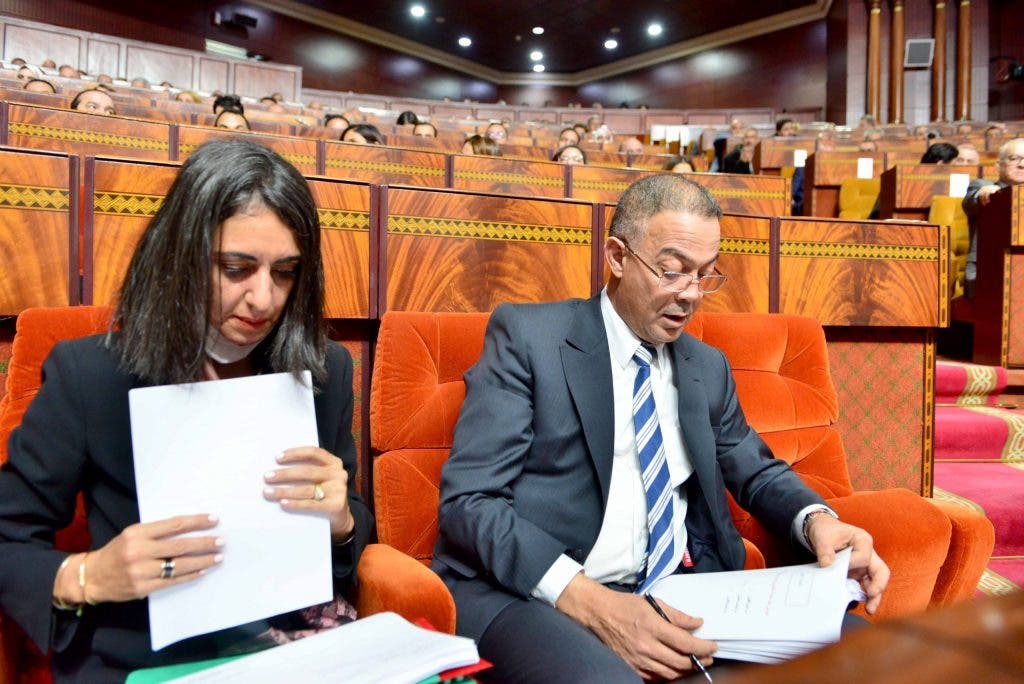
Note that the Minister of Economy and Finance, Nadia Fattah, confirmed, during her presentation of the main lines of the finance bill before the two houses of Parliament, that the project is based on realistic and integrated priorities aimed at to respond to various economic and social challenges, on the basis of the results and achievements obtained thanks to the bill of the first half of the government mandate, and according to orientations which ensure continuity in order to continue to strengthen the foundations of social and national States . economic and financial model.
The minister explained that the government is seeking, through the guidelines of the finance bill, to respond to four major and complementary challenges, which are “to continue to strengthen the social foundations of the State”, “to consolidate the dynamism investment and create employment opportunities. » and “continue the implementation of structural reforms”, in addition to “preserve the viability of public finances”.