This article was automatically translated from HIBAPRESS, the Arabic version:
HIBAPRESS-RABAT-AFD
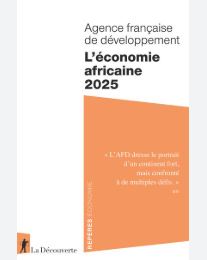
Fruit of collaboration work between AFD researchers and academics with specific expertise in African states, the African economy 2025 offers a reflection on the challenges of the African continent in the face of current climatic, geopolitical and technological challenges. Posted at La Découverte edition, Collection Repères, the African Economy highlights key themes for which promising sustainable development solutions are taking shape.
Among the flagship themes of 2025, the work addresses the question of artificial intelligence, some major challenges of which will be at the heart of the great summit for action on artificial intelligence in February. To transform the opportunities of AI into success, Africa will have to take up the challenge of personal data sovereignty and control the risk of job restructuring due to AI.
Since its origin, the work has endeavored to measure the importance of challenges and positive developments of the continent in an “all Africa” approach, to account for all African dynamics. This sixth edition draws up an inventory of the African continent through 6 chapters dedicated to the following themes:
Africa’s major macroeconomic trends : Despite structural challenges and successive shocks, African economies have shown resilience from the Pandemic of Covid-19. However, these crises have slowed down economic and social progress. Growth, although high, remains insufficient in the face of demography and has not allowed a notable structural transformation. The budgetary margins of African states remain low, despite a recovery of revenues, due to heavy charges related to debt. National resources are not enough to finance sustainable development, making support of the international financial system essential. Artificial intelligence and development: challenges and opportunities for Africa: Can artificial intelligence become an engine of development for Africa, or on the contrary, constitute an obstacle to its independence? The prospects are promising in fields such as health and education, but the continent must take up the challenge of using African languages in digital. Indeed, the effectiveness of the AI is based on data quality, and African languages are still too little present, for dominant AIs. The rebirth of research in Africa: from dependence on international integration. In Africa, research is underfunded, its production limited and turned towards development. Research work corresponds to a need for companies but it is an activity that remains marginalized, in particular basic research. International funding and partnerships structure this research as well as researchers’ careers, which for a large part depend on it. African democratic trajectories: tensions, resilience practices and new agenda. Analysis of the democratic trajectories of the great regions of the African continent shows that global democratic decline is far from fatality. The chapter details experienced citizen practices, but also democratic experiments with a more local territorial mesh, on contemporary challenges: access to public services, transparency, climate change, relationship to living, disinformation etc. What place for sub -Saharan Africa in the world? :: After the quasi-economic and geopolitical monopoly of the Western actors in the Cold War, the turning point of the century saw the emergence of new actors in the south of the Sahara, especially Asian, Middle East and Latin American, with China in mind, redefining economic and diplomatic dynamics. Since 2015, this diversification has been accompanied by economic, democratic and security crises, while global geopolitical rivalries, such as the return of Russia, accentuate the internal imbalances of the region. Armed conflicts in Africa and development, a state of reflections and issues. Is Africa the continent of conflicts? What assessment can we draw from the many and multifaceted operations that took place there? This chapter will answer these questions while questioning the link commonly accepted between development and security.
“When geopolitics and technology are invited to the table of macroeconomic analysis: it is the theme of this sixth edition which analyzes, each year, Africa in the rocking of the world. This edition aims to once again offer a decryption, often surprising and within everyone’s reach, of the great challenges of the continent, moving away from popular belief. “Indicates Rémy Rioux, Managing Director of the French Development Agency.
“Over the pages, the authors of this collective work help to bring out a new look at changes at work on the continent, as close as possible to the territories, projects and actors who carry them. While Africa demonstrates resilience to external shocks, investment needs remain considerable. This new edition reaffirms the importance of a structural transformation aligned with climatic and social objectives, carried by coalitions of actors determined to build a lasting future for the continent. Adds Sandra Kassab, Director of the Africa Department of the French Development Agency.