This article was automatically translated from HIBAPRESS, the Arabic version:
This article was automatically translated from Hibapress, the Arabic version:
Heba Press – Abdul Latif Baraka
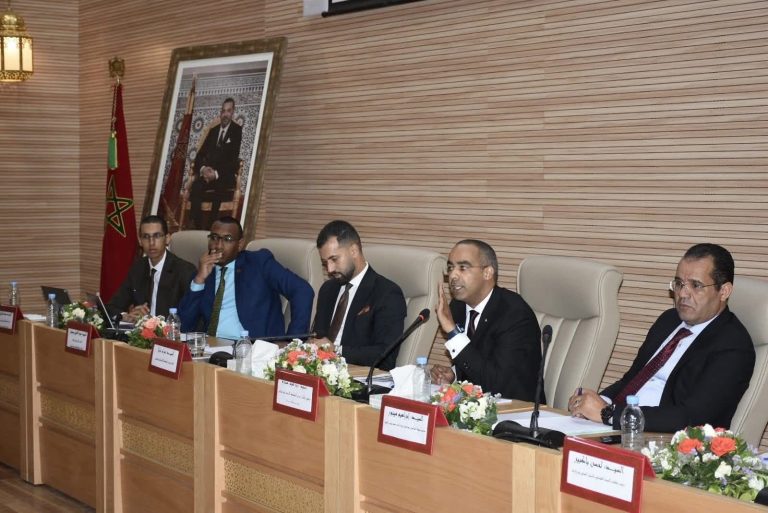
After months of tension and attraction, and an intense confrontation between the Minister of Justice Abdel -Latif Wehbe and the lawyers, his speech came to the opening of the 32nd National Congress of the Association of Lawyers in Morocco, in Tangier, to transform the page or try to do so, by a speech characterized by a reconciliation, apologists, and sometimes emotional. But is it enough that the language of the apology is to fill the trusted chasm that fell in love with the two parties? Is it possible to read this reconciliation as a political transformation in the minister’s approach, or is it a circumstantial maneuver imposed by professional and electoral accounts?
-Excuses… tactical decline or self-revision?
The explicit apologies that Wehbe presented to the lawyers: “If I make a mistake in your right one day, then I apologize. It was not only an emotional expression, but rather reflects a late awareness of the price of undertaken climbing which led to the tendency of the ministry with a fundamental element of the judicial system, the weeks of the strike led by the lawyers, to protest against the bill of the profession and the new taxes in the courses, produced a partial paralysis in the courts of judgment in the Ministry of Justice in the Ministry of Justice Its partners in the Ministry of the Ministry of Justice in justice in the front of its justice justice partners in the Ministry of Justice in the front of its Ministry of Justice in the Ministry of Justice embarrasses for the Ministry of Jusine Reform.
Excuses can therefore be understood as a tactical decline aimed at calming the internal front and restoring the communication channels, in particular in the light of the minister’s conscience that there is no reform of the possible justice without generalized lawyers, not only as professional actors, but partners in legislation and implementation.
Of the discourse of confrontation to the language of the “family”
Wehbe’s tone of skepticism about the intentions of lawyers to speak of the “family” and “professional affiliation” is not a linguistic detail, but rather an expression of a transformation in political discourse itself, as minister, who previously considered himself as a “failing lawyer” in a declaration which triggered a ridiculous and a resuscitation of his colleagues. scene. »»
Here, an attempt to reconstruct bridges with the professional body appeared, recalling common affiliation, as if Wehbe announces its dissolution of the political minister’s hat to carry the lawyer of the lawyer who includes the concerns and challenges of the profession.
Policy and the next step
It is not possible to read this change without referring to the broader political context, Fahbi, as a former secretary general of authenticity and the party of modernity and minister in a free government with its allies (pots and scales), is under double pressure, on the one hand the failures and challenges of the reform of justice, and on the other hand to the erosion of its balance within the professional and political street.
The Tangier conference was an opportunity to restore positioning, especially since the professional land testifies to an organizational movement and elections expected within organizations. Silent apologists and apologists can be understood in this context as an attempt to gain friendly conviviality again, after relations reached a critical point which almost ravaged any possible consensus.
-Has something really changed?
Despite the impact of the apology and the heat of the applause which included the intervention of the minister, real reconciliation already remains more than the saying. Drafting and report, not only notice and justification.
There is no doubt that Tangier’s speech has represented a turning point in Wehbe’s relationship with lawyers, but the success of reconciliation requires that words turn into real advisory paths, which lead to fair law, fair legislation and a participatory approach that respects the independence of the profession. The excuses, as honest, are not sufficient to restore a deep fracture made by unilateral decisions, and an authoritarian tendency to manage an institution with its history and its values.
.Hibawts {display: inine-flex; Align-Eeetems: Center; Justification-contained: Center; Background color: # 25D366; padding: .5rem 1.25rem; Police size: 1st; Link-Height: 1.5rem; Police-point: 500; -Tw-tox-opacity: 1; Transition time:. 7s; Transition timing funiating: Cubic-Bezier (. 4.0, 2.1); Width: 49%; } .HIBAWTS SPAN {Color: #FFFFFS; } Padding: 10px; Border-Radius: 10px; Color: #FFF; Police: Bold; Display: inheritance; Marge pot: 5px; } Padding: 10px; Border-Radius: 10px; Color: #FFF; Police: Bold; Display: inheritance; Marge pot: 5px; } Padding: 10px; Border-Radius: 10px; Color: #FFF; Police: Bold; Display: inheritance; } Width: 3rd; Height: 2m; ADIGNE VERTICAL: Middle; Display: online block; Marge: Var (-google -News-icon-Margin); } Url (“https://ar.hibapress.com/wp-constrent background-size: auto; background-size: 2m 2em;} url (” https://ar.hibapress.com/wp-content/themes/hibapress/hiba.svg?6.52#sshare- Telegramgramgramgramgramgramgramgramgramgramgrantargramess-size: Auto; last news from Heba Bress on x