HIBAPRESS
The Minister of Equipment and Water, Nizar Baraka, revealed that the current dam filling rate is 32 percent, compared to 40 percent last May.
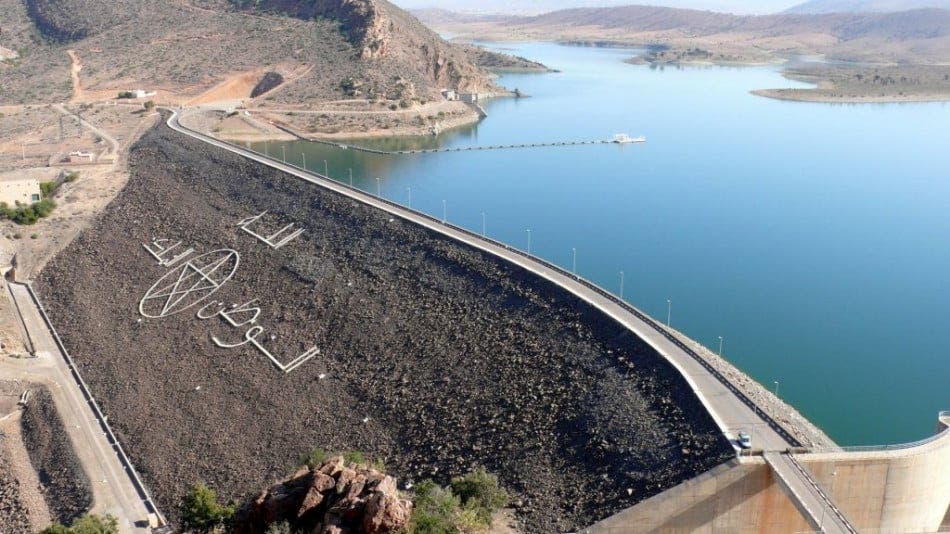
The Minister explained, in response to a question about "water policy directed towards rural areas," that the decrease in dam storage is mainly due to the amount of water supplies allocated for agriculture and drinking water, as well as the evaporation of a total of 650 million cubic meters of water due to extreme heat waves. He pointed out that the past agricultural season recorded a relative improvement compared to previous years, as the average rainfall at the national level reached 142 mm, and a total of 4.8 billion cubic meters of water resources were recorded, an increase of 50 percent compared to the previous season. However, the Minister added that this rate remains 22 percent below the normal national average, with a deficit estimated at 58 percent compared to the average water imports. Regarding managing the water deficit, Baraka explained that the government has accelerated the pace of implementing projects to enhance water resources, foremost of which is the construction of major dams. Since 2021, six new dams have been put into operation: Qadoussa in Rachidia, Tidas in Khouribga, Todgha in Tinghir, Akdz (Zagora), Fask (Guelmim), and Imdaz (Sefrou), in addition to starting to fill the two dams of Koudiat Born in Sidi Kacem and Ghiss in Al Hoceima. He also pointed out that 14 large dams are currently under construction, while 11 additional dams have been programmed between 2025 and 2027. In parallel, the construction of 4 medium-sized dams is underway, including the Tasa and Irkan dam in Al Haouz, Massalit in Tata, Ain Qasab in Benslimane, and Sidi Yacoub in Tiznit. In the same context, the Minister highlighted that 155 small tertiary dams were programmed between 2022 and 2027 within the framework of an agreement between the Ministries of Equipment and Water, Economy and Finance, Interior, Agriculture, and the National Office of Electricity and Drinking Water, noting that 50 of these dams are under construction. He continued that at the level of groundwater mobilization, 4221 exploratory wells were completed with a total depth of nearly 671 thousand meters and a flow rate of 8889 liters per second, noting that 5.8 million rural residents benefit from drinking water. Regarding water interconnection projects between basins, Baraka explained that the urgent phase of the project to transfer water from the Sebou basin to the Bouregreg basin enabled the transfer of 871 million cubic meters from October 2023 to this October, which ensured the supply of major cities with drinking water, in addition to benefiting 500 thousand people from the rural population from this water. The Minister also affirmed that desalination of seawater will enable more than 60 percent of citizens to be supplied with drinking water by 2030, noting that the number of mobile desalination plants has reached 110 plants, while 1200 tanker trucks and 10,000 tanks have been purchased to supply the villages with water, benefiting about 2.7 million people annually.