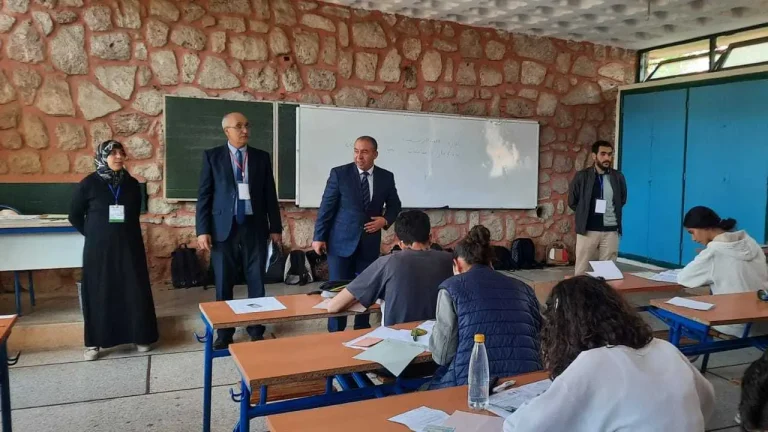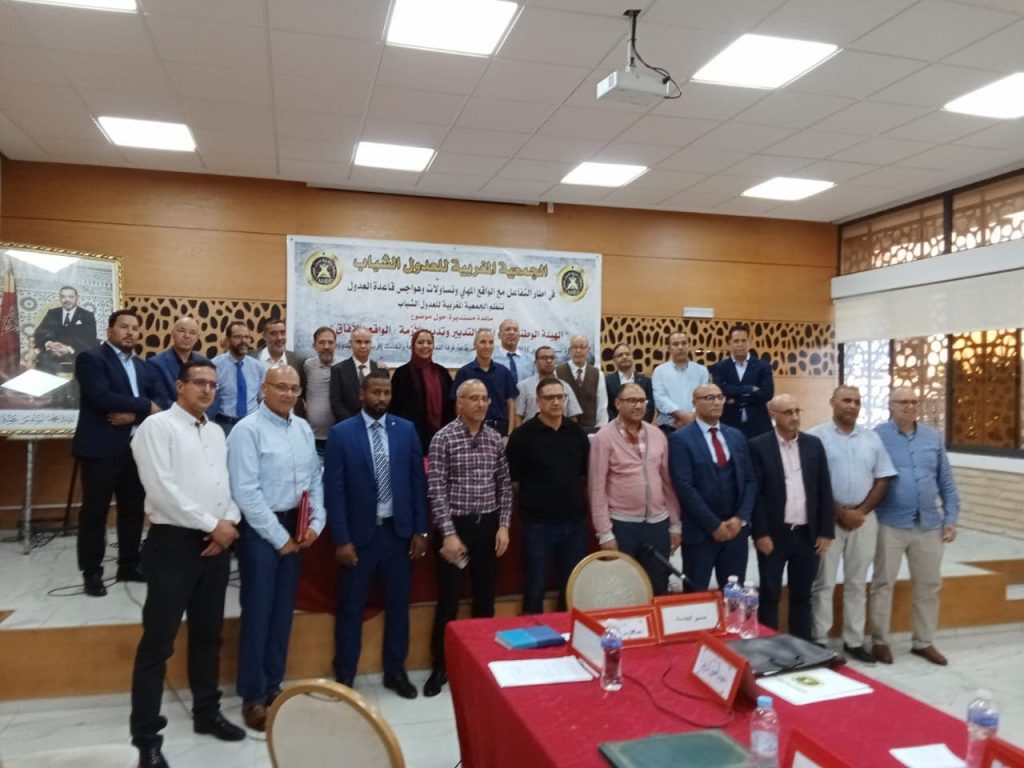
Young notaries in Morocco organized, on Saturday, October 18, 2025, in the city of Kenitra, a round table entitled: "The National Body of Notaries: The Crisis of Management and Managing the Crisis," at the invitation of the Moroccan Association of Young Notaries, with the aim of opening a frank and objective discussion about the reality of the national body and its reform mechanisms.
The initiative brought together a large number of notaries from various regions, in an atmosphere characterized by boldness and responsibility in presentation and a sincere desire for professional renewal. The participants confirmed that the current dynamism in the profession represents a historic opportunity to rebuild trust between the notaries and their national body, and to consolidate the values of governance, democracy, and accountability as the foundations for any modern and effective professional management. Professor Abdul Haq Al-Rifi, President of the Moroccan Association of Notaries, explained that the initiative comes as a continuation of the association's openness to all actors within the body, stressing that professional reform is only achieved through free and responsible dialogue. He added that the association is working to create interactive spaces for institutional discussion that bring together notaries in various positions to develop the profession and overcome current management problems, with a focus on transparency and accountability as essential pillars for any professional renaissance. For his part, Professor Abdul Latif Al-Habousi, a member of the Tangier Regional Council of Notaries, addressed the issue of the management crisis, warning of the impact of some ill-considered statements by officials of the body on the image of the profession and its credibility in the eyes of public opinion, and calling for the adoption of a balanced professional discourse that is in line with the institutional values of documentation work. Professor Said Al-Saroukh, head of the Foreign Relations and Communication Committee of the National Body and a founding member of the association, also affirmed that the round table constituted a qualitative shift in the professional discussion by transferring the dialogue from social media spaces to an organized institutional space, pointing out that the multiplicity of voices and the difference of experiences added depth and diversity to the discussion, and that the association believes that professional affairs are collective and do not tolerate isolation in decision-making. Professor Idris Al-Tarali, a founding member of the association, highlighted that the essence of professional reform lies in consolidating the principles of governance and linking responsibility with accountability, stressing the need for professional leadership to be a role model in discipline, clarity, and respect for institutions. Al-Tarali presented practical proposals to enhance reform, including modernizing management mechanisms, expanding the base of participation in decision-making, and adopting a culture of accountability and financial and administrative clarity. The interveners agreed that professional criticism is a tool for development, not hostility, and that opening the door to discussion and the multiplicity of viewpoints is evidence of institutional maturity and the health of the professional body, stressing that building a strong body requires consolidating a culture of responsible dialogue and constructive disagreement among notaries in various positions.