HIBAPRESS
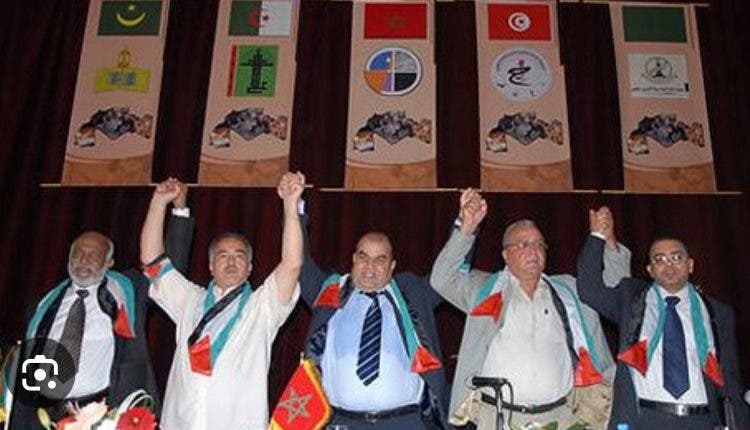
The Union of Higher Education Trade Unions in the Maghreb praised the UN Security Council resolution on the Moroccan Sahara, expressing hope for the start of negotiations to settle the artificial conflict within the framework of the autonomy proposal.
The Union said in a statement, a copy of which was received by "HIBAPRESS," that the Security Council resolution is considered a "major historical turning point for conducting real, constructive, and beneficial reconciliations for all the peoples of the five regions." The Union of Higher Education Trade Unions in the Maghreb added that it anticipates "the start of serious negotiations between the parties concerned with the conflict file, in order to put an end to a file that has lasted for fifty years and has had dire repercussions on the entire Maghreb region." The same Maghreb body affirmed that "the artificial conflicts between the Maghreb countries make their governments compete in the arms race, which deprives thousands of young people of job opportunities" and "a decent life for a group of its categories." The Union of Higher Education Trade Unions in the Maghreb addressed a call to "the sincere brothers of all political, trade union, associative, human rights, women's, educational, and economic components in the Maghreb countries to work on a sober and calm treatment of all their governments' differences." The trade union body called for "working to overcome the artificial crisis between Morocco and Algeria," calling for “the real and effective activation” of the Arab Maghreb Union at all levels." The same body demanded "the components of the Maghreb elites, including professors and researchers, to mobilize and harness everything that contributes to closing the pages of pain and disagreement and opening new pages that meet the requirements of the 21st century." The Union of Higher Education Trade Unions in the Maghreb expressed its commitment to "supporting all initiatives aimed at achieving the desired unity for the stability and progress of the region." The same body called for "unifying efforts between the five Maghreb countries in order to transform the Maghreb Union into a balanced economic force and a strong presence in international decisions, especially those related to the Mediterranean basin and the Sahel and Sahara region." The body condemned "all practices that contribute to the fragmentation and Balkanization of the region and obstruct good efforts to make it a regional power with its human, natural, economic, cognitive, cultural, political, and trade union resources." The Union of Higher Education Trade Unions in the Maghreb reiterated its emphasis on "the categorical rejection of the cases of fragmentation and dispersion that the Maghreb region is witnessing," noting that "the failure to activate the provisions of the Arab Maghreb Union deprives its peoples of 2.5% of the gross domestic product." In another context, the same Maghreb body recalled "its pride in the struggles of the peoples of the Maghreb region for freedom, independence, and the establishment of the foundations of national sovereignty for each country, and the joint struggles of the brotherly Algerian and Moroccan peoples." The same trade union addressed "greetings of appreciation and respect to the brotherly Algerian people on the occasion of their celebrations of the 71st anniversary (1954 – 2025) of the National Day of the Liberation Revolution, which began on the first of November 1954." The Union of Higher Education Trade Unions in the Maghreb also congratulated the Moroccan people "on the occasion of the 50th anniversary of the Green March (1975 – 2025) to restore the southern provinces of the Kingdom."