HIBAPRESS – Abdellatif Baraka
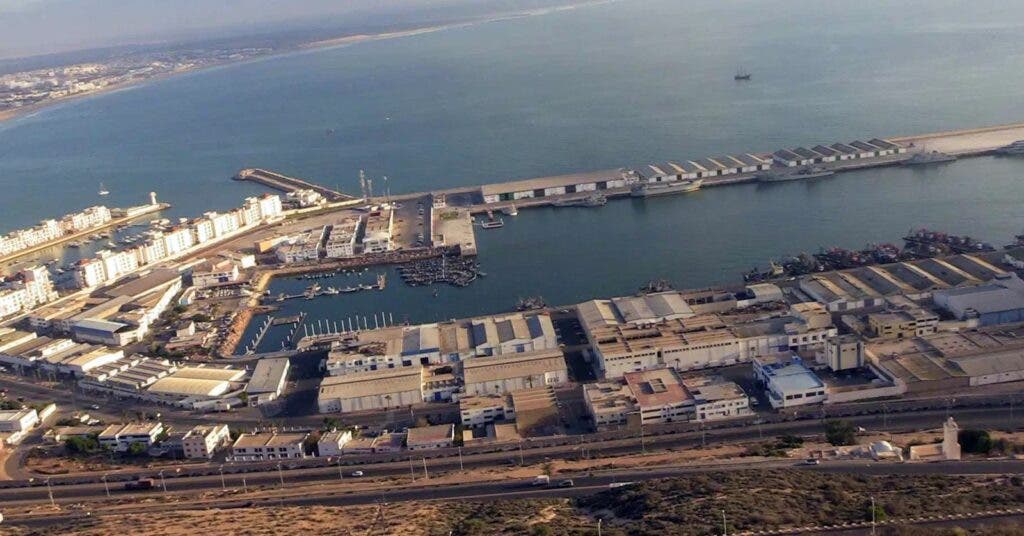
On the quays of the port of Agadir, the sounds of engineering machinery rise amidst the tireless movement of workers and engineers, in a scene that summarizes the size of the transformation that Moroccan ports are witnessing in preparation for receiving hundreds of thousands of fans who will choose the sea as a way to reach the Kingdom during the 2030 World Cup finals.
Expansions and new equipment are being implemented at an accelerated pace within an integrated national vision to modernize the port infrastructure, where the National Ports Agency launched a series of major projects including the ports of Casablanca, Tangier City and Tangier Med, Nador Beni Ansar, Nador West Med, Saidia, and Agadir.
In a field tour of the port of Agadir, it is clear that the workshop is open on more than one front: expanding the quays, rehabilitating passenger reception halls, and creating new crossing areas to connect the port with various means of urban transport. One of the engineers supervising the project says that the goal is to "create a marine facility with international standards, capable of receiving huge ships and luxury yachts especially for the fans and VIP visitors."
The development is not limited to the structural aspect only, but also includes the modernization of logistical and digital systems, by adopting smart monitoring technologies and facilitating crossing and inspection operations, to ensure high fluidity in the movement of passengers, especially during peak periods that will accompany the World Cup and the African Cup of Nations matches.
This port momentum comes within the framework of Morocco's commitments as a country organizing the tri-nation World Cup alongside Spain and Portugal, which requires close coordination between the three ports to facilitate the movement of European and African fans through the short sea lines that connect the two sides of the Mediterranean.
In this context, a source from the maritime transport sector confirms that "Morocco seeks to make its ports a smart maritime front, combining the economic, tourism and sports dimensions, similar to what we witnessed in Qatar 2022, where huge ships were adopted as floating hotels for the fans."
On the other hand, the authorities are betting that these projects will bring about a qualitative shift in the image of the Moroccan sea, not only during the global tournament, but as a permanent legacy that enhances the Kingdom's position as a major hub for maritime tourism and trade in the region.
Between the noise of the workshops in Agadir and the silence of the marine depths that await the first tourist ships coming from Europe, a new reality is taking shape for the ports of Morocco, its title: Readiness and leadership towards the 2030 World Cup.