HIBAPRESS – Mohamed Boudhan
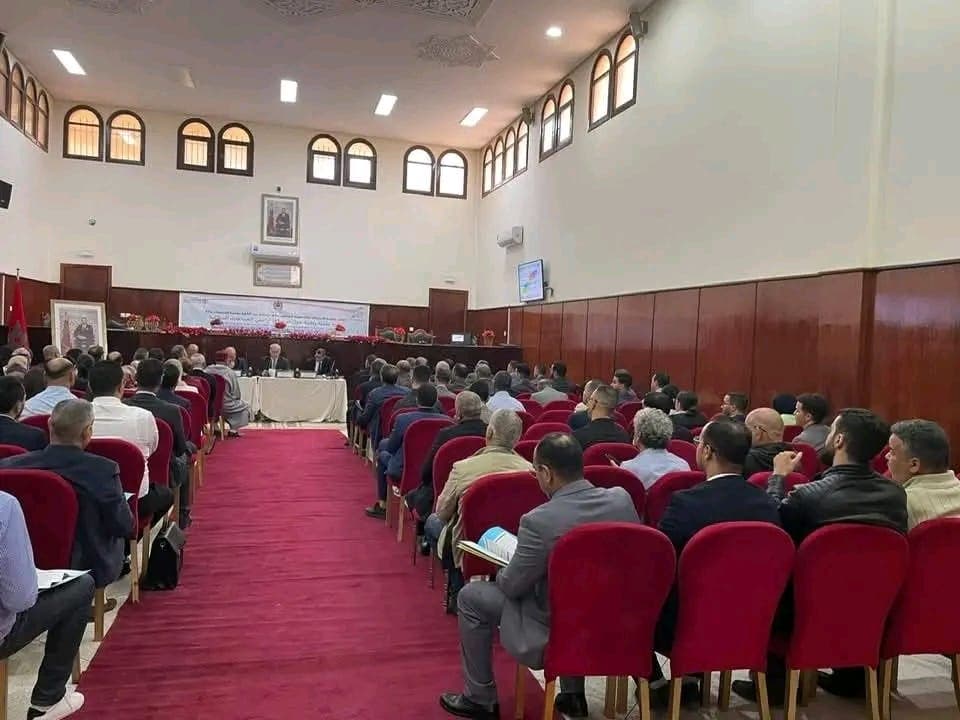
The courtroom of the Court of First Instance in Jerrada hosted, on Thursday afternoon, a national scientific conference dedicated to the topic of "Collective Lands: Legal Framework, Practical Problems, and Development Stakes".
The conference was organized on the initiative of the Court of Appeal in Taza and the Bar Association in Taza, in partnership with the Faculty of Multidisciplinary Studies in Taza, within the framework of strengthening institutional openness and consolidating scientific cooperation between the judicial system and the university. Participants in the opening session emphasized that the issue of collective property is of particular importance in light of the recent legislative changes, which came in line with the high royal directives calling for the mobilization of real estate assets as a basic lever for economic and social development. It was emphasized that the contents of the royal message addressed to the National Conference on the State's Real Estate Policy in 2015 constitute a clear reference in this national workshop, especially with regard to accelerating the settlement of the legal status of collective lands and integrating them into the development path. The interventions stopped at the legal developments brought by each of Law 62.17 related to administrative guardianship over collective groups, Law 63.17 related to administrative determination, Law 64.17 associated with lands located in irrigation circles, in addition to the implementing texts of 2020. The interveners highlighted that this legislative arsenal established a new phase based on modernizing management methods and guaranteeing the rights of those entitled, while opening the field for investment and public and private real estate partnerships. The conference proceedings were divided into two scientific sessions. The first session was devoted to legislative rooting and highlighting the problems associated with the actions taken on the collective property, where the challenges associated with implementing the legal texts on the ground were discussed, and the constraints faced by judges and lawyers in related files, especially with regard to conflicting claims, and the benefit, and disputes between the beneficiaries. The second scientific session revolved around the topic of judicial security and its impact on investment in collective property. The interventions focused on the importance of unifying judicial work to ensure legal stability, with analytical readings on disputes related to abandonment issues, judicial protection according to the Urban Planning Code, then the criminal protection of collective property, in addition to discussing the prospects of integrating young people into real estate investment projects within the framework of the Green Generation plan. The interveners agreed that strengthening governance in the management of collective lands represents one of the basic bets to achieve spatial justice and activate economic dynamism, stressing that the judiciary is a pivotal pillar in protecting rights and ensuring real estate security. At the end of the conference, the need to consolidate the results of this scientific meeting and develop coordination mechanisms between the various stakeholders was emphasized, in line with the royal directives aimed at valuing the national real estate assets and making them a support for development. The conference concluded with the presentation of the synthesis report of its work and the distribution of participation certificates to the attendees, followed by a tea party held in honor of the participants and guests.