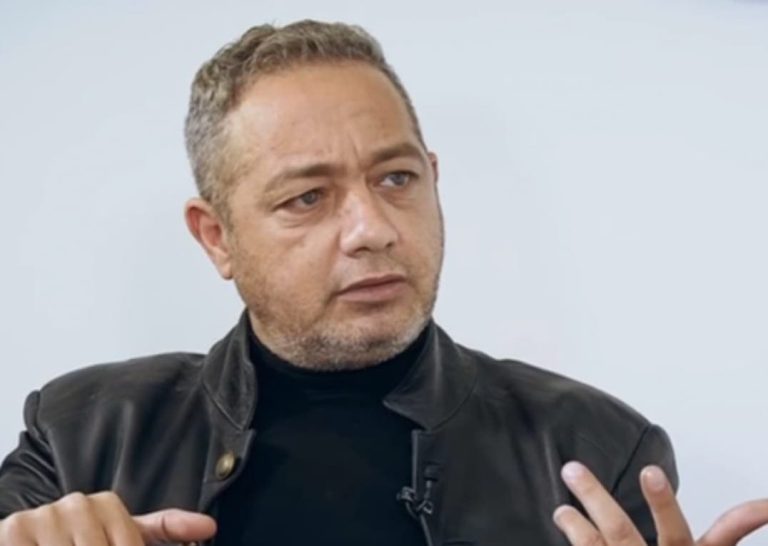
The High Commissioner for Planning, Chakib Benmoussa, called today in Rabat for a broad and comprehensive adoption of artificial intelligence to accelerate its spread in various sectors and to keep pace with the structural transformation of the Moroccan economy.
Benmoussa highlighted, in a speech during a panel discussion entitled "Sustainability, Talent, and Artificial Intelligence: The New Rules of the Economy" organized within the framework of the tenth conference of the Association of Certified Accountants, the importance of technology in various sectors and professional fields, emphasizing two main axes: basic training and continuous training. The High Commissioner pointed out that artificial intelligence represents an unprecedented technological revolution that will profoundly change the labor market and the nature of jobs themselves. He explained that the impact of artificial intelligence is translated into increased activity in some sectors, with the possibility of job losses in others, especially those related to administrative and technical expertise, indicating that international studies estimate that a quarter of professions may be exposed to automation. He said, "What is certain is that these jobs will change in nature, and the interaction between humans and machines will be very strong," noting that the importance of artificial intelligence lies in its ability to process vast amounts of data from various sources. Benmoussa stressed that professions will not necessarily be destroyed, and jobs will not disappear systematically, but they will witness a profound transformation with greater interaction between humans and machines compared to the past. Regarding basic training, Benmoussa emphasized the importance of integrating basic skills related to artificial intelligence into educational programs, with the aim of developing useful and rare skills to enable all citizens to adapt to this transformation. He continued by saying, "The educational system must be able to provide sufficient foundations for these skills," adding that the second level relates to continuous training, which enables professionals to adapt to the ongoing transformations. He also pointed to the ongoing work at the High Commission for Planning to analyze the impact of artificial intelligence on skills and professions, explaining that a database is being prepared that enables a more accurate future analysis of the risks and opportunities associated with this transformation. He warned of the specific risks of using this technology, while considering, at the same time, that artificial intelligence also constitutes a path carrying great opportunities that can be invested to create a positive transformation dynamic. He stressed that "artificial intelligence can be an opportunity for the country, as long as it is dealt with firmly and proactively," calling for making this technological revolution a driver for accelerating economic and social development. For his part, the Chairman of the Board of Directors of the Casablanca Stock Exchange, Brahim Benjelloun Touimi, highlighted the importance of financial, non-financial, and strategic transparency to enhance investor confidence and facilitate access to capital markets. He stressed that major transformations in the fields of energy, digitalization, and industry require large amounts of capital, making capital markets a basic complementary source of financing for the banking system. He pointed out the importance of employing hybrid talents capable of combining financial knowledge, cybersecurity, climate, and cross-cultural communication, calling for the establishment of a hub to connect Africa and the world. For his part, the Chairman of the Mutandis Group and Chairman of the Board of Directors of CFG Bank, Adil Douiri, highlighted the global professions for Morocco, an initiative that has contributed to creating hundreds of thousands of jobs and stabilizing the unemployment rate. Regarding artificial intelligence, Douiri considered it "the revolution of devices and semiconductors," calling for combining the traditional industrial model and enhancing artificial intelligence to train as many scientists and mathematicians as possible. He said, "Artificial intelligence will require a lot of engineers and mathematicians. We must train as many scientists as possible to achieve things that seemed impossible to us." This session, which comes within the framework of the tenth conference of the Association of Certified Accountants organized under the slogan "Artificial Intelligence, Sustainability, and Talent: The Winning Strategy," enabled highlighting the challenges and opportunities associated with the profound transformations that the national and global economy is witnessing.