HIBAPRESS – Khénifra
Yesterday, Thursday, the Taabeth village in Khénifra province witnessed the exit of dozens of women alongside men, youth, and children in a peaceful march towards the prefecture headquarters, expressing their anger at what they described as “years of exclusion” and the deprivation of their region from the elements of a decent life.
The participants chanted slogans demanding justice for their region and achieving spatial justice, highlighting that the absence of basic projects—foremost among them connecting the village to the liquid sanitation network—has become a burden that weighs on families and deepens the suffering of the population in terms of health and the environment. Slogans criticizing the slow implementation of development promises were raised, including: “Taabeth is marginalized.. No mosque, no wastewater,” reiterating the ongoing suffering for years.
One of the protesters clarified in a circulating video that the demand for sanitation has been present in every election season without seeing the light, saying: “Twenty years and we are waiting for wastewater.. We want nothing but the project to be done.”
Local sources indicated that previous promises made by regional officials and elected officials regarding the acceleration of the liquid sanitation project have not yet been translated into practical steps, which increases the state of discontent among the population.
For its part, the local authorities dealt with the march in a calm manner, as the public forces tried to stop its progress before the prefecture headquarters, before representatives of the authorities intervened to listen to the demands of the protesters and reassure them by opening channels of dialogue to find urgent solutions.
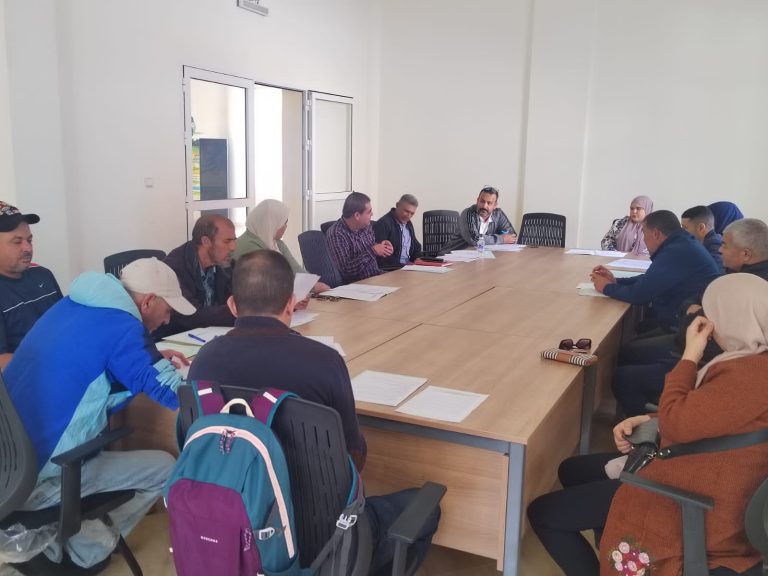
In the same context, the Secretary-General of the Khénifra prefecture held a meeting with representatives of the population, where he discussed the details of the file and the obstacles that delayed the implementation of the project, stressing the regional authorities' keenness to address the demands gradually and responsibly, while emphasizing the importance of continuous communication to find realistic and sustainable solutions.