HIBAPRESS – Mohammed Zariouh
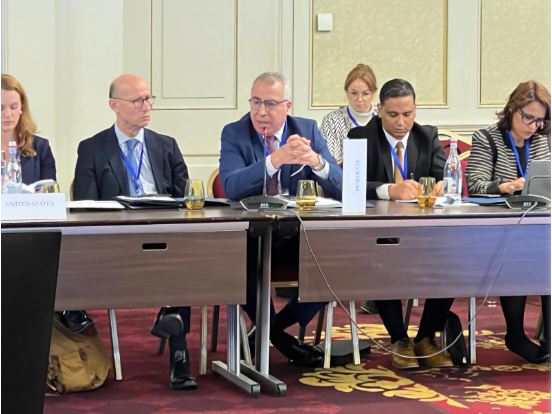
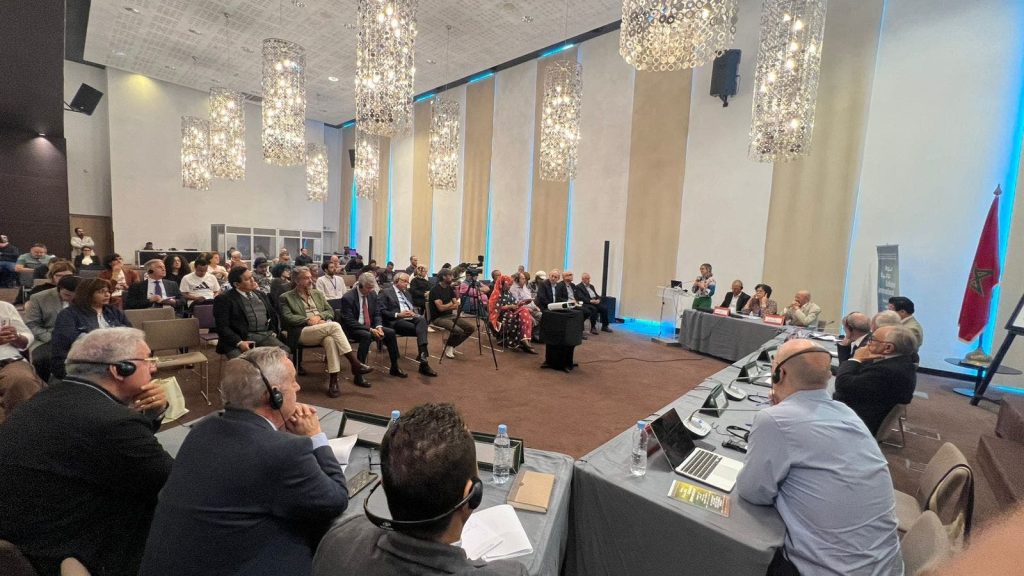
The city of Nador hosted, on the morning of Sunday, November 16th, a distinguished event within the activities of the fourteenth session of the International Film and Shared Memory Festival, where a high-level international symposium was held under the title "Peace Towards Global Transitional Justice." This symposium, organized by the Shared Memory Center for Democracy and Peace Foundation, brought together a select group of thinkers and human rights activists from within and outside Morocco to address one of the most influential issues at the international political and human rights levels.
The meeting was opened by Abdelslam Seddiki, former minister and honorary president of the festival, with a speech that served as a starting point for the in-depth discussions witnessed by the symposium. Seddiki called for the adoption of modern approaches in the field of transitional justice, stressing that this meeting represents an opportunity to research and discuss mechanisms for building sustainable peace through the promotion of justice and the protection of human rights in all parts of the world.
Among the most prominent interventions that enriched the symposium was the one presented by the advisor to His Majesty the King, Omar Azziman, who reviewed the pioneering Moroccan experience in transitional justice. In his intervention, Azziman described Morocco's experience as the first of its kind in the Arab and Islamic worlds, noting that the Kingdom of Morocco, through the transitional justice workshop, was able to open a new horizon in dealing with painful realities, redressing harm, and preserving national memory, similar to what several countries around the world have witnessed.
In the context of his discussion about the challenges that Morocco went through, Azziman pointed to the stage of consensual alternation, which formed a decisive turning point in the history of political rights in the Kingdom, stressing that the comprehensive reforms that took place under the wise leadership of His Majesty King Mohammed VI, such as the Family Code and judicial reforms, have proven very effective in promoting human rights and building trust between the citizen and the state.
Following the Moroccan presentation, a number of international specialists reviewed the experiences of their countries in the field of transitional justice, with a focus on Latin America and Eastern Europe. The experiences of Argentina, Colombia, Peru, and Guatemala, which went through bitter experiences of political unrest and bloody conflicts, were discussed, and how these experiences contributed to the development of various transitional justice mechanisms, including truth commissions and trials of those responsible for gross violations, in addition to collective redress programs.
The experiences of Eastern Europe were also highlighted, specifically Poland and Hungary, where these states adopted advanced models for national reconciliation after the collapse of totalitarian regimes. These discussions sparked recognition of the political and social specificities that differ from one country to another, which added a new dimension to the discussion about the impact of transitional justice in achieving reconciliation and rebuilding trust between peoples and states.
One of the decisive moments in the symposium was when the participants emphasized the praise for the Moroccan model in transitional justice and considered it a global reference to be emulated. The opinions agreed that Morocco was able, in the last two decades, to achieve a unique balance between revealing the truth, redressing harm, institutional reform, and sustainable development, which made it offer a vital lesson to the entire region.
In conclusion, the participants affirmed that this symposium is an important step towards deepening the global dialogue on transitional justice and opening new horizons for understanding the best ways to achieve sustainable peace. They clarified that the International Film and Shared Memory Festival in Nador has established its position as a global dialogue platform, enabling the exchange of experiences between different countries in the fields of peace, human rights, and the preservation of shared memory.