HIBAPRESS
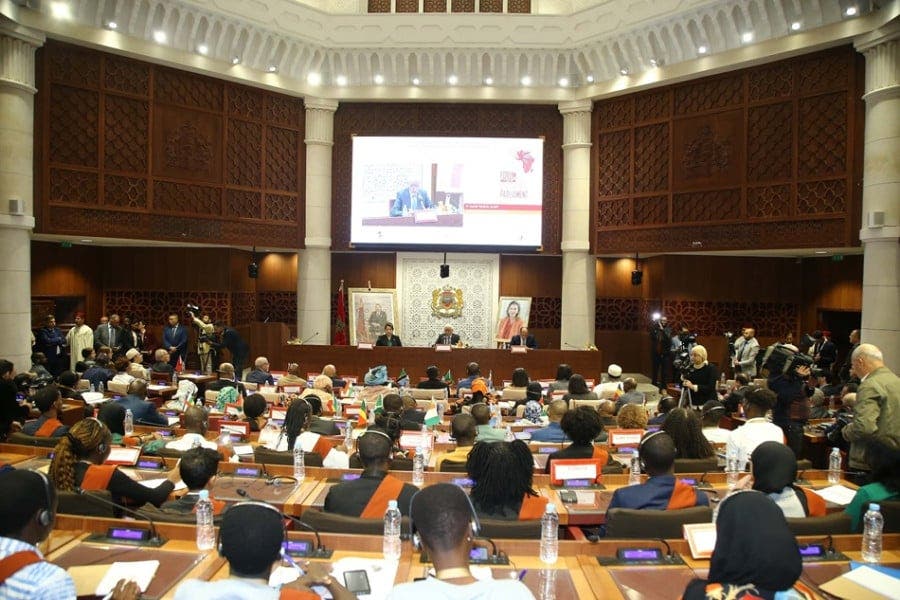
The work of the first African Forum for the Children's Parliament concluded on Saturday with the adoption of the "Rabat Declaration for the Participation of Children in the Development of Africa".
The participating child parliamentarians in this forum, held over two days, unanimously adopted this declaration, which welcomed the establishment of the "African Network for Children's Rights" as a continental platform for advocacy, dialogue, and the effective participation of children for their development and well-being. The declaration also welcomed the proposal of the National Observatory for Children's Rights in Morocco to host the headquarters of the African Network for Children's Rights and to bear its operating costs. The document affirmed the work to ensure that the African Network for Children's Rights is a non-governmental African cooperative entity, with legal status, working in coordination with partner African institutions, and in accordance with the principles of the International Convention on the Rights of the Child and relevant regional and international instruments. The declaration encouraged the establishment and development of children's parliaments in African countries and the involvement of children in monitoring public policies and regional and international commitments. The child parliamentarians also saluted the wise vision of King Mohammed VI, aimed at promoting an Africa characterized by peace, stability, and sustainable development, based on effective solidarity and South-South cooperation, which places youth at the heart of all development initiatives. They expressed their thanks to Princess Lalla Meryem for her commitment, as the President of the National Observatory for Children's Rights, to protect and promote the rights of the child through concrete, sustainable, and adaptive initiatives to contemporary challenges. The declaration encouraged the establishment and development of children's parliaments in African countries and the involvement of children in monitoring public policies and regional and international commitments. The document also requested the support of specialized United Nations development agencies accompanying the national efforts of African countries aimed at enhancing the role of children in development and establishing children's parliaments according to the specificities and contexts of each country. The child parliamentarians affirmed their determination to launch joint initiatives that enhance advocacy efforts at the international level, by participating in global events related to children's rights, and working to consolidate partnerships with various regional and international actors, in a way that serves the network and its members and supports their presence and influence. They praised the fraternal ties and relations of cooperation and solidarity existing between the Kingdom of Morocco and the brotherly African countries, reiterating through the declaration the common commitment to achieving the sustainable development goals, particularly those related to health, education, equal opportunities for children, and combating climate change. The child parliamentarians also affirmed their awareness of the need for concrete and coordinated continental African action to promote children's rights as recognized by the International Convention on the Rights of the Child and other international and regional instruments, especially their rights to participation, physical, psychological, and social well-being. Through this document, the child parliamentarians expressed their satisfaction with the success of the organization of the first session of the African Children's Parliament Forum, held under the high patronage of King Mohammed VI, may God protect him, and under the actual presidency of Princess Lalla Meryem, President of the National Observatory for Children's Rights, confirming their commitment to encouraging dialogue, exchanging experiences, and building a common African vision aimed at enhancing the participation of African children in development paths, in accordance with Article 12 of the United Nations Convention on the Rights of the Child.