HIBAPRESS – Ahmed Al-Musaed
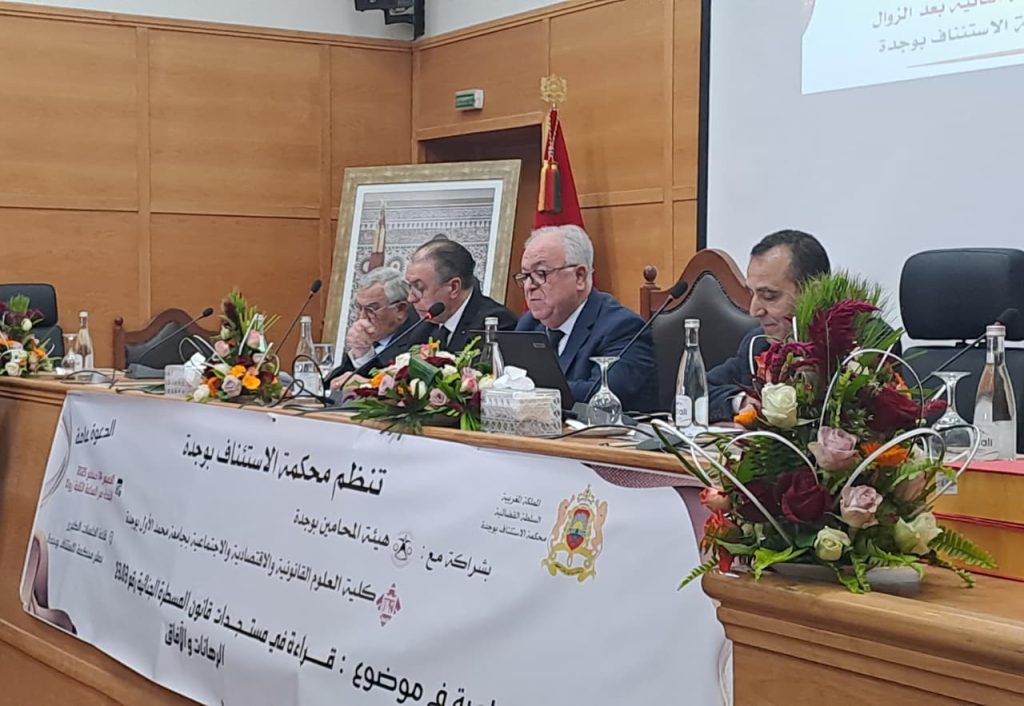
In a move reflecting the judiciary's commitment to openness and engagement with reform developments, the Palace of Justice in Oujda hosted an important scientific symposium today, Thursday, December 4th, organized by the Court of Appeal in partnership with the Bar Association and the Faculty of Law. The symposium was dedicated to an extensive reading of the new provisions in Criminal Procedure Law 03-23, while highlighting the deep trends that shape the features of penal policy in Morocco.
The meeting, which saw the presence of M'hamed El Atafawi, the Wali of the Oriental region, and a group of judges, lawyers, academics, and professionals, formed a qualitative platform for dialogue and exchange of experiences on the latest reforms. The discussion revolved around fundamental pillars related to guaranteeing fair trials by strengthening the constitutional and legal principles that ensure the course of justice with integrity and transparency, then rationalizing pre-trial detention and searching for effective alternatives and regulating the resort to this exceptional procedure, as well as enhancing the protection of victims by enacting new measures and procedures that guarantee the rights of those affected, and modernizing litigation procedures by exploiting modern techniques and alternative means in research and analysis to accelerate and improve judicial work, with judicial confirmations of the reform, which is considered a decisive stage that requires follow-up. The opening remarks affirmed the scientific value of this meeting in bridging the communication gaps between the various components of the legal scene, which serves to crystallize common visions for implementing the reform. In this context, Professor Khaled Benkirane, President of the Court of Appeal in Oujda, stressed that the new law constitutes "a turning point in the history of criminal justice in our country," stressing the need to take "all organizational measures to ensure its proper implementation." Benkirane called for striving to understand the legal texts "in text and spirit" to ensure the proper application of their provisions, considering that continuous training is an essential channel for providing judges with the necessary competencies to rule on various criminal files. For his part, Professor Mustafa Al-Yartawi, the Public Prosecutor at the Court of Appeal in Oujda, affirmed the Public Prosecution's determination to "prepare a program to accompany and ensure the optimal implementation of the new provisions." He highlighted that the success of the reform requires "understanding the spirit and philosophy of the legislator," stressing the importance of getting rid of conceptual and procedural problems that may hinder the practical implementation of modern criminal texts. The symposium concluded by emphasizing the importance of continuing to modernize the justice system, not only by improving litigation procedures and speeding up procedures, but also by strengthening human rights guarantees and developing institutional communication mechanisms. This scientific appointment reflects the judiciary's keenness to involve all actors in building a unified vision on the expected legal reforms, with the aim of enhancing transparency, efficiency, and the quality of justice, and establishing the city of Oujda as a permanent platform for enriching legal debate and exchanging experiences and best practices in the criminal field.