HIBAPRESS – Abdellatif Baraka
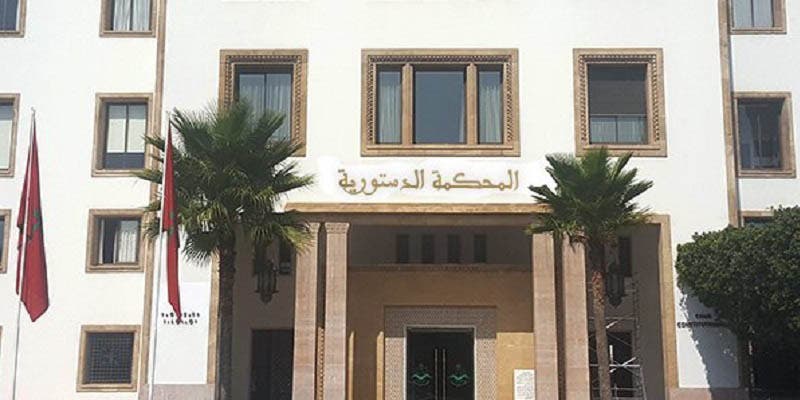
In a delicate legislative context experienced by Morocco, a high-level scientific conference was hosted by a research institution in the capital, Rabat, and was dedicated to examining the reality of constitutional justice and the mechanisms for challenging the constitutionality of laws. The meeting was an opportunity to re-raise deep questions about the extent to which current legislation respects the spirit of the constitution, and the limits of compatibility between texts and practice, especially in light of the renewed debate over the conditions of membership within the Constitutional Court and its mechanisms of action.
The issue of allowing the reappointment of some members of the Constitutional Court, on the grounds that the supplementary terms they served were less than three years, dominated the conference proceedings. This approach was considered by a number of speakers to be an unsound entry point that could open the door to exceeding the constitutional ceiling set at nine non-renewable years. It was emphasized that such an interpretation constitutes a departure from the spirit of the constitution, undermines the principle of rotation within the institution, and creates unjustified discrimination between members, as well as its potential impact on the independence of constitutional justice by creating unhealthy associations with the logic of remaining in office.
Participants also paused at the technical issues related to the publication of laws and their referral to the Constitutional Court, highlighting the lack of clarity in how to include the referral to constitutional interpretation within legislative texts or in their margins. A number of them pointed out that some decisions issued by the court itself raised wide discussions, whether those related to electoral appeals or to the management of the information system within the civil procedure, or the decisions related to the judicial organization, which presented a concept that experts considered "vague" and inconsistent with established constitutional practice.
The conference featured a number of academic and professional interventions that shed light on the practical challenges facing the mechanism of challenging unconstitutionality, whether before the ordinary judiciary or during the referral procedure to the Constitutional Court. Reference was made to the difficulties faced by litigants and lawyers as a result of the complexity of the procedures, and to the urgent need to reformulate some texts in a way that achieves harmony between law and the constitution. The speakers also called for going beyond a rigid literal interpretation towards a reading that evokes the rights dimension and the principle of proportionality, which constitutes the essence of the philosophy of constitutional review.
The discussion was not devoid of criticism of the way the draft law on challenging unconstitutionality was prepared, as it was considered "born on multiple dates", reflecting confusion in the stages of preparation and presentation, both in terms of form and content, which requires careful review to ensure the clarity, integrity, and suitability of the text for the roles of the Constitutional Court.
The participants agreed that reforming constitutional justice today is no longer a technical matter that concerns specialists alone, but has become a political and social necessity linked to the citizen's trust in institutions. Strengthening legal security, protecting rights and freedoms, and improving legislation are not circumstantial tasks, but a national path that everyone must engage in to ensure the building of strong institutions based on genuine independence, clear and consistent decisions.
Thus, the conference concluded that the discussion about constitutional justice in Morocco opens a wide door to reassessing the entire constitutional experience, and calls for a comprehensive reform approach that ensures respect for the spirit of the constitution and strengthens the democratic path, pending the results of the upcoming discussions within Parliament and various decision-making circles.