HIBAPRESS – Abdellatif Baraka
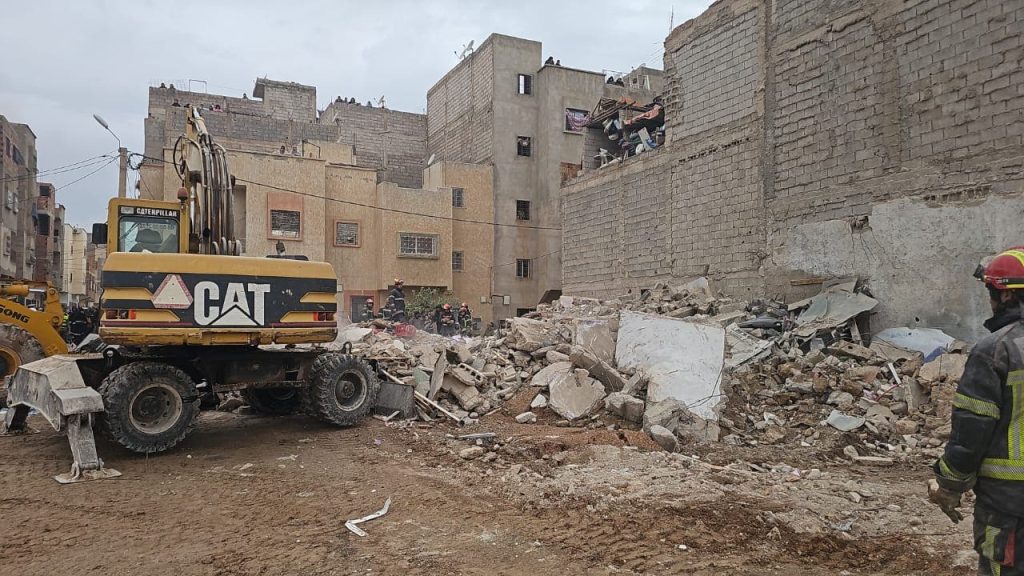
The city of Fes is experiencing a deep shock following the collapse of two adjacent buildings in the former Al-Azaiba neighborhood in the Zouagha-Bensouda district, on the night of Tuesday-Wednesday, in a tragedy that claimed the lives of 22 people and injured 16 others.
With the succession of initial data, strong suspicions emerged about the presence of two illegal added floors and structural modifications that do not respect the original designs, which brought back to the forefront an urgent question about the urban monitoring system and its robustness. In the midst of this heavy scene, the public raises a direct question: Will the Ministry of the Interior and its specialized committees move to open urban planning files deeply and uncover potential violations? The incident is no longer just an isolated collapse, but an indicator of a defect that may be deeper, whether at the level of granting housing permits, monitoring workshops, or respecting technical procedures through the digital platform "Permits". Popular expectations are directed towards an official move that includes auditing old urban planning records, investigating the conformity permits that were granted in the past years, and questioning local officials, engineers, and anyone who may have contributed, by decision or by ignoring, to the forfeiture of serious imbalances that allowed for the construction of buildings that do not meet the required standards. Law 66.12 and Decree 2.13.424 set a strict framework for building control, but the recent tragedy revealed that the actual application of these texts may not be with the required strictness. While the victims are mourned and the wounds are healed, the question remains strong: Will this collapse lead to real accountability and a rearrangement of the priorities of building control within the Fes-Meknes region, or will the tragedy remain another number in the record of collapses that are forgotten over the days?