HIBAPRESS – W.M.A.
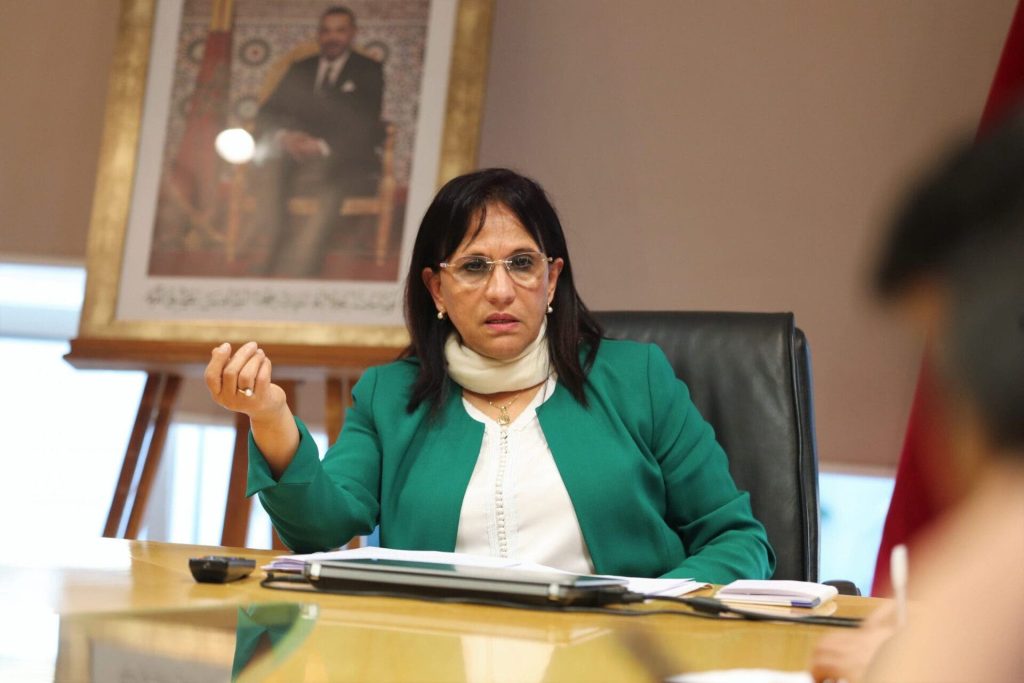
The President of the National Human Rights Council, Amina Bouayach, highlighted on Friday in Mexico City, Morocco's experience in the field of human rights, considering it the result of a deep and cumulative reform process, with legal, political, social and cultural dimensions, reflecting clear national choices that make human dignity the basis of collective action.
Bouayach emphasized, in a speech on the occasion of the presentation of a collective work on the subject of “Human Rights: Contemporary Challenges and Prospects in a Globalized World”, at the headquarters of the Supreme Court in Mexico, that the development of human rights in Morocco is closely linked to the process of consolidating democratic construction, which aspires to move human dignity from an abstract concept to a central reference that guides constitutional, legislative and institutional reforms, so that human rights become a regulatory framework for legislation and public policies.
In this regard, she reviewed the components of the concept of the state that protects or defends human rights, as embodied in the Moroccan experience, based on five basic pillars, which are respect for the rule of law and avoiding any violation by the state itself; and protecting rights through judicial and non-judicial mechanisms; and promoting human rights through public policies; and ensuring the effectiveness of rights; as well as establishing the principle of linking responsibility with accountability.
The Moroccan human rights official also mentioned that Morocco has witnessed, for more than two decades, a decisive turning point that has placed human rights at the heart of public debate, and has strengthened the involvement of citizens, and has resulted in the establishment of a national body for truth, equity and reconciliation to address past violations, whose recommendations formed the basis for major constitutional, legislative and institutional reforms.
On the occasion, Bouayach reiterated the three pillars on which the Moroccan approach to reform is based, which are seeking consensus instead of settlement, innovating solutions appropriate to the national context, and involving and widely participating of all actors within a participatory approach that includes all regions of the Kingdom.
She concluded that the Moroccan experience shows that building a state that protects or defends human rights is a gradual and participatory process, based on dialogue and adaptation to national specificities, while keeping in mind the universality of human rights with its three dimensions, namely prevention, protection and promotion.
Alongside Bouayach, a number of experts and specialists in law and human rights participated in the authorship of this collective work, which is available in the reference of the Supreme Court in Mexico and published with the support and cooperation of the Spanish University “King Juan Carlos” and the Electoral Court of the Judicial Authority of Mexico, in particular, most of whom are from Latin American countries, especially Mexico, Colombia, Brazil, Peru and Ecuador, in addition to experts from other countries, including Spain, Morocco and Georgia.