HIBAPRESS – Ahmed Al-Musaed
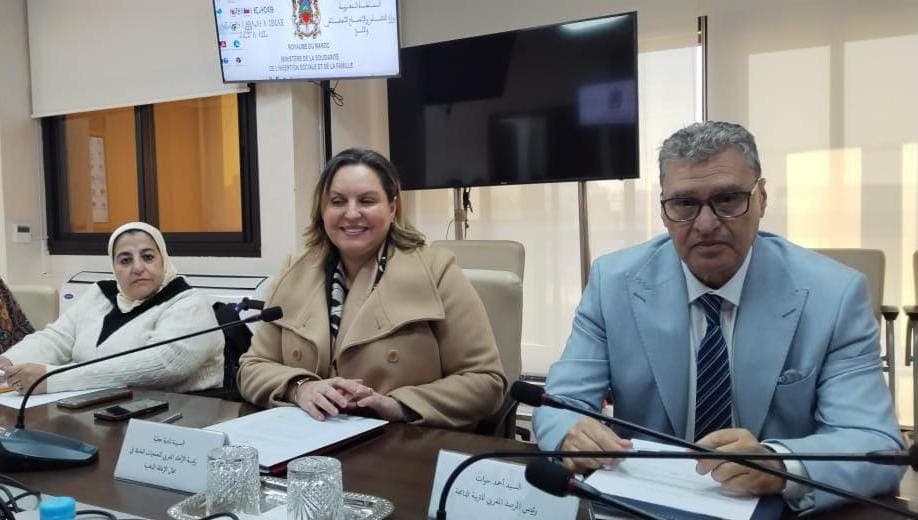
In following up on developments in social affairs in Morocco, the Moroccan Union of Associations Working in the Field of Intellectual Disability recorded sharp critical observations regarding the announcement by the Ministry of Solidarity, Social Inclusion and Family, and the State Secretariat in charge of Social Inclusion, on Wednesday, January 21st, about the signing of an agreement to launch the third national survey on disability.
In a statement that the "HIBAPRESS" website received a copy of, Nadia Atia, the union's president, considered that this announcement comes in a context that raises many questions about the methodology followed and the timeline, noting the following points:
1. "Structural" delay that disrupts plans, as Nadia Atia expressed her surprise at the noticeable delay in announcing the survey, pointing out that it was supposed to be completed and its results published in conjunction with the General Census of Population for the year 2024. This delay, according to the same speaker, has led to the loss of substantive opportunities to develop integrated sectoral and territorial plans and programs based on realistic and updated data.
2. The absence of "participatory democracy": The union criticized what it described as the "absence of a consultative approach" in the methodological and organizational preparation of the research, as it was sufficient to hold an informational meeting to announce the initiative without the actual participation of the associative movement representing people with disabilities, which empties the principle of participation of its content.
3. Questions about the feasibility of the action plan (2026-2028), as the statement raised a fundamental question about the feasibility of implementing the "action plan 2026-2028" which was announced by the ministry and the relevant sector in 2025, in light of the absence of updated statistical data. The union considered that building future strategies without an accurate database puts the effectiveness of these programs at stake.
4. Missing regional opportunities: The union pointed out that this delay prevented the investment of regional data in the preparation of integrated territorial programs, in line with the high royal directives that attach the utmost importance to spatial justice and the promotion of the rights of people with disabilities at the level of all regions of the Kingdom.
5. Demand for international and inclusive standards, Nadia Atia stressed the need to adhere to the global standard methodology: adopted in statistics and disability, which was successfully applied in the second national survey; expanding the scope of the research: to include all disabilities, especially intellectual developmental disorders, autism, learning disorders, and psychosocial disorders; targeting early childhood: by the necessity of including the age group under 6 years old in the research to ensure early and effective intervention.
The union concluded its statement by emphasizing that the promotion of the rights of people with disabilities requires a political will that is translated into accurate figures and public policies that are built in consultation with the field, away from delayed or unilateral solutions.