HIBAPRESS – W.A.M.
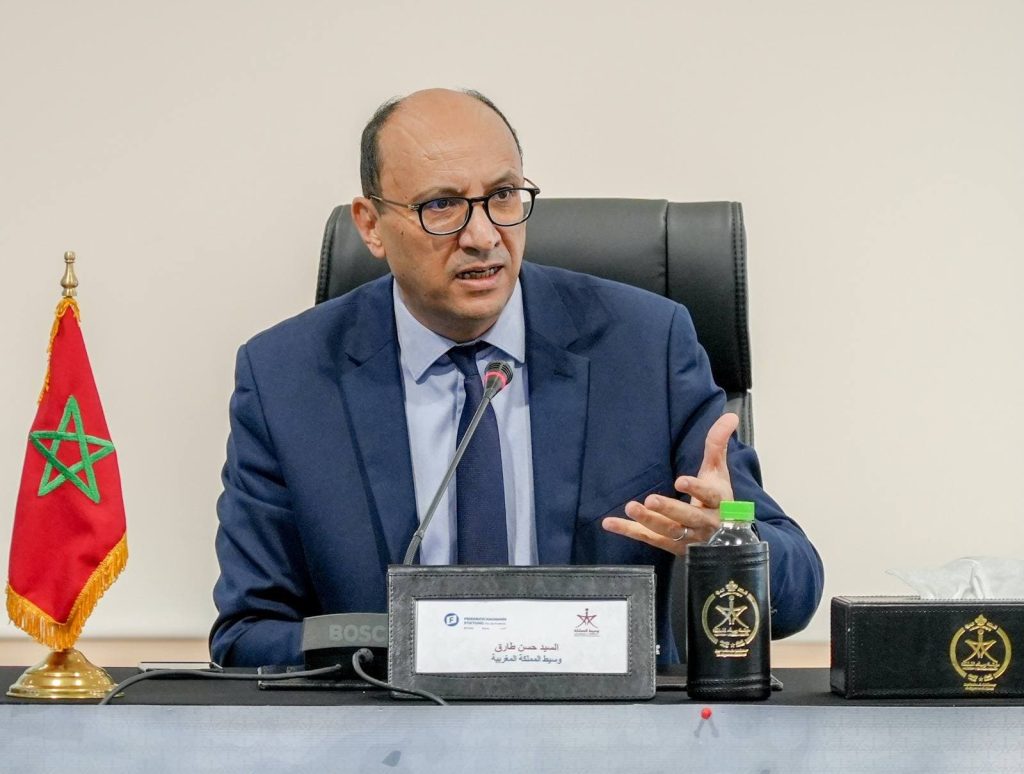
The Ombudsman of the Kingdom, Hassan Tariq, confirmed on Wednesday in the House of Representatives that the national institutional and political context is stimulating for administrative and institutional mediation, highlighting that the royal recognition of the National Day for Institutional Mediation, which coincides with December 9, represents a pivotal moment to consolidate the culture of mediation and appreciate its roles within the public administration.
Tariq explained, during a meeting dedicated to presenting explanations and clarifications regarding the annual report of the Ombudsman of the Kingdom for the year 2024, that among the features of this context is also the "new spirit" that governance bodies are experiencing, noting that, for the first time in the institution's history, the annual report was submitted within the legal deadline, which "confirms that the relationship between governance bodies and parliament, and between deliberative, proposing, and representative bodies, can be based on cooperation and integration". The Ombudsman of the Kingdom noted that the central conclusion of the report is that the Moroccan administration has become a point of intersection between social demand and public policies, highlighting that "the citizen has begun to view the administration as a bearer of public answers about his social situation, which makes this relationship, by its nature, a relationship governed by a kind of tension". In this context, he pointed out that the general statistical data for the mediation demand map for the year 2024 showed an increase in the number of files received by the institution, which totaled 7948 files, including 5755 complaints, representing 72.41 percent of the total files, which, according to him, reflects the continued rise in files of jurisdiction. From a thematic point of view, Mr. Tariq explained that the complaints map reflects the dominance of administrative files (2325 files), followed by financial files (1761 files), then real estate files (926 files), which are categories covering more than 87 percent of the total complaints, indicating the continuation of patterns of "tension" in the user's relationship with the administration, and what results from it of disputes of an administrative, financial, tax or real estate nature. He also highlighted that the handling of files received by the Ombudsman of the Kingdom, in its three-part composition of complaints, guidance and direction, and requests for amicable settlement, forms an essential part of the wager on institutional effectiveness and commitment to the constitutional function and the legal role of the institution. In this framework, he reported that the report recorded the handling of 5774 complaint files in 2024, compared to 5448 files in 2023, and the handling of 2182 guidance and direction files, compared to 1836 files in the previous year, in addition to handling ten requests for amicable settlement. The Ombudsman of the Kingdom concluded that the report sought to monitor the administration's level of response to the institution's interventions, through a network of indicators that included the implementation of recommendations, settlement decisions, the financial values of judgments, and amicable settlement, in addition to the time and response indicators. For their part, the parliamentarians confirmed that the annual report, including its precise data and objective analysis, confirms the pivotal role played by the Ombudsman of the Kingdom in consolidating the principles of good governance, linking responsibility with accountability, and protecting the rights of users, especially in light of the increasing social and economic constraints. The deputies praised in this context the efforts made by the Ombudsman institution in handling complaints and grievances, noting in return that "the continued rise in files related to the management of the administration or the pressure of procedures implicitly raises the question of the extent to which some public administrations are committed to implementing the institution's recommendations, which requires, when appropriate, strengthening the mechanisms of follow-up and penalty to ensure efficiency and convergence in institutional work". They noted the need to continue to strengthen the culture of mediation within the public administration, not "only as a mechanism to correct imbalances after they occur, but as a preventive approach based on listening, simplifying procedures, and respecting response deadlines, which limits the aggravation of administrative disputes and enhances confidence in the public facility". On the other hand, the deputies praised the integration of roles between the parliament and the Ombudsman of the Kingdom, especially with regard to investing the conclusions of the annual report in legislative and supervisory work, and translating it into concrete reforms that serve the citizen and strengthen confidence in the institutions.