HIBAPRESS
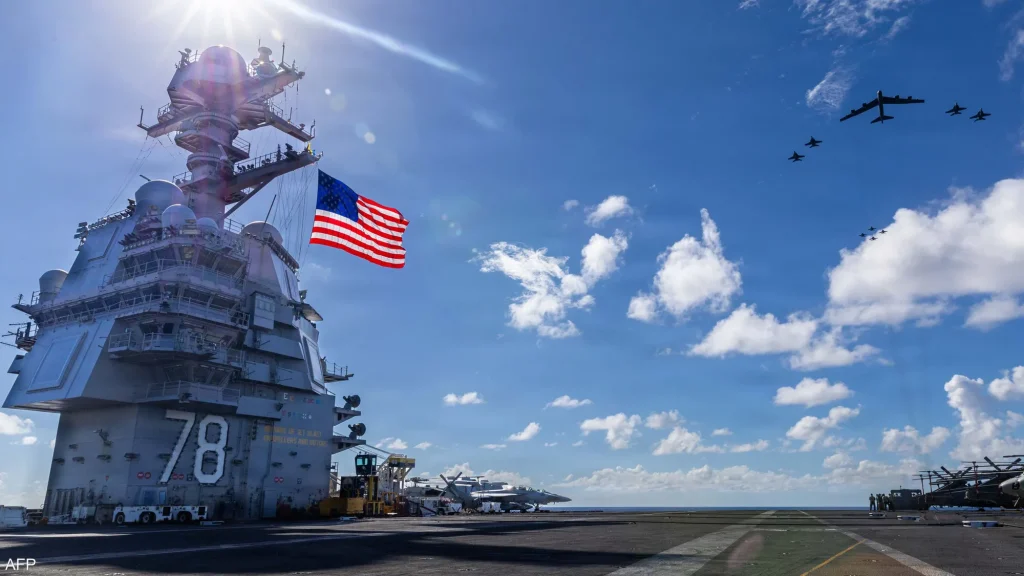
The United States has reinforced its military presence in the Middle East by sending the aircraft carrier USS Gerald Ford at the head of a strike group to join the aircraft carrier USS Abraham Lincoln.
This move comes amid questions about whether it aims to increase pressure on Iran in ongoing negotiations or pave the way for a potential military operation.
The Gerald Ford carrier had previously participated in a combat deployment in 2023 following the outbreak of the war between Hamas and Israel, where its deployment was extended and redirected to the eastern Mediterranean as a message of support and strategic deterrence.
Military analysts believe that the sending of the carrier carries operational implications that go beyond a mere show of force and may reflect a readiness for escalating options, including the possibility of launching a strike against Iran if political pressure does not yield results.
US officials stated that the carrier and its strike group will remain in the region until late April or early May to enhance the military deployment.
This comes in parallel with optimistic statements by Trump about the possibility of reaching a nuclear agreement within about a month, with a focus on the Iranian nuclear program, while the Pentagon is strengthening its naval and air presence with two aircraft carriers, destroyers, defensive missiles, and submarines capable of launching Tomahawk missiles.
Senior national security officials have advised arranging military capabilities first to ensure the protection of American interests.
Former Deputy Assistant Secretary of Defense Mike Mulroy confirmed that sending the second carrier indicates the United States' readiness for the possibility of imminent military strikes, while former Commander of Central Command Joseph Votel stressed the need for American defenses to be ready before any move.
Michael Hanna, the American program director at the International Crisis Group, pointed out that military preparations are also a pressure message to Iran within the framework of a policy of coercive diplomacy, stressing that the absence of an agreement increases the risks of a military confrontation in the region.