HIBAPRESS – Ahmed Al-Musaed
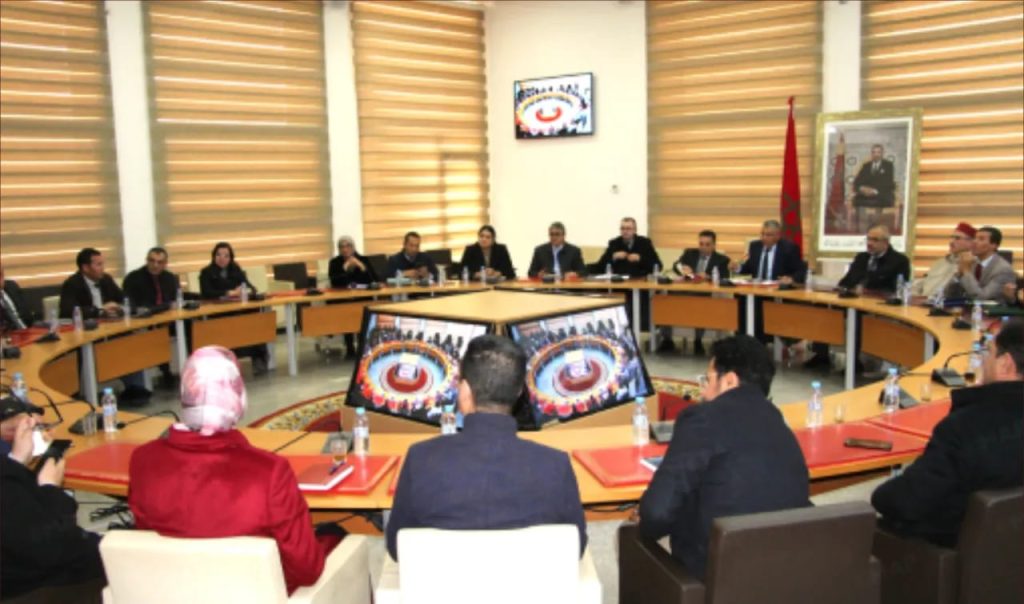
The Regional Human Development Committee of the prefecture of Oujda-Angad approved, during its first meeting held last Monday, March 30, for the year 2026, 135 development projects with a total financial cost estimated at 36 million dirhams.
These projects, which were selected based on a series of meetings and participatory diagnoses, and funded by the National Human Development Initiative up to 80 percent, are distributed across the four programs of the third phase of this major royal project. Thus, regarding the first program related to "Addressing deficiencies in infrastructure and basic services," five projects were approved with a total cost of 9.5 million dirhams, fully funded by the initiative. As for the second program, dedicated to "Supporting people in vulnerable situations," it includes 27 projects that will be implemented with financial support from the initiative, amounting to approximately 8 million dirhams. Regarding the third program, "Improving income and economic integration for youth," more than 83 projects were approved with a total investment of about 11.6 million dirhams. These projects aim to support entrepreneurship and the social and solidarity economy, contributing to job creation, strengthening the local economy, and achieving sustainable economic integration. As for the fourth program related to "Promoting human development for the rising generations," it received 20 projects funded by the National Human Development Initiative amounting to 6.9 million dirhams. In a speech on the occasion, the Secretary-General of the Eastern Region, Ahmed Shaaban, affirmed that this first meeting of the regional committee for the year 2026 constitutes an opportune opportunity to continue thinking and working in accordance with the orientations of the third phase of the initiative and to ensure its optimal implementation at the prefecture level. Shaaban highlighted the role of the local human development committees in the prefecture as a key mechanism for embodying the principle of proximity, pointing out that the meetings held this year formed an essential station in consolidating participatory governance through coordinating local efforts and defining development priorities, which ensures achieving a positive impact on the target groups. He added that these participatory diagnoses, supported by field visits, resulted in the proposal of these 135 projects that meet the expectations of the target groups and enhance convergence between the various stakeholders. On the occasion, the Secretary-General reviewed the outcome of last year's projects, particularly the third program, which saw the funding of 116 projects for the benefit of youth with a total financial cost of approximately 13 million dirhams, enabling the creation of more than 425 jobs. Shaaban concluded that regarding the other three programs, 53 projects were programmed during the past year with a total cost of 35.3 million dirhams, in which the National Human Development Initiative contributed 19.3 million dirhams.