HIBAPRESS – Abdellatif Baraka
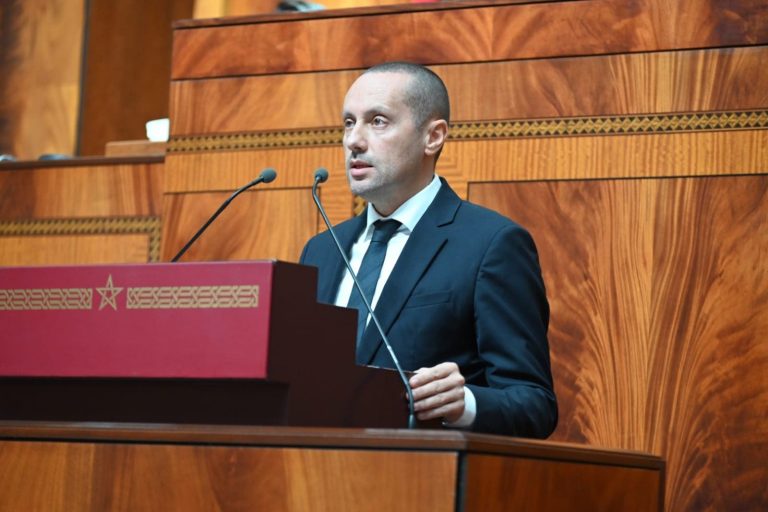
The government is moving towards a deep restructuring of the urban planning sector through a new draft law related to real estate subdivisions, submitted by Fatema Zahra Al Mansouri, Minister of National Territory Planning, Urban Planning, Housing and City Policy, on Wednesday, April 1st, concerning Draft Law No. 34.21. This was discussed during a meeting of the Internal Affairs, Local Authorities, Housing, City Policy and Administrative Affairs Committee, in an attempt to overcome imbalances that have persisted for more than three decades. However, this reform ambition raises fundamental questions about the text's ability to withstand the complexities of reality.
The project, which aims to revise the legal framework governing residential subdivisions, came in response to chronic problems, most notably the failure to complete the equipment works within the specified deadlines, and conflicting interpretations among various stakeholders, which produced a heterogeneous urban scene and burdened the groups with additional costs to fix imbalances for which they were not originally responsible.
One of the most prominent developments of the text is the adoption of flexible deadlines for project completion, linked to the area of the subdivision, instead of setting a unified ceiling, in addition to recognizing the possibility of suspending the validity of these deadlines in cases of force majeure, with that being subject to the control of a specialized technical committee.
The deadlines for completing residential subdivisions, according to the project presented by Fatema Zahra Al Mansouri, depend on the project area gradually, as they were set at three years for subdivisions that do not exceed 20 hectares, five years for those whose area ranges between more than 20 and 100 hectares, and seven years for those between more than 100 and 250 hectares, and ten years for subdivisions that range between more than 250 and 400 hectares, while it reaches fifteen years for projects whose area exceeds 400 hectares.
The project also seeks to enhance the presence of public facilities within the subdivisions, and to ensure the preservation of their character and function, in a way that guarantees the quality of living within the new urban spaces.
However, these provisions, despite their importance, pose real challenges when implementing them. Extending the deadlines may turn, in the absence of strict control, into a pretext to delay projects instead of accelerating them, especially in light of the weakness of tracking and accountability mechanisms. Also, the multiplicity of technical committees, despite its goal of improving governance, may lead to complicating procedures instead of simplifying them, which contradicts the spirit of administrative reform that the project seeks.
On the other hand, the text bets on strengthening the role of local authorities in managing the operations of receipt and control, and giving them broader powers in recovering the cost of repairs when subdividers default, but the success of this approach remains dependent on the availability of these groups of human and technical resources capable of keeping pace with these new tasks.
The project also opens the door to addressing the issue of illegal subdivisions, through mechanisms to restructure them according to specific programs, which is an approach that carries an important social dimension, especially in the context of combating inadequate housing. But this workshop, in turn, faces challenges related to financing these operations and the complexity of real estate situations.
In a parallel context, the project seeks to stimulate investment in the sector, by adapting it to tax laws and simplifying procedures, but achieving this goal remains conditional on providing an environment of trust and legal stability, which ensures clarity of vision for investors and reduces the risks associated with delays or failures of projects.
In conclusion, it seems that the draft law on residential subdivisions carries an advanced reform vision that seeks to organize the urban area and improve its quality, but in return it faces a real test at the level of implementation, as its effectiveness remains linked to the administration's ability to implement strictly, simplify procedures, and enhance governance, in a way that prevents the re-production of the same imbalances that it came to address.