HIBAPRESS – Rabat
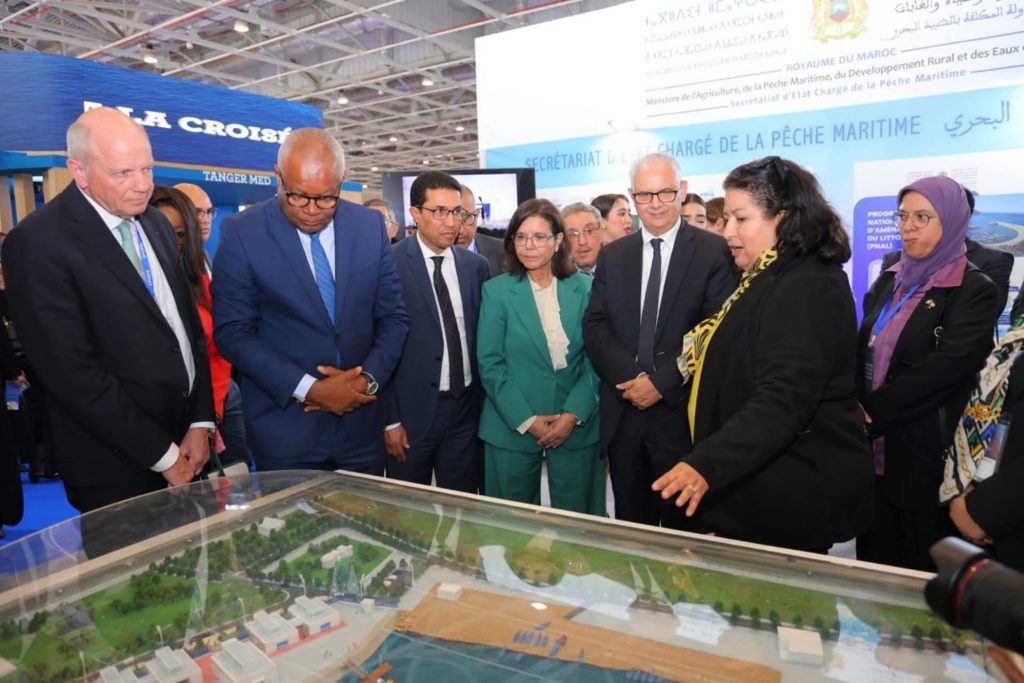
Zakia Eddarouch, Secretary of State in charge of maritime fisheries, confirmed during the opening of the first session of the international exhibition of ports and their system SIPORTS 2026, that Morocco continues to strengthen its position as a pivotal player in the maritime economy, within the framework of a strategic vision that makes the blue economy a key lever for sustainable development and economic openness.
The government official explained that the organization of this event reflects an increasing awareness of the strategic role played by ports, as engines of economic development and tools to enhance integration into global trade chains, noting that this approach is consistent with the royal vision that has made maritime development one of the pillars of the national development model, by achieving a balance between economic efficiency and preserving natural resources and integrating coastal populations. In this context, Eddarouch highlighted that Morocco established in 2023 a national committee specifically for the blue economy, which is responsible for coordinating public policies and following up on major projects related to maritime activities, in a step that aims to establish integrated governance for this vital sector, stressing that the modernization of the port system constitutes one of the most prominent manifestations of this dynamism, through major projects such as the Tangier Med complex and the port of Nador West Med, in addition to the Dakhla Atlantic port project, which is expected to enhance the Kingdom's position as a strategic bridge between Africa, Europe and the rest of the world. The Secretary of State added that the fisheries sector represents a fundamental pillar of the national economy, as Morocco has a significant infrastructure that includes 22 fishing ports and more than forty unloading points, as well as a diverse naval fleet, highlighting that the volume of marine discharges exceeded 1.4 million tons in 2024, placing the Kingdom at the forefront of African countries in this field, as the sector provides more than 269,000 direct jobs and achieves an export turnover of nearly 29 billion dirhams. The speaker revealed the preparation of a road map for the period 2025-2027, which aims to make Morocco a global reference in the comprehensive blue economy, by valuing marine resources and ensuring their sustainability and enhancing added value for economic actors and local communities, while stressing at the same time that achieving this goal remains dependent on protecting the oceans in light of the increasing challenges related to overexploitation, pollution and climate change. Zakia Eddarouch highlighted that Morocco has made the preservation of marine ecosystems a priority within its public policies, by adopting an approach based on marine planning, fisheries management, strengthening monitoring mechanisms and combating illegal fishing, stressing that a large percentage of marine discharges have become subject to sustainable management, with work on expanding the scope of protected marine areas to reach 10 percent of national waters, in a way that achieves a balance between protecting biodiversity and developing economic activities related to the sea. On the international level, the official stressed that Morocco continues to strengthen its partnerships, especially with African countries, within the framework of South-South cooperation based on solidarity and the exchange of experiences, by implementing field projects to develop the fisheries sector and improve the social and economic conditions of professionals, in addition to strengthening cooperation with international organizations to address the common challenges related to the governance of the seas and the sustainability of resources. The aforementioned speaker concluded her speech by emphasizing that this exhibition is a platform for exchanging experiences and anticipating innovative solutions for a more integrated and flexible maritime economy, expressing her hope that its work will contribute to crystallizing practical visions capable of keeping pace with the rapid transformations witnessed by the maritime sector globally.