

HIBAPRESS
An initial report prepared by the "190 for a World of Work Free from Violence and Harassment" coalition, in partnership with the "For Women's Dignity and Rights" coalition, revealed an increase in the number of female candidates in the Moroccan legislative elections of 2026 to 2659, compared to 2329 in 2021. The number of women who won seats in the House of Representatives reached 107 deputies out of 395, equivalent to 27.1 percent of the total members of the council.
The report, which is based on data available up to September 29, 2026, indicated that the number of candidates in local constituencies increased from 762 in 2021 to 876 in 2026. The number of local list leaders rose from 97 to 120, and the number of women who won through these constituencies increased from six deputies to 17.
Women constituted approximately 36.5 percent of the total 7277 candidacies. These were distributed between 1783 candidates in regional constituencies designated for women under Organic Law No. 53.25, and 876 candidates in local constituencies.
Despite the increase in the number of female candidates and elected officials, the report noted that women represent only about 16 percent of the total local candidacies. Ninety deputies were elected through regional constituencies and 17 through local constituencies, reflecting the continued primary role of the legal mechanism dedicated to enhancing female representation in the legislative institution.
The same source pointed out that the percentage of women in the House of Representatives increased from about 24.3 percent in 2021 to 27.1 percent in 2026, compared to their representation of 46 percent of those registered in the general electoral lists, a difference of approximately 19 percentage points.
The two coalitions considered that the evaluation of women's political participation should not be limited to the number of female candidates and winners. It requires monitoring the conditions for accessing electoral competition, the criteria for endorsements within political parties, the positions of women on lists, as well as opportunities for actual participation during election campaigns.
In this context, the report highlighted the absence of an available national database that clarifies the number of women who applied for party endorsements and the number who obtained them. It considered that the lack of this data limits the ability to assess the extent of equal opportunities in accessing leadership of local lists.
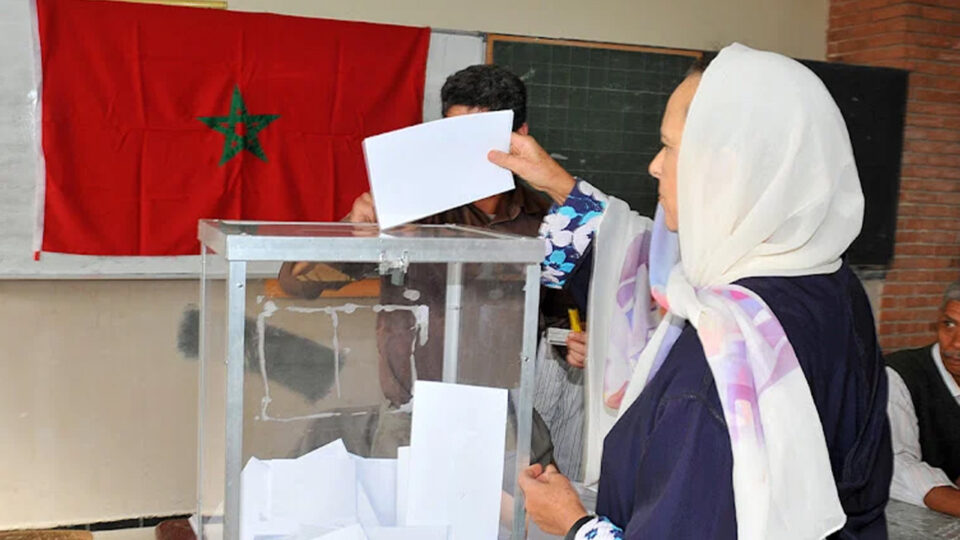
It also presented results from civil observation indicating the absence of women on platforms in 20 percent of the electoral gatherings covered by the monitoring. Women did not speak in 26 percent of some cases despite their presence on the platform. The report also noted that men constituted 93 percent of the observed polling station managers, compared to 7 percent for women, confirming that these indicators pertain to the observation field and cannot be generalized to all cases.
The report addressed the challenges related to women's political participation in the digital space, particularly the risks of defamation, threats, violation of private life, and gender-based violence. It called for distinguishing between legitimate political criticism and practices targeting women because of their participation in public life.
In its recommendations, the two coalitions called for the establishment of an official open database for electoral results categorized by gender, constituency type, and candidate's position on the list. They also recommended strengthening the transparency of party endorsement procedures, establishing a national indicator to measure women's participation in local constituencies, and developing monitoring of women's media presence during election campaigns.
The report also recommended establishing a unified mechanism for documenting political and digital violence against female candidates, enhancing women's participation in managing election day, publishing data on the distribution of responsibilities within polling stations by gender, and unifying civil observation tools to facilitate comparison of indicators between regions and electoral mandates.
The two coalitions emphasized the importance of continued monitoring after the results are announced, by tracking the positions of responsibility that female deputies will assume within parliamentary committees, the office of the House of Representatives, and parliamentary groups. This aims to evaluate the extent of their actual participation in influencing and decision-making, rather than solely measuring their numerical presence within the legislative institution.