HIBAPRESS – Rabat
The Head of Government, Fatima Ezzahra Al-Mansouri, revealed the government's orientations to strengthen Morocco's strategic security through measures encompassing water, energy, food, digitalization, and industry, emphasizing that confronting global transformations and emerging risks requires diversifying supply sources and strengthening national capabilities.
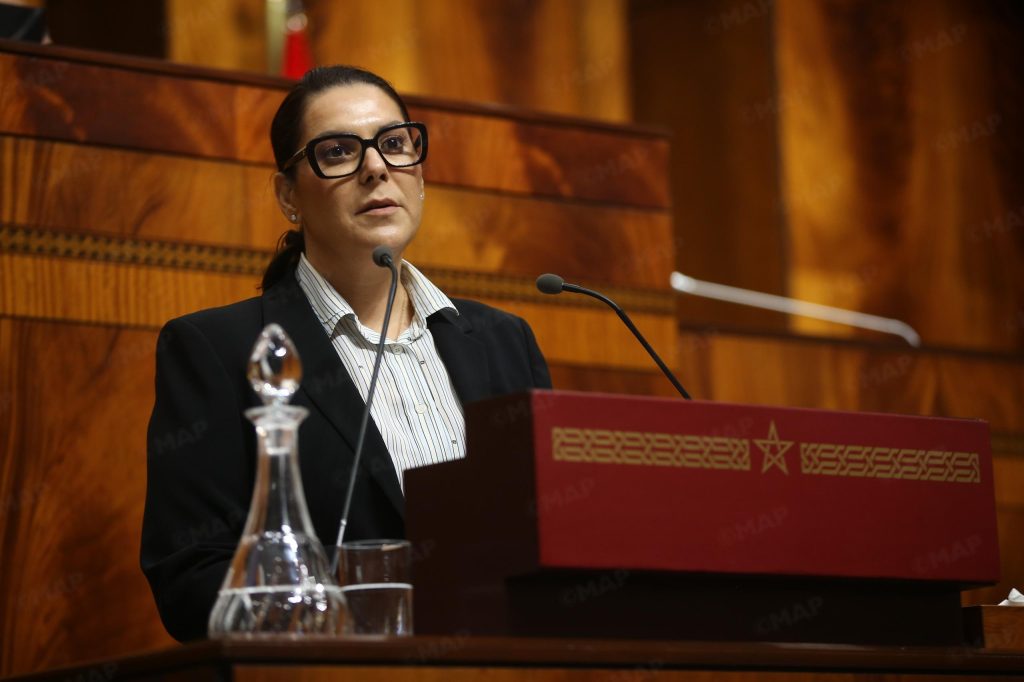
In her presentation of the government program during a joint session of the two parliamentary chambers on Monday, Al-Mansouri announced that the water strategy focuses on accelerating the construction of seawater desalination plants, with the aim of mobilizing 1.8 billion cubic meters by 2031.
This also includes doubling the construction of dams, especially in arid, semi-arid, mountainous regions, and oases, and developing inter-basin and inter-regional water transfer projects when necessary, while considering the water balances of the concerned regions.
To ensure the sustainability of water resources, the government intends to prepare a national water plan that will serve as a strategic framework for guiding long-term water policy, taking into account natural, climatic, economic, and social specificities, and ensuring coordination between public policies related to water, agriculture, energy, environment, and land use planning.
In the energy sector, the government pledged to accelerate the development of renewable energies, aiming to increase their share to over 52 percent of the energy mix by 2030. Priorities also include implementing Morocco's green hydrogen offering and gradually executing the gas infrastructure roadmap, alongside rationalizing energy demand and enhancing energy efficiency.
Regarding food security, Al-Mansouri highlighted the government's orientation towards transitioning from circumstantial support to controlling production factors through a seed sovereignty program aimed at increasing the share of national seeds from 20 to 50 percent during the government's term. This is concurrent with measures to secure stocks, ensure market supply, review grain reserves, and regulate exports of sensitive production chains.
The announced measures also include rebuilding the national livestock herd by facilitating access for small herders to high-yield breeds, supporting local breeds, and strengthening health monitoring and epidemiological vigilance to boost national production and protect livestock wealth.
Concerning digital sovereignty, the government intends to establish an integrated national mechanism for cybersecurity, data protection, and critical system security, expand internet coverage, especially in remote areas, and establish a framework for secure and responsible artificial intelligence, while improving investment conditions and supporting innovative startups.
On the industrial front, Al-Mansouri affirmed that the government will work to strengthen Morocco's position within value chains, develop maritime, logistical, and energy corridors, low-carbon industries, and new professions, while activating African and Atlantic royal initiatives. She also announced the orientation towards establishing a defense industrial and technological base by improving the legal framework, competitiveness, and incentives, alongside working to build a strong and competitive national commercial maritime fleet and accelerating major port projects and associated logistical and industrial zones.