HIBAPRESS – A. Mahyaoui
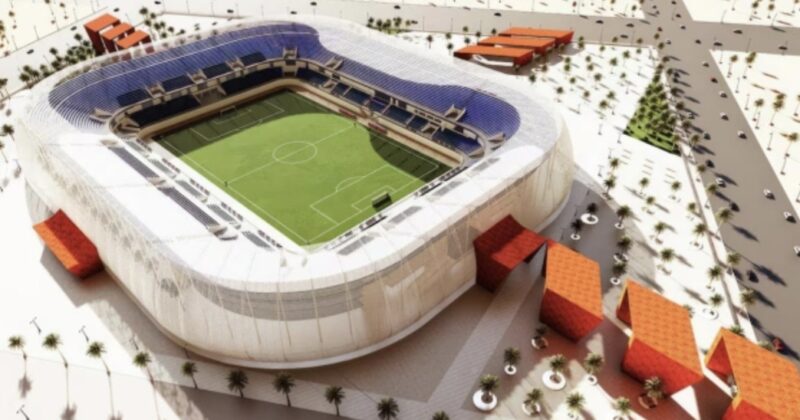
Work continues on the construction of the Grand Stadium in the city of Dakhla, with the launch of a new tender for the execution of carpentry works in aluminum, wood, and iron, with an estimated cost of approximately 57.85 million dirhams. This step aims to complete the components of this sports facility, which is expected to have a capacity of 15,000 spectators.
The National Agency for Public Facilities announced this deal as part of the continued implementation of the sports project, which is intended to strengthen the sports infrastructure in the Dakhla-Oued Ed-Dahab region and provide a space capable of hosting football competitions and major sporting events.
The launch of the new tender comes after the awarding of the first phase of the stadium's construction works in January 2025 to the company "Rwandi," for a financial value exceeding 265 million dirhams. This phase includes the major construction works, the metal roofing, the completion of the stands, along with other components related to the facility, with an initial completion period of 36 months.
The project is being built in the Taourta area, affiliated with the Arqoub municipality, on a land area of approximately 50 hectares, as part of a vision to develop sports facilities in the region and expand its capabilities in hosting sporting events.
According to project data, the stadium will include a natural grass pitch and covered stands, as well as facilities under the stands and equipment dedicated to serving players, sports teams, technical and medical staff, in addition to spaces for journalists, press conference rooms, and equipment related to live television broadcasting.
The project also includes the development of parking lots for about 750 cars and others for 50 buses, with access areas organized to consider the needs of fans, sports teams, official figures, and media representatives.
This project is expected to be a qualitative addition to the sports infrastructure in the Dakhla-Oued Ed-Dahab region by providing a facility that meets the requirements for hosting football competitions and supports the development of sports practice locally and regionally.
With the successive stages of completion and the launch of tenders for equipping it, the main challenge remains linked to respecting the set deadlines, ensuring the quality of work, and providing all the necessary facilities so that the stadium can fulfill its expected sporting, organizational, and developmental role.