HIBAPRESS – Ahmed Al-Musaed
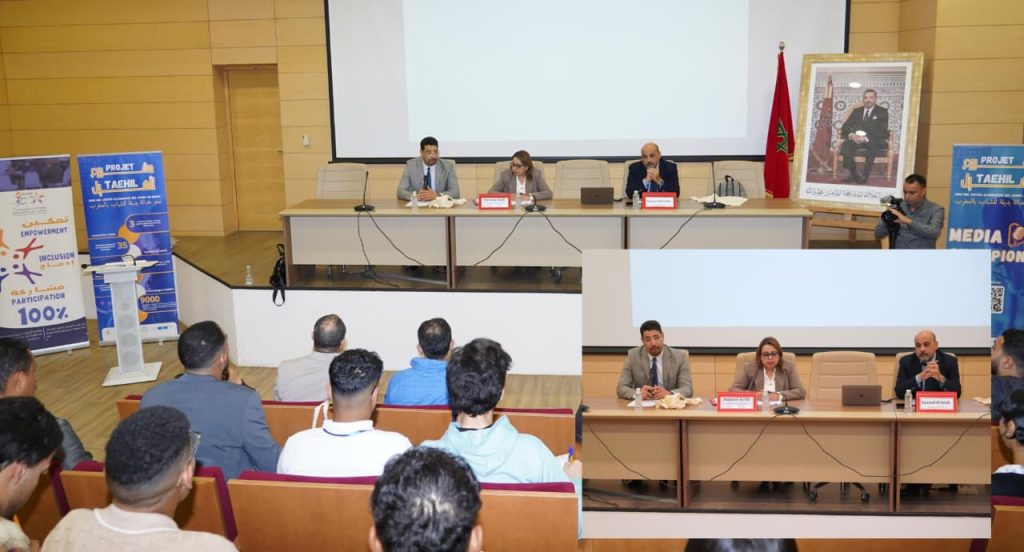
In a strategic move aimed at aligning the criminal justice system with modern human rights trends, the National Institute for Court Clerks and Legal and Judicial Professions in Technopolis witnessed the launch of the "Rehabilitation" project, an initiative led by the "Youth for Youth Association" with the support of the Council of Europe and the European Union, to establish a culture of alternative penalties and restorative justice for youth in conflict with the law.
The "Rehabilitation" project comes as a direct response to the legislative dynamics that Morocco is experiencing, especially with the issuance of Law No. 43.22 related to alternative penalties. The project aims to transition from the classical punitive approach to a "rehabilitative" approach that places the dignity of the young person and their socio-professional integration at the heart of the priorities, betting on reducing recidivism rates and strengthening social cohesion.
In his speech during the official opening, Youssef Fallah, representative of the Council of Europe (MA-JUST program), affirmed that this project represents a fundamental pillar for judicial reforms in Morocco, pointing out that activating alternatives to custodial sentences is a key entry point for a more humane and effective justice system.
The project was not limited to purely legal aspects, but rather targeted "opinion makers" from journalists and influencers. The discussion focused on the necessity of formulating a responsible media discourse that avoids social stigma and stereotypes, where the participants considered that the media is a pivotal partner in the success of the "second chance" by preparing public opinion to accept those integrated and change negative perceptions towards them.
In this regard, Hanan Zareeh, President of the Youth for Youth Association, along with Executive Director Ahmed Rizki, stressed that the success of "Rehabilitation" depends on a collective mobilization that goes beyond official institutions to include civil society and the media, to create an environment that embraces integration paths.
Community trainers and social mediators also benefited from intensive workshops that included effective listening mechanisms and diagnosis of individual situations, the engineering of professional integration projects specifically designed for the needs of young people, and mediation techniques to bridge the gaps between the young person, the family, and institutions.
In parallel with that, media professionals were involved in workshops to produce professional journalistic content that respects professional ethics and addresses sensitive issues with a professionalism that balances between the "right to information" and the "right to privacy and reintegration."
The "Rehabilitation" project is expected to be a leading model in coordinating between institutional and civil actors, as through the combination of training "field mediators" and mentoring "content creators," the project seeks to build a wall against exclusion, and lay the foundations of a justice that does not just punish, but gives life a new chance.