HIBAPRESS – Ahmed Sabbar
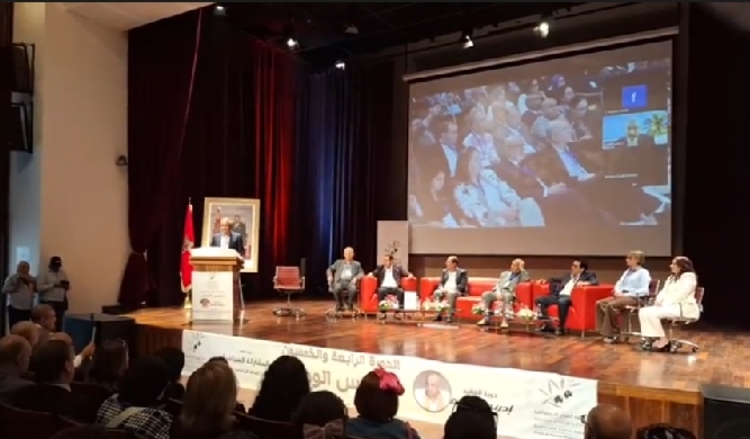
The capital, Rabat, witnessed today, Sunday, May 17, 2026, the convening of the fifty-fourth session of the National Council of the Democratic Forces Front party, in a political, organizational juncture described as pivotal in the party's trajectory, under the slogan: "Political participation is an entry point to social and spatial justice," with the presence of party leaders, members of the National Council, and representatives of various organizations and parallel bodies.
The session, hosted by the headquarters of the Mohammed VI Foundation for the Promotion of Social Works for Education and Training, bore the name "Idriss Benajem Session," in honor of the late National Council member, and in recognition of his struggle and organizational journey within the party, in a message of loyalty to its symbols and activists.
This session comes as the first organizational and political test after the party's seventh national conference recently held in the city of Taza, and in the context of early preparations for the upcoming legislative elections on September 23, 2026, where the party seeks to rearrange its internal affairs, and present itself as a proposing political force that bets on renewing elites and strengthening internal democracy.
The political and organizational report presented by the Secretary-General was the most prominent highlight of the session, as it included features of the party's electoral program, and the political and organizational road map for the next phase, with a focus on issues of social and spatial justice, strengthening the roles of parties in democratic framing, and restoring confidence in political and institutional work.
The National Council also discussed new amendments to the party's internal regulations, with the aim of adapting it to the requirements of the basic system approved during the seventh national conference, in a step that aims to strengthen party governance, clarify specializations, and achieve greater organizational efficiency within the party's structures.
The session also witnessed the launch of the election of national leadership structures, through the election of the President of the National Council and his deputy, and members of the Political Bureau, in addition to strategic bodies including the Arbitration and Discipline Committee, the Nominations and Elections Committee, the Parity and Equal Opportunities Committee, the Moroccans of the World Committee, as well as the supporting committees.
In an indication of the party's direction towards renewing its elite, the leadership emphasized the adoption of the standards of competence and productivity and the non-accumulation of responsibilities, while ensuring the strengthening of the presence of women and youth within the various national structures, reflecting a declared direction towards injecting new blood into the party scene.
Observers believe that the current National Council session carries great political and organizational stakes for the Democratic Forces Front party, especially in light of the transformations the national party scene is witnessing, and the escalation of the debate about the roles of political parties in keeping pace with social and economic challenges, and restoring citizens' confidence in representative institutions.