HIBAPRESS – Abdellatif Baraka
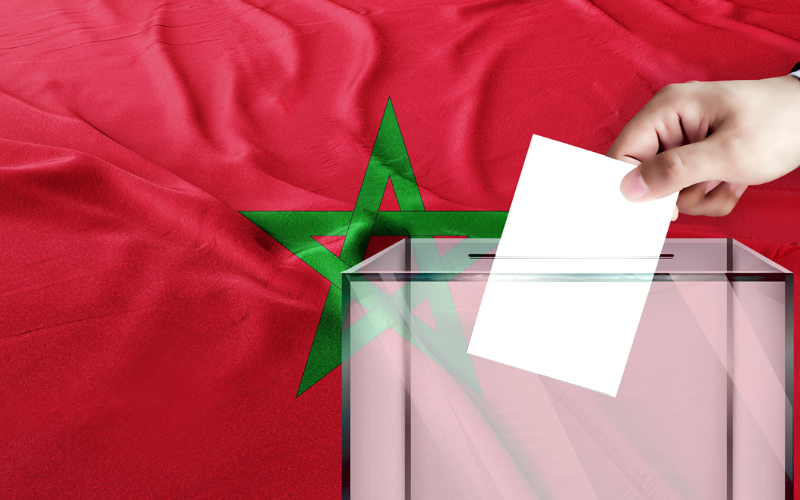
The Moroccan political scene is preparing to enter a decisive electoral phase during the upcoming month of September, in light of a remarkable party plurality that reflects a democratic dynamic in form, but at its core raises questions about effectiveness and the ability to influence. According to official data, the number of licensed and recognized political parties is 34, a number that reflects a diversity of orientations, but places the voter before a complex political map in which the calculations of power and positioning overlap.
At the heart of this scene, the parties of the government coalition that are leading the current stage stand out, including the National Rally of Independents, Authenticity and Modernity, and the Istiqlal Party. These parties are entering the upcoming elections burdened with their record of managing public affairs, which puts them in direct confrontation with the test of the outcome, especially in light of the rising expectations of social and economic expectations, and the increasing demands for improving purchasing power and promoting job opportunities. In contrast, the main opposition parties are moving in an attempt to restore political balance and rebuild bridges of trust with voters. In this context, the Socialist Union of Popular Forces, the Popular Movement, the Party of Progress and Socialism, along with the Constitutional Union stand out. The bet of these parties is not limited to criticizing the government's performance, but extends to presenting realistic alternatives and programs capable of convincing large segments of citizens, especially in light of the cooling of political participation during previous stages. Among the most prominent features of the upcoming elections as well, is the return of the Justice and Development Party to the forefront of the political debate after a period of decline, in addition to the presence of a group of other parties that seek to prove themselves within the scene, such as the Front of Democratic Forces, the Moroccan Green Left, the Moroccan Free Party, the Party of Renewal and Equity, the Environment and Sustainable Development Party, the Renaissance and Virtue Party, the Democratic Covenant Party, the Unity and Democracy Party, in addition to the New Democrats Party. Despite the limited impact of these organizations compared to the major parties, they are betting on being close to citizen issues and an alternative discourse to gain a position within the political map. In light of this plurality, the upcoming elections appear to be more than just a race towards seats, but a real test of the parties' ability to renew their political discourse, present feasible programs, and interact with the expectations of a voter who has become more aware and critical. Amidst the abundance of parties and the diversity of visions, the biggest bet remains to transform this diversity into qualitative competition that enhances confidence in political action, instead of turning into mere numbers that do not reflect a real impact on reality.