HIBAPRESS
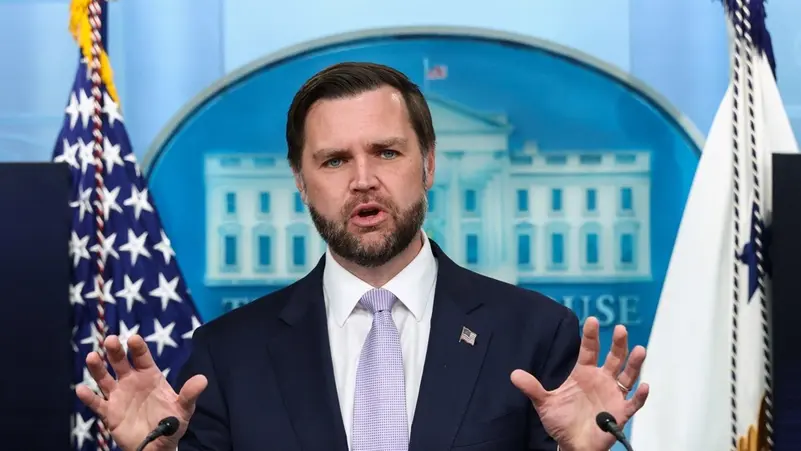
U.S. Vice President J.D. Vance expressed optimism about the possibility of Iran agreeing, within any potential agreement, not to develop nuclear weapons.
Vance, who participated in the talks between Tehran and Washington, said in an interview with NBC on Wednesday that he is "very optimistic" that Iran will agree as part of any agreement not to make nuclear weapons.
But he added: "I think the more difficult question is whether Iran will agree to a monitoring and verification mechanism that gives us confidence that it will not violate the agreement in the future."
This came as U.S. President Donald Trump meets with his government today, Wednesday, to hold talks aimed at ending the war with Iran.
Contentious Issues
Since the ceasefire came into effect in early April, the two sides remain at odds over a number of contentious issues such as Iran's nuclear ambitions, Israel's war in Lebanon, and Iran's demands to lift sanctions and release frozen assets.
After weeks of mostly indirect talks, both sides said they had made progress on a memorandum of understanding that would end the war and give negotiators 60 days to reach a final agreement.
Earlier, Iranian Foreign Ministry spokesman Ismail Baghaei said that results had been reached on many of the points discussed within a potential 14-point memorandum of understanding, noting that the general framework focuses on ending the war and the U.S. naval blockade in exchange for Iran taking steps to ensure safe passage in the Strait of Hormuz.
While senior Iranian diplomat Hossein Noushabadi pointed out that the potential framework agreement includes ending the war on all fronts, including Lebanon, the release of frozen Iranian assets, lifting the U.S. naval blockade, opening the Strait of Hormuz, the withdrawal of U.S. forces from the vicinity of Iran, and freedom to sell Iranian oil.
Noushabadi added that the initial draft agreement presented by Iran does not include any obligations regarding its nuclear program, according to what was reported by the "ISNA" agency.
Baghaei and Noushabadi stated that if the first phase of the agreement goes well, the nuclear file can then be considered and negotiated during a 60-day period.
The United States believes that Iran is seeking to make a nuclear bomb. Iran has repeatedly denied this, confirming that its nuclear program is for peaceful purposes only.