HIBAPRESS from Chichaoua
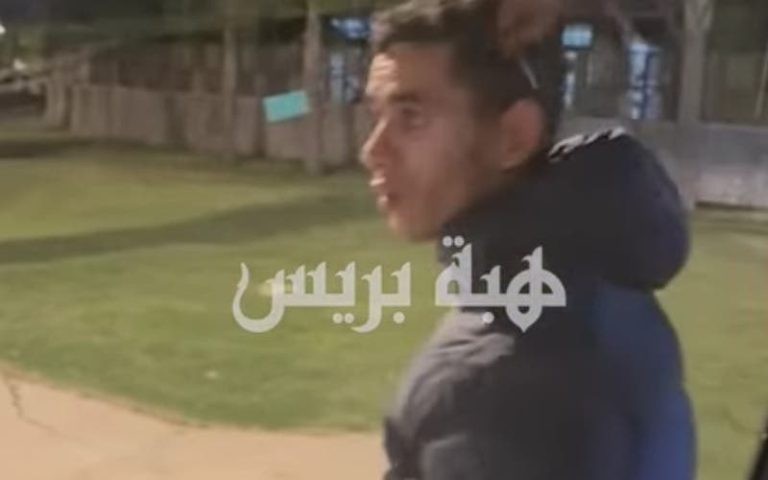
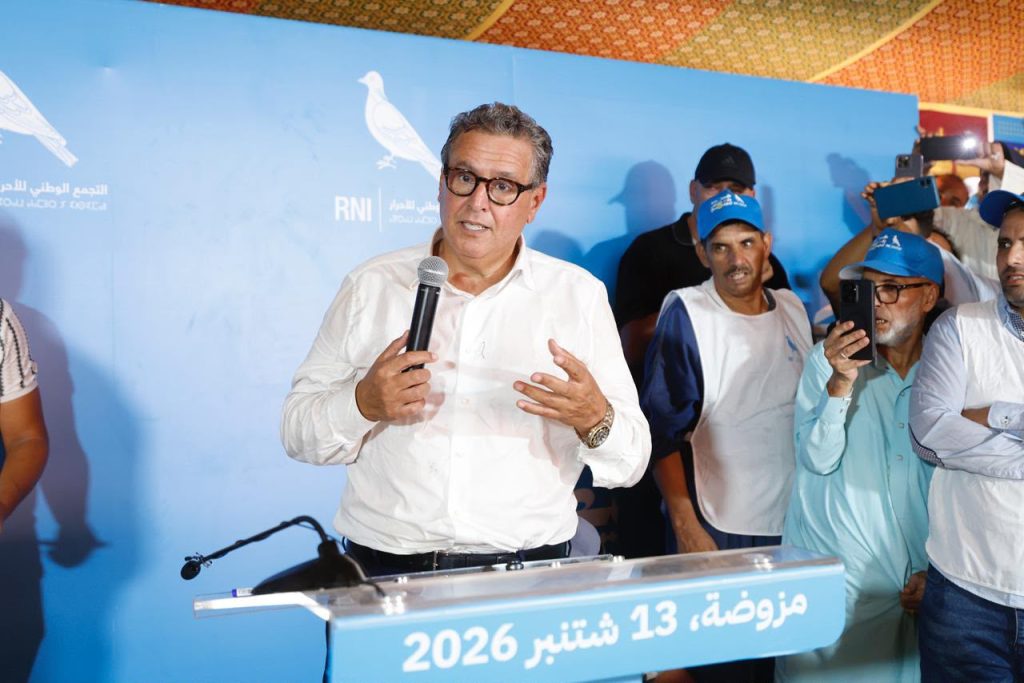
Aziz Akhannouch, the Head of Government and member of the Political Bureau of the National Rally of Independents party, launched direct criticism on Sunday evening from the commune of Mzouda in the province of Chichaoua, against Hicham Al-Mahjari, a Member of Parliament for the province. This was in response to Al-Mahjari's positions towards the government and its president, placing the discussion within a broader framework concerning the nature of political practice, which he stated should be based on programs, positions, and the ability to serve citizens, not on targeting individuals and personalizing discourse.
Akhannouch emphasized, during a public gathering attended by leaders from the National Rally of Independents party, that political disagreement does not mean turning competition into personal conflict. He considered that elected officials are required to present alternatives, defend citizens' issues, and hold the government accountable, instead of descending into discourse based on insults and curses.
The Head of Government linked the strength of political practice to the ability to present tangible achievements and implementable programs, affirming that the voter is the ultimate arbiter in evaluating these choices.
In this context, Akhannouch recalled Al-Mahjari's political trajectory within the governmental majority, pointing out that the Member of Parliament was part of it before taking positions within the legislative institution that he considered to be targeting the government and its president, at a time when the government was engaged in implementing major social projects, including the generalization of mandatory health insurance, the launch of direct social support, and housing subsidies.
The Head of Government considered that the "Independents" party had sensed from the beginning Al-Mahjari's "bad intention to break the government," highlighting that the transition from a position within the majority to attacking the government and its president is not consistent, in his view, with political practice based on competition in programs and positions.
He also pointed out that the Member of Parliament was absent from the parliamentary scene and the representation of the people of Chichaoua for 4 years, before returning to the forefront "to pick up the microphone again and start insulting people," which he described as "unacceptable."
On another level of his intervention, Akhannouch addressed the controversy surrounding the financing obtained by the Agadir municipality, regarding which Al-Mahjari had previously directed criticisms, considering that part of the discussion accompanying the file was based on a misunderstanding of the financial process.
He explained that the Agadir municipality launched a call for tenders to select the financial institutions responsible for collecting the financing, before the choice fell upon 3 financial actors, including the largest and second-largest banks in Morocco, in addition to the Caisse de Dépôt et de Gestion (CDG).
The Head of Government clarified that the financing was raised from the financial market, with the contribution of an international institution to part of it, and that its purpose was to finance the development program for the city of Agadir.
He denied that the legal framework prepared by the government, with the participation of the Ministry of Interior, the Ministry of Finance, and the Head of Government's office, was specifically designed for Agadir, emphasizing that the decree opened the door for various communes and regions to resort to the capital market and mobilize the necessary financing to implement their development projects.
Akhannouch directly responded to the criticisms related to this file, saying: "I have opened the door for you to use this type of financing," before adding, addressing Al-Mahjari: "Go, my brother, take 100 billion or 200 billion for your region, or your municipality. Go work for Marrakech and work for the region. Why are you competing with me in my work in Agadir?"
Akhannouch noted that the goal of making these financing mechanisms available to communes and regions is to enable them to implement their projects and accelerate the pace of development, not to turn financing into an object of political conflict. He considered that the discussion about projects should focus on their effectiveness and impact on citizens, rather than reducing it to personal stances or electoral calculations.