HIBAPRESS – MAP
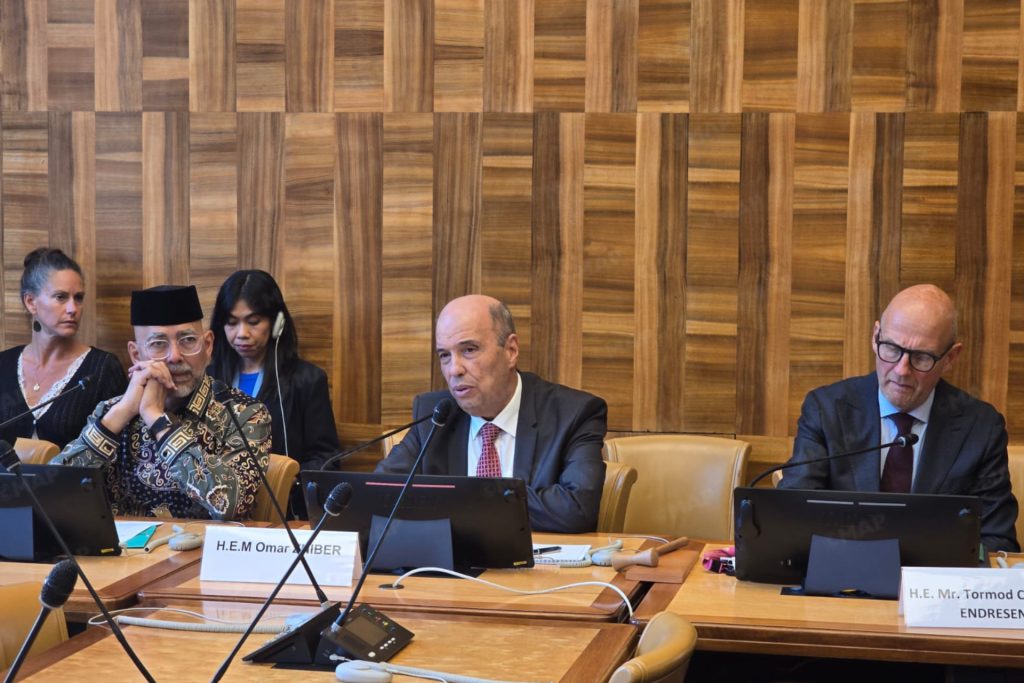
Morocco organized on Thursday at the Palais des Nations in Geneva a parallel event to the 63rd session of the Human Rights Council, dedicated to enhancing the Universal Periodic Review (UPR) process, on the occasion of the 20th anniversary of this mechanism and the approach of its fifth cycle.
This meeting, held under the theme "From Rabat to Geneva… Strengthening the Universal Periodic Review Process for Transformative Human Rights Impact," was organized in partnership with the Office of the United Nations High Commissioner for Human Rights and the organization "UPR Info." It witnessed intensive participation from permanent missions accredited to the United Nations, representatives of UN organizations, international experts, and civil society representatives.
In his opening speech, the Ambassador, Permanent Representative of the Kingdom of Morocco to Geneva, Omar Zniber, emphasized that this meeting constitutes an extension of the international retreat held on June 5 and 6, 2026, in Rabat. This retreat brought together the President of the Human Rights Council, 26 government representatives, as well as representatives from UN system agencies, civil society, academic circles, and independent experts.
Zniber explained that the work of the Rabat retreat aimed at a dual objective: evaluating the achievements and lessons learned from the Universal Periodic Review, and reflecting, in particular, on ways to enhance its core effectiveness as the fifth cycle approaches.
He affirmed that "Morocco's interest in the Universal Periodic Review is neither circumstantial nor superficial," recalling that this commitment falls within the framework of the Kingdom's adherence to multilateral cooperation based on dialogue and aiming to achieve tangible impact on the ground.
He also recalled the role Morocco played in the inception of this mechanism, particularly as a facilitator in its establishment in 2006, the development of its working methods in 2008, and the review process of the mechanism in 2021.
In presenting the main conclusions of the Rabat retreat, the Ambassador primarily stressed the need to place implementation at the heart of the fifth cycle, by ensuring the translation of recommendations into legislation, public policies, and institutional reforms that lead to concrete improvements in the enjoyment of human rights.
He also underscored the importance of the quality of recommendations, which should be specific, targeted, measurable, and actionable, as well as strengthening national ownership by involving ministerial departments, parliaments, judicial actors, local authorities, national human rights institutions, and civil society.
Zniber also emphasized the crucial role of national implementation, reporting, and follow-up mechanisms, as they are essential links between Geneva and the reality of human rights on the ground.
He also addressed the potential contribution of digital tools in tracking recommendations, while emphasizing the need to use them in a transparent, inclusive, and compliant manner with international human rights law.
Cooperation, technical assistance, capacity building, peer exchange, as well as South-South and triangular cooperation, are among the mechanisms identified in Rabat to enhance the sustainable implementation of recommendations.
In this regard, participants praised the voluntary trust funds managed by the Office of the United Nations High Commissioner for Human Rights, dedicated to supporting participation and implementation.
The Ambassador explained that the conclusions of the Rabat retreat do not constitute a "final plan," as some proposals garnered broad consensus, while others require further discussion. He indicated that the Geneva meeting aims to broaden the dialogue and share these conclusions with members of the international community, with the goal of enriching reflection on the fifth cycle.
The meeting was notably marked by interventions from the President of the Human Rights Council, Sidarto Reza Suryodipuro, Ambassador of Indonesia, and the Ambassadors of Norway, Tormod Cappelen Endresen, Maldives, Ms. Shiyama Raashid, and Kenya, Vance O. A., as well as Juliette de Rivero, Chief of the UPR Branch at the High Commissioner's Office, Mona Mbekai, Executive Director of UPR Info, and the Ministerial Delegation for Human Rights. They praised the high participation in this meeting, considering it evidence of the topic's relevance and the wisdom of the Rabat retreat.